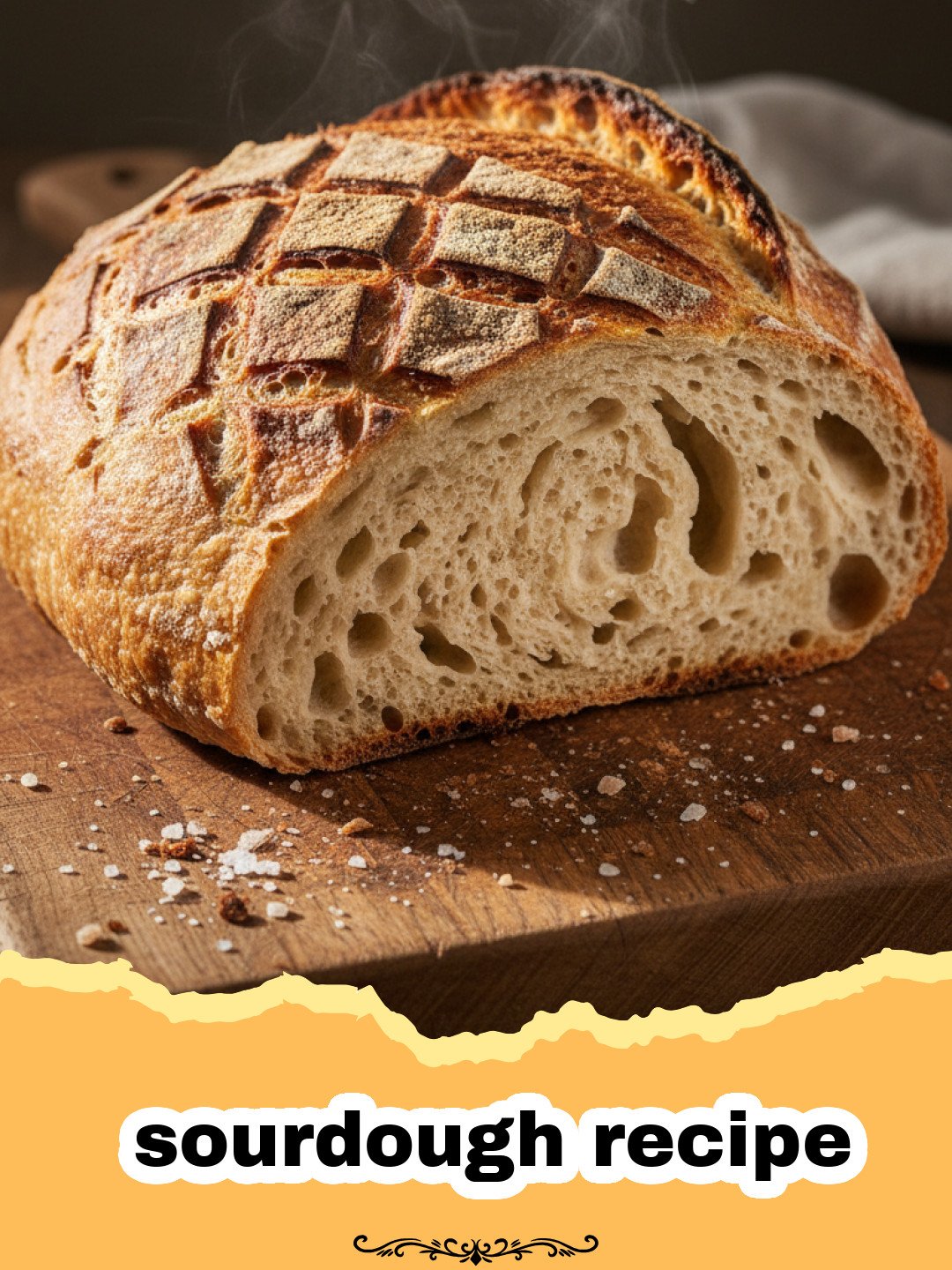
Finding the perfect sourdough recipe changed the way I look at my kitchen forever. There is something truly magical about taking three simple ingredients—flour, water, and salt—and watching them transform into a bubbling, living masterpiece. I remember my first attempt years ago; it was a flat, dense brick that could have doubled as a doorstop. But I didn’t give up. I spent months obsessing over hydration levels, fermentation times, and the elusive ‘ear’ on the crust. This sourdough recipe is the result of all those trials and errors, simplified so that you can achieve bakery-quality bread in your own home. Whether you are a seasoned baker or a complete novice, there is a deep sense of satisfaction in pulling a golden-brown, crackling loaf out of the oven. This sourdough recipe will guide you through the rhythm of the dough, teaching you to feel when it is ready. Let’s embark on this delicious journey together and fill your home with the incomparable aroma of freshly baked bread.
Why This Recipe is a Must-Try
- Foolproof Method: This sourdough recipe uses a high-success technique that minimizes common mistakes for beginners.
- Exceptional Flavor: The long, cold fermentation process develops a complex, tangy profile that store-bought bread simply cannot match.
- Perfect Texture: Achieve that sought-after combination of a crispy, shattered-glass crust and a soft, airy, open crumb.
- Versatile Foundation: Once you master this basic sourdough recipe, you can easily adapt it with various grains, herbs, and inclusions.
Key Ingredient Notes
The success of any sourdough recipe starts with the quality of your ingredients. First and foremost, you need an active, bubbly sourdough starter. Your starter is the heart of the bread; it provides the wild yeast and lactic acid bacteria necessary for rise and flavor. If you have extra starter that isn’t quite active enough for a loaf, you might want to try The Ultimate Fluffy Sourdough Discard Cinnamon Rolls. For the flour, I highly recommend using a high-quality bread flour with at least 12% protein content. This ensures a strong gluten network that can support the air bubbles during the long rise. Water quality also matters; if your tap water is heavily chlorinated, it might slow down the fermentation. Filtered water at room temperature is usually the safest bet for this sourdough recipe. To keep your starter healthy and visible, using Basics Glass Food Storage is a great way to monitor its growth and bubbles through the clear sides. Finally, fine sea salt is preferred over table salt as it dissolves more evenly into the dough without any additives.
Step-by-Step Guide with Pro Tips
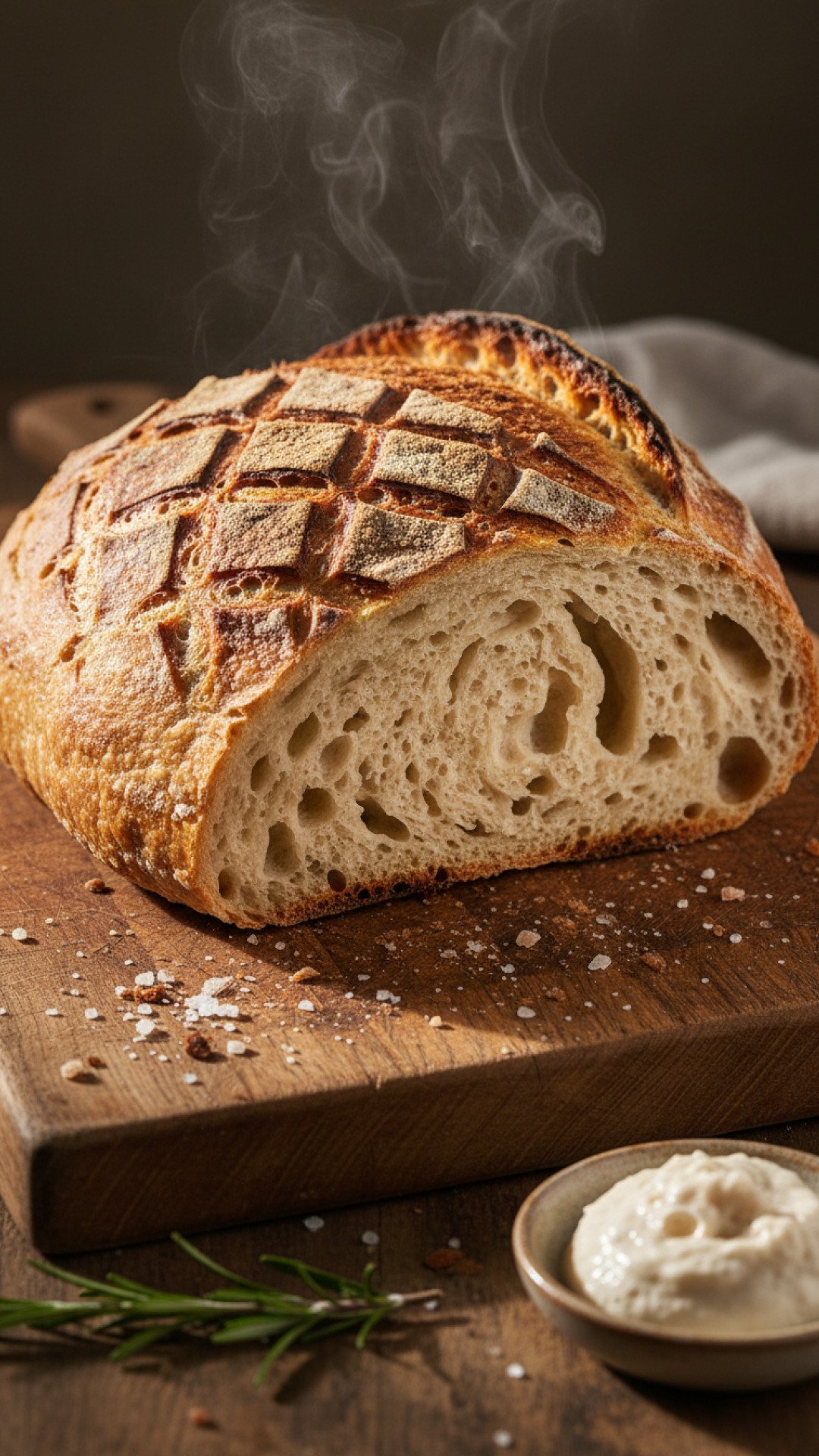
Every sourdough recipe is a lesson in patience and observation. We start by mixing our active starter with warm water until it is mostly dissolved. When you add the flour and salt, don’t worry if the dough looks shaggy at first. This is the ‘autolyse’ or initial mixing phase where the flour fully hydrates. One of the best pro tips for this sourdough recipe is to use wet hands when handling the dough; this prevents sticking without adding unnecessary extra flour which can toughen the bread. During the bulk fermentation, you will perform a series of ‘stretch and folds.’ This technique replaces heavy kneading and gently builds strength in the dough while preserving the delicate gas bubbles. As the sourdough recipe progresses, you will notice the dough becoming smoother, silkier, and more elastic. After the dough has grown by about 50% in volume, it is time for shaping. Be gentle but firm to create surface tension on the loaf, which helps it rise upward rather than outward in the oven. A cold proof in the refrigerator overnight is a secret weapon in this sourdough recipe; it firms up the dough for easier scoring and deepens the sour flavor significantly. When it comes time to bake, a preheated Dutch oven creates the perfect steamy environment to get that professional crust.
Variations & Serving Suggestions
This sourdough recipe is incredibly adaptable. For a savory twist, try folding in roasted garlic and fresh rosemary during the second set of stretch and folds. If you prefer a nuttier profile, replace 100g of the bread flour with whole wheat or rye flour. This sourdough recipe also makes the most incredible base for breakfast. Imagine a thick, toasted slice topped with smashed avocado and a side of The Perfect Hard Boiled Eggs Recipe for Easy Peeling. For a classic lunch, use it to build the ultimate grilled cheese or a hearty turkey club. The tangy crumb also pairs beautifully with sweet toppings like honey or homemade jam. If you find yourself with leftovers, this sourdough recipe makes the best croutons or panzanella salad you have ever tasted. The possibilities are truly endless once you have a reliable loaf ready on your counter.
Nutrition Information
| Nutrient | Amount per Serving |
|---|---|
| Calories | 185 kcal |
| Carbohydrate Content | 36g |
| Cholesterol Content | 0mg |
| Fat Content | 0.8g |
| Fiber Content | 2g |
| Protein Content | 6g |
| Saturated Fat Content | 0.1g |
| Serving Size | 1 slice (approx 75g) |
| Sodium Content | 380mg |
| Sugar Content | 0.5g |
| Trans Fat Content | 0g |
| Unsaturated Fat Content | 0.4g |
Conclusion
Mastering this sourdough recipe is a rewarding journey that connects you to the ancient art of bread making. While it requires time and a bit of practice, the results are far superior to anything you can buy at a grocery store. I hope this sourdough recipe becomes a staple in your home, bringing joy to your kitchen and deliciousness to your table. Don’t be afraid to experiment and find your own rhythm with the dough. Happy baking!
FAQs
What if my sourdough recipe doesn’t rise?
The most common reason for a poor rise in a sourdough recipe is an inactive or weak starter. Make sure your starter is bubbly and passes the ‘float test’ before mixing. Temperature also plays a huge role; if your kitchen is below 70u00b0F, the fermentation will take significantly longer.
Can I use all-purpose flour for this sourdough recipe?
While you can use all-purpose flour, bread flour is highly recommended for this sourdough recipe because it has a higher protein content, which creates a stronger gluten structure and a better rise.
How do I store my sourdough bread?
Once completely cooled, store your bread in a paper bag or a bread box for up to 2 days. For longer storage, slice the loaf and freeze it in an airtight bag; you can toast the slices directly from the freezer.
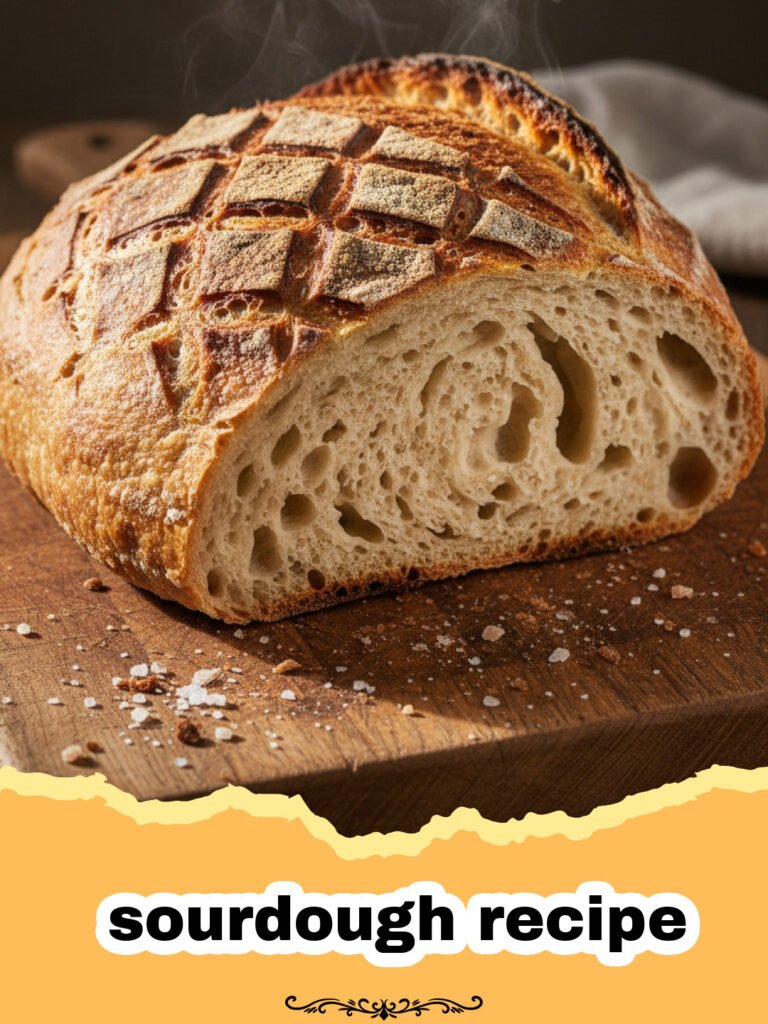
Artisan Sourdough Bread
A beginner-friendly sourdough recipe that produces a crispy crust and an airy, flavorful crumb using traditional fermentation methods.
- Total Time: 24 hours
- Yield: 1 loaf (approx 12 slices) 1x
Ingredients
100g active sourdough starter (fed within 4–12 hours)
350g warm filtered water (approx 80°F)
500g high-quality bread flour
10g fine sea salt
Instructions
Step 1: In a large mixing bowl, whisk together the active sourdough starter and warm water until the starter is mostly dissolved and the water looks milky.
Step 2: Add the bread flour and salt to the bowl. Mix by hand or with a sturdy spatula until a shaggy dough forms and no dry flour remains. Cover and let rest for 30 minutes.
Step 3: Perform your first set of stretch and folds. Grab one side of the dough, pull it up high, and fold it over into the center. Rotate the bowl and repeat 4 times. Cover and rest for 30 minutes. Repeat this 3 more times for a total of 4 sets.
Step 4: Allow the dough to rest undisturbed for the remainder of the bulk fermentation (usually 4-6 hours total from the start) until it has increased in volume by about 50% and looks bubbly.
Step 5: Gently turn the dough onto a lightly floured surface. Shape it into a round boule by folding the edges toward the center, then flip it over and use your hands to create surface tension.
Step 6: Place the dough into a floured proofing basket (banneton) or a bowl lined with a floured tea towel. Cover and refrigerate for 12 to 24 hours for a cold proof.
Step 7: Preheat your oven to 450°F (230°C) with a Dutch oven inside for at least 45 minutes. Carefully transfer the cold dough to parchment paper, score the top with a sharp blade, and place it in the Dutch oven. Bake covered for 20 minutes, then uncovered for 20-25 minutes until deep golden brown.
Notes
Ensure your starter is at its peak activity for the best rise. If your kitchen is cold, fermentation may take longer.
- Prep Time: 30 minutes
- Cook Time: 45 minutes
- Category: Baked Goods
- Cuisine: Artisanal
Nutrition
- Serving Size: 1 slice
- Calories: 185 kcal
- Sugar: 0.5g
- Sodium: 380mg
- Fat: 0.8g
- Saturated Fat: 0.1g
- Unsaturated Fat: 0.4g
- Trans Fat: 0g
- Carbohydrates: 36g
- Fiber: 2g
- Protein: 6g
- Cholesterol: 0mg
Keywords: sourdough recipe, homemade bread, artisan bread, beginner sourdough, bread making