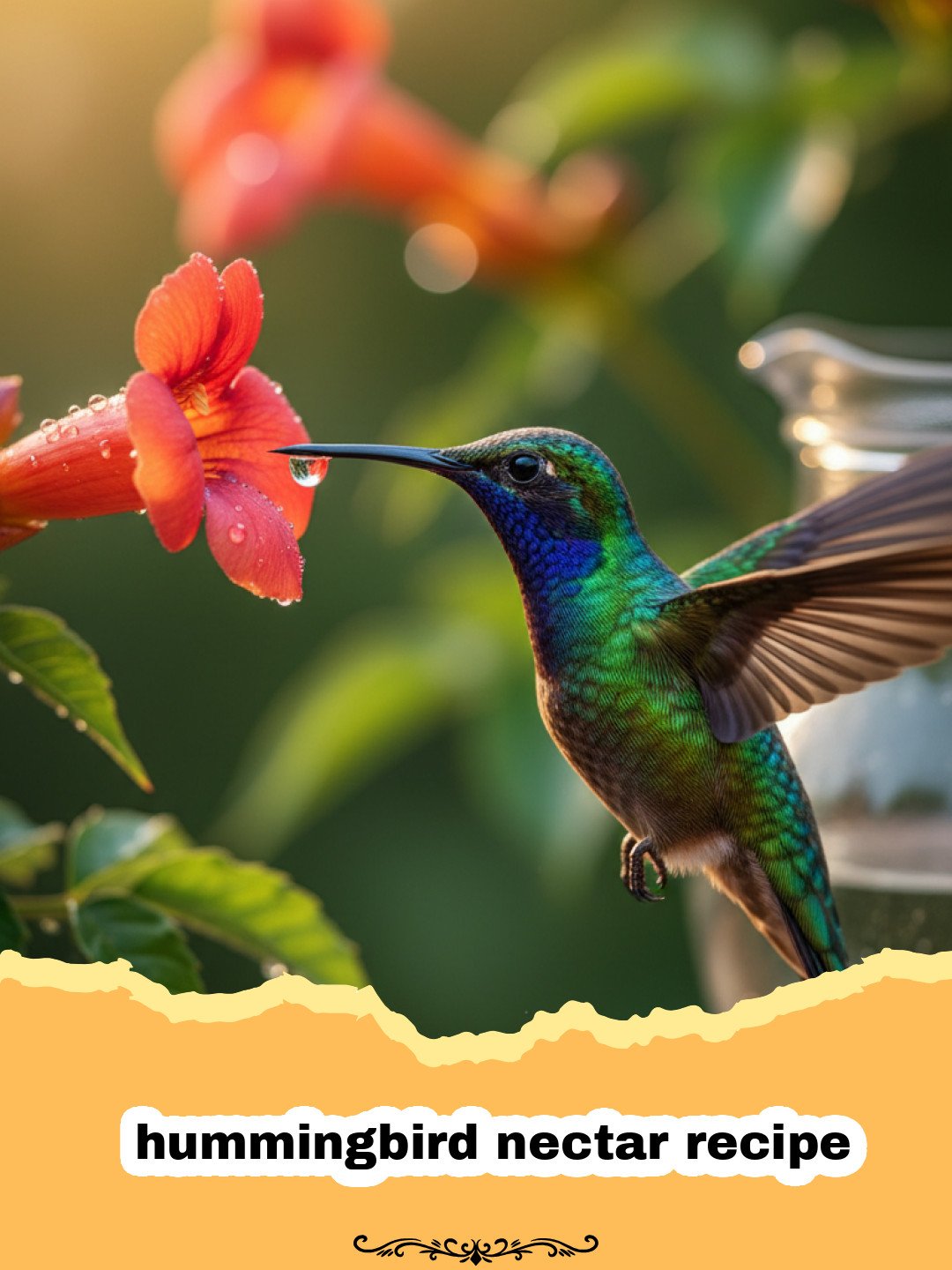
There’s a special kind of magic that unfolds in a garden when tiny, iridescent wings buzz past your ear, a flash of emerald and ruby darting to a feeder – it’s the unparalleled joy of witnessing hummingbirds, and for them, a perfect hummingbird nectar recipe is truly a lifeline. I remember countless summer afternoons as a child, sitting quietly on my grandmother’s porch, utterly captivated by these aerial jewels. She always had a vibrant red feeder hanging, meticulously cleaned and refilled every few days. I thought it was store-bought, this magical red liquid that drew them in, but one sweltering July morning, she invited me into her kitchen. ‘Come, my dear,’ she’d whispered, ‘let me show you how to make their breakfast.’ It was then I learned the deceptively simple truth: the best hummingbird nectar recipe isn’t bought in a bottle, but lovingly prepared right at home. The process was so quick, so straightforward, yet it created a vibrant hub of activity in her garden. She taught me the golden rule: simplicity is key. No dyes, no fancy sugars, just pure, clean sustenance. That memory, those tiny, whirring wings, and the quiet wisdom of my grandmother, ignited a lifelong passion for these magnificent creatures. Now, I’m thrilled to share that very same, incredibly easy, and utterly effective hummingbird nectar recipe with you, so you too can experience the sheer delight of inviting these miniature marvels into your own outdoor space.
Why This Hummingbird Nectar Recipe is a Must-Try
- Simplicity Itself: You only need two basic ingredients that are likely already in your pantry. No complex steps, no obscure items – just pure, simple goodness. This hummingbird nectar recipe truly simplifies attracting these beautiful birds.
- Hummingbird Safe & Healthy: Unlike commercial mixes that sometimes contain preservatives or artificial colors, this homemade hummingbird nectar recipe ensures your tiny visitors are consuming only what’s best for them. Red dye, often found in store-bought options, is completely unnecessary and potentially harmful.
- Cost-Effective Solution: Making your own hummingbird nectar recipe at home is significantly more economical than buying pre-made solutions. You’ll save money, especially if you have multiple feeders or a large population of hummingbirds.
- Reliable & Consistent Attraction: This tried-and-true hummingbird nectar recipe mimics the natural sugar content found in flower nectar, making it irresistibly appealing to hummingbirds. You’ll be amazed at how quickly they find and frequent your feeders.
Key Ingredient Notes for Your Hummingbird Nectar Recipe
Creating the perfect hummingbird nectar recipe is all about understanding the few, but crucial, ingredients. The quality of what you put in directly impacts the health of your tiny visitors and how much they’ll frequent your feeder.
Granulated White Sugar
This is the cornerstone of your hummingbird nectar recipe. The key here is plain, white granulated sugar. It’s pure sucrose, which is easily digestible by hummingbirds and mimics the natural sugars found in flowers. Do NOT use brown sugar, powdered sugar, raw sugar, organic sugar, honey, or artificial sweeteners. These can contain iron, molasses, or other compounds that are difficult for hummingbirds to digest, can ferment too quickly, or can even be toxic. Honey, in particular, can harbor bacteria and fungi that cause deadly infections in hummingbirds. Stick to the basics, and your hummingbird nectar recipe will be perfect every time.
Clean Water
Just as important as the sugar is the water. Use clean, fresh water. Tap water is generally fine as long as it’s not heavily chlorinated or hard. If you wouldn’t drink it, don’t give it to your hummingbirds. Filtered water is an excellent choice. Boiling the water as part of the hummingbird nectar recipe not only helps dissolve the sugar completely but also sterilizes it, helping to prevent spoilage and mold growth in the feeder, which is particularly important during warmer months when you might also be enjoying a refreshing tomato cucumber salad on your patio.

Step-by-Step Guide with Pro Tips for the Best Hummingbird Nectar Recipe
Making this hummingbird nectar recipe is incredibly simple, but following these steps ensures you create a safe and appealing treat for your garden’s most dazzling residents.
Gather Your Supplies
- A medium saucepan
- A stirring spoon
- Measuring cups
- A clean container for storage (preferably glass)
- Your hummingbird feeder(s)
Prepare the Nectar
Step 1: Combine 4 cups of clean water with 1 cup of plain white granulated sugar in your medium saucepan. The 4:1 ratio (water to sugar) is crucial for a healthy hummingbird nectar recipe, as it closely mimics the sugar concentration found in natural flower nectar.
Step 2: Place the saucepan over medium-high heat. Bring the mixture to a rolling boil, stirring occasionally to ensure the sugar fully dissolves. Once the water starts boiling and all the sugar crystals are gone, let it boil for just one to two minutes.
Cool Completely
Step 3: Remove the saucepan from the heat. Allow the sugar solution to cool completely to room temperature before filling your feeders. This is a critical step; hot nectar can harm hummingbirds. Patience is a virtue here!
Fill Your Feeders
Step 4: Once cooled, carefully pour the fresh hummingbird nectar recipe solution into your clean feeders. Do not overfill if you have small feeders; only put in as much as the birds will consume in 2-3 days, especially in warm weather.
Storage Tips
Step 5: Store any leftover hummingbird nectar recipe solution in a clean, airtight container in the refrigerator for up to two weeks. This allows you to quickly refill feeders as needed. Glass containers are ideal for storage, such as those found in Basics Glass Food Storage sets, as they don’t leach chemicals and are easy to sterilize.
Feeder Maintenance
Step 6: Regular cleaning is paramount. In cool weather (below 70°F/21°C), change the nectar and clean the feeder every 3-5 days. In hot weather (above 70°F/21°C), change the nectar and clean the feeder every 1-2 days. Use hot water and a bottle brush to thoroughly scrub the feeder. Avoid soap if possible, or rinse meticulously to remove all residue. A mild bleach solution (1 part bleach to 9 parts water) can be used for deep cleaning, followed by a thorough rinse. Proper feeder hygiene is just as important as the correct hummingbird nectar recipe for the birds’ health.
Variations & Serving Suggestions for Your Hummingbird Nectar Recipe
While the basic hummingbird nectar recipe is perfect as is, there are a few ways to optimize your hummingbird feeding station for maximum enjoyment for both you and your tiny visitors!
- Feeder Types & Placement: Experiment with different feeder designs. Some hummingbirds prefer glass, others plastic. Look for feeders with bee guards if you have issues with insects. Place feeders in shaded areas to keep the nectar cooler and prevent fermentation, and away from direct sun. Consider hanging them near brightly colored flowers – perhaps even where you might enjoy a delicious grilled pineapple on a summer evening – to attract more attention.
- Multiple Feeders: Hummingbirds are territorial. If you have the space, placing multiple feeders out of sight from each other can reduce aggression and allow more birds to feed peacefully.
- No Red Dye Needed: Remember, the red color on many commercial feeders is sufficient to attract hummingbirds. Adding red dye to your homemade hummingbird nectar recipe is completely unnecessary and potentially harmful to the birds. Their keen eyesight is drawn to the feeder itself, not the color of the liquid.
- Consistency is Key: Once you start feeding hummingbirds, try to maintain a consistent schedule, especially during migration periods. They come to rely on these food sources.
Nutrition Information
| Nutrient | Amount Per Serving (1 cup) |
|---|---|
| Calories | 768 kcal |
| Carbohydrate Content | 200 g |
| Cholesterol Content | 0 mg |
| Fat Content | 0 g |
| Fiber Content | 0 g |
| Protein Content | 0 g |
| Saturated Fat Content | 0 g |
| Serving Size | 1 cup |
| Sodium Content | 0 mg |
| Sugar Content | 200 g |
| Trans Fat Content | 0 g |
| Unsaturated Fat Content | 0 g |
This nutrition information is an estimate based on the ingredients used for the hummingbird nectar recipe. Hummingbirds consume very small amounts per feeding, and their metabolism is incredibly high.
Creating your own hummingbird nectar recipe is a simple act of kindness that brings immense joy. There’s nothing quite like watching these energetic, glittering gems hover and sip, knowing you’ve provided a safe and healthy source of energy for them. So, gather your two ingredients, follow these easy steps, and prepare to welcome the wonder of hummingbirds into your world. Your garden (and your heart) will thank you for this simple, magical hummingbird nectar recipe!
FAQs
Is red dye safe for hummingbirds?
No, red dye is not safe for hummingbirds and is completely unnecessary. Commercial nectars often add red dye, but there is no scientific evidence that it attracts hummingbirds more effectively, and it may be harmful to their health. The red parts of the feeder itself are enough to attract them.
How often should I change homemade hummingbird nectar?
You should change the nectar every 2-3 days, especially when temperatures are above 70u00b0F (21u00b0C). In very hot weather, it may need to be changed daily. In cooler weather, you might be able to extend it to 4-5 days, but never let it spoil or grow mold.
What kind of sugar should I use for hummingbird nectar?
Always use plain white granulated sugar. This type of sugar is pure sucrose, which is easily digestible by hummingbirds. Do NOT use brown sugar, powdered sugar, organic sugar, honey, or artificial sweeteners, as these can contain harmful compounds or promote bacterial growth.
Can I store homemade hummingbird nectar?
Yes, you can store any leftover homemade hummingbird nectar. Once cooled, pour it into a clean, airtight container (preferably glass) and refrigerate it. It will remain fresh for up to two weeks, allowing for easy refills of your feeders.
Easy Homemade Hummingbird Nectar
A simple, safe, and effective recipe to make your own hummingbird food with just two ingredients: plain white granulated sugar and clean water. Attract these beautiful, energetic birds to your garden with a healthy, dye-free solution.
- Total Time: 10 minutes
- Yield: 4 cups 1x
Ingredients
4 cups water (clean, fresh, filtered if possible)
1 cup granulated white sugar
Instructions
Step 1: In a medium saucepan, combine 4 cups of clean water with 1 cup of plain white granulated sugar. The 4:1 ratio is vital for the health of the hummingbirds, mimicking natural flower nectar.
Step 2: Place the saucepan over medium-high heat. Stir occasionally until the sugar completely dissolves. Once the water begins to boil and all sugar crystals are gone, let it boil for 1-2 minutes to sterilize the solution.
Step 3: Remove the saucepan from the heat. Allow the sugar solution to cool completely to room temperature before proceeding. This cooling process is crucial; hot nectar can harm hummingbirds.
Step 4: Once the nectar has cooled, carefully pour it into your clean hummingbird feeder(s). Only fill the feeder(s) with as much as the hummingbirds are likely to consume within 2-3 days, especially during warm weather.
Step 5: Store any leftover hummingbird nectar in a clean, airtight glass container in the refrigerator for up to two weeks. This ensures you have a ready supply for quick refills.
Step 6: Remember to clean your feeders regularly. In cool weather (below 70°F/21°C), change the nectar and clean feeders every 3-5 days. In hot weather (above 70°F/21°C), change and clean feeders every 1-2 days. Use hot water and a bottle brush, avoiding soap or rinsing thoroughly if used.
Notes
Always use plain white granulated sugar. Do not use honey, artificial sweeteners, brown sugar, or red dye as these can be harmful to hummingbirds. Clean your feeders regularly to prevent mold and bacterial growth.
- Prep Time: 5 minutes
- Cook Time: 5 minutes
- Category: How To
Nutrition
- Serving Size: 1 cup
- Calories: 768 kcal
- Sugar: 200 g
- Sodium: 0 mg
- Fat: 0 g
- Saturated Fat: 0 g
- Unsaturated Fat: 0 g
- Trans Fat: 0 g
- Carbohydrates: 200 g
- Fiber: 0 g
- Protein: 0 g
- Cholesterol: 0 mg
Keywords: hummingbird nectar recipe, hummingbird food, attract hummingbirds, homemade nectar, sugar water for hummingbirds, bird feeder recipe, DIY hummingbird food, safe hummingbird food