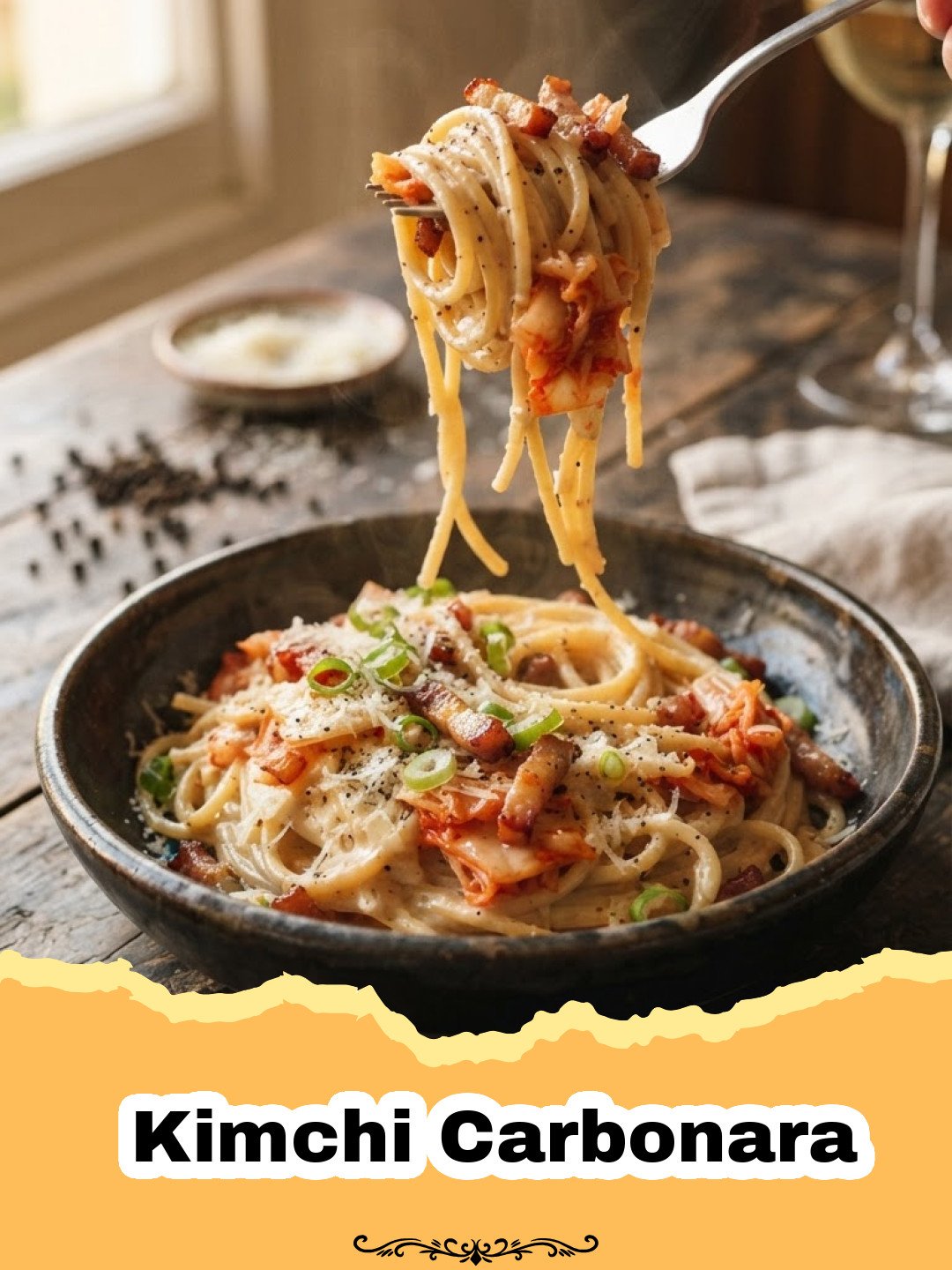
There are some dishes that just stick with you, weaving themselves into the fabric of your culinary memories. For me, one such dish is the incredible Kimchi Carbonara. I remember the first time I stumbled upon this concept. It was a chilly evening, I was home alone, and my fridge was looking rather sparse, save for a forgotten jar of tangy kimchi and a few eggs. Italian pasta night seemed out of reach, but my craving for something comforting and creamy was undeniable. Inspiration struck like a lightning bolt: what if I combined the rich, silky embrace of a classic carbonara with the vibrant, spicy kick of kimchi? It felt audacious, a culinary rebellion, but also utterly compelling. The first attempt was a glorious mess – a little too much kimchi juice, perhaps, and my eggs scrambled slightly. But the potential, oh, the potential was clear. Over the years, through countless experiments and a few minor kitchen disasters, I’ve honed this recipe into what I believe is the perfect balance of savory, spicy, and umami. It’s a dish that tells a story of cultural fusion, of making something extraordinary from humble ingredients, and of finding comfort in the most unexpected places. It’s become a go-to for busy weeknights, a showstopper for casual gatherings, and a true testament to the magic that happens when diverse flavors come together.
Why This Kimchi Carbonara is a Must-Try
- Unforgettable Flavor Fusion: This isn’t just pasta; it’s a symphony where the creamy, peppery notes of carbonara meet the fiery, fermented tang of kimchi. The combination is surprisingly harmonious and utterly addictive, offering a depth of flavor that’s both familiar and exhilaratingly new.
- Quick & Easy Weeknight Meal: Despite its sophisticated flavor profile, this Kimchi Carbonara comes together in under 30 minutes! It’s the perfect solution for those evenings when you crave something special but are short on time.
- Pantry-Friendly Ingredients: You likely have most of the core ingredients for Kimchi Carbonara already on hand. With just a few fresh additions, you can transform everyday staples into a gourmet experience.
- Customizable to Your Taste: Whether you prefer a milder kick or a full-on spicy explosion, this recipe is incredibly adaptable. Adjust the amount of kimchi, add a splash of gochujang, or even incorporate some crumbled bacon for extra depth.
Key Ingredient Notes
The success of any great recipe often hinges on understanding its core ingredients. For our amazing Kimchi Carbonara, a few components truly shine:
Kimchi: The Star of the Show
Not all kimchi is created equal, and for Kimchi Carbonara, the quality and age of your kimchi make a significant difference. You want a fermented napa cabbage kimchi that’s well-aged – at least a few weeks old, preferably. Older kimchi develops a deeper, more complex sour and umami flavor that stands up beautifully to the richness of the carbonara sauce. If your kimchi is too fresh, it might lack that distinctive tang. Don’t be afraid of the juice either! A little bit of kimchi juice adds an incredible depth of flavor and a lovely reddish hue to the sauce, enhancing the overall Kimchi Carbonara experience. When chopping, aim for bite-sized pieces that will meld well with the pasta.
Pecorino Romano (or Parmesan): The Salty Umami Backbone
While some carbonara recipes swear by Pecorino Romano, and others by Parmesan, for Kimchi Carbonara, I often lean towards Pecorino Romano for its sharper, saltier, and more pungent kick. This bold cheese can truly hold its own against the powerful flavors of the kimchi. If you prefer a slightly milder, nuttier profile, good quality Parmigiano-Reggiano is also an excellent choice. The key is to use freshly grated cheese, not pre-shredded, as it melts smoother and incorporates better into the emulsified sauce. The saltiness from the cheese is crucial, so taste before adding extra salt.
Eggs: The Creamy Heart
Eggs are the soul of carbonara, and in Kimchi Carbonara, they are no less vital. You need a combination of whole eggs and extra yolks. The yolks provide that luscious, creamy texture that defines carbonara, while the whole egg helps bind everything together. Always use high-quality, fresh eggs, as they form the base of your sauce. It’s essential to temper the eggs correctly by slowly adding hot pasta water, preventing them from scrambling. This technique ensures a silky, smooth sauce that coats every strand of pasta beautifully.
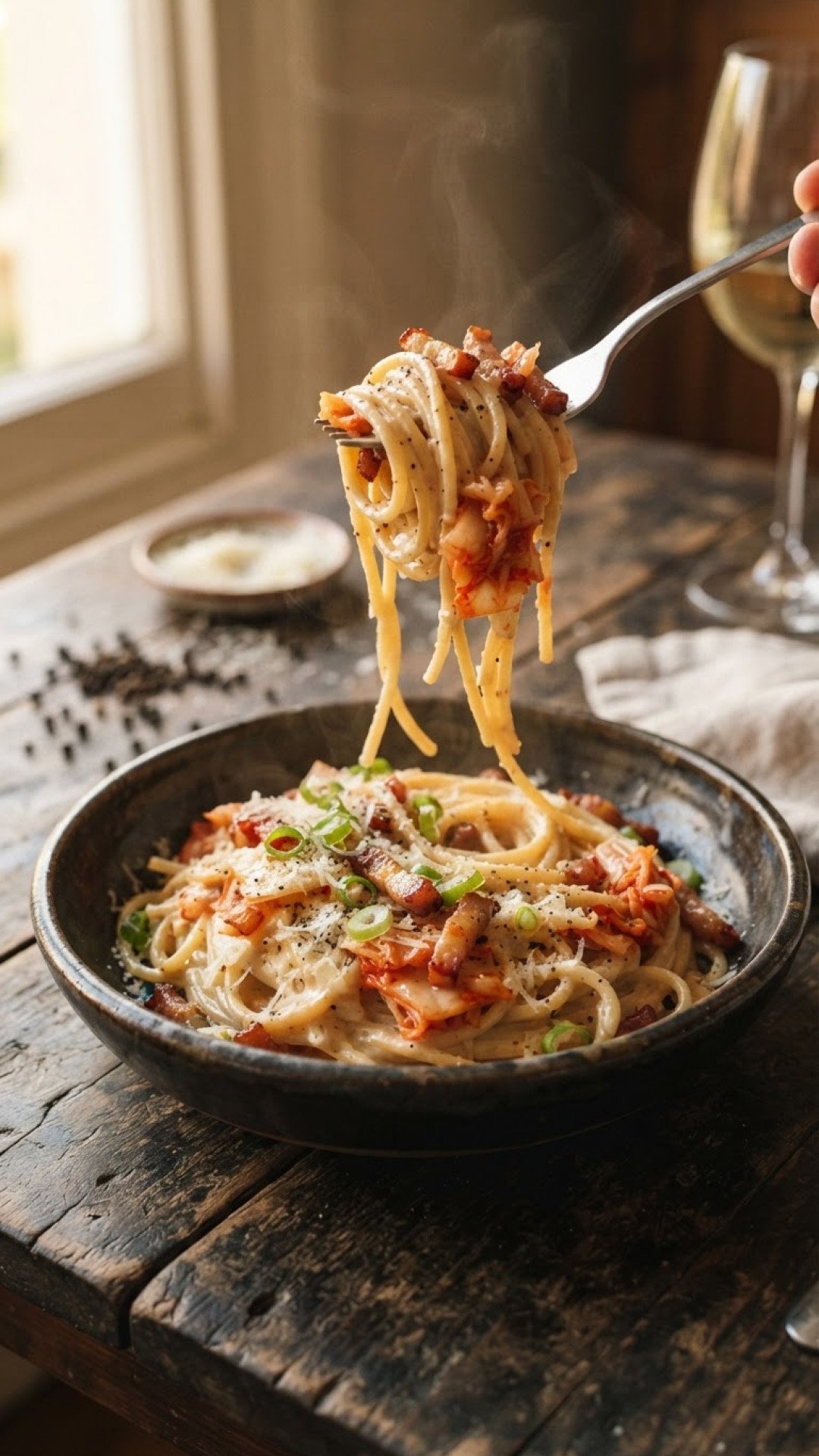
Step-by-Step Guide with Pro Tips
Ready to make the best Kimchi Carbonara you’ve ever tasted? Follow these steps carefully for a truly spectacular dish.
Step 1: Cook the Pasta. Bring a large pot of salted water to a rolling boil. Add your spaghetti or bucatini and cook according to package directions until al dente. This is crucial for carbonara; you want pasta with a slight bite. Before draining, reserve about 1.5 cups of the starchy pasta water. This liquid gold is essential for creating the creamy sauce.
Step 2: Prepare the Eggs and Cheese. While the pasta cooks, whisk together 2 whole eggs and 2 egg yolks in a medium bowl. Grate 1 cup of Pecorino Romano or Parmigiano-Reggiano cheese. Add half of the grated cheese to the egg mixture, along with plenty of freshly ground black pepper. Whisk until well combined. Set aside the remaining cheese for serving.
Step 3: Crisp the Bacon (Optional but Recommended). In a large skillet or pan, cook the diced bacon or pancetta over medium heat until crispy. Remove the bacon with a slotted spoon, leaving about 1-2 tablespoons of rendered fat in the pan. Set the crispy bacon aside on a paper towel-lined plate.
Step 4: Sauté the Kimchi. Add the chopped kimchi (and a tablespoon or two of its juice for extra flavor!) to the same skillet with the rendered bacon fat. Sauté for 3-5 minutes over medium heat, stirring occasionally, until the kimchi softens slightly and its flavors become more concentrated. This step is key for a truly flavorful Kimchi Carbonara.
Step 5: Combine Pasta and Kimchi. Once the pasta is al dente, drain it (remembering to reserve the pasta water!) and immediately add it to the skillet with the sautéed kimchi. Toss well to combine, ensuring the pasta is coated with the kimchi and any rendered fat. This helps season the pasta and cool it down slightly before adding the egg mixture.
Step 6: Create the Carbonara Sauce. This is the most critical step for perfect Kimchi Carbonara! Remove the skillet from the heat. Gradually add about 1/2 cup of the reserved hot pasta water to the egg and cheese mixture, whisking constantly. This tempers the eggs, preventing them from scrambling. Now, pour the tempered egg mixture over the pasta in the skillet. Toss vigorously and continuously with tongs, adding more pasta water a tablespoon at a time, until a creamy, emulsified sauce forms that coats all the pasta. The residual heat of the pasta and pan will cook the eggs just enough without scrambling them. Add the reserved crispy bacon now, if using.
Step 7: Season and Serve. Taste the Kimchi Carbonara and adjust seasoning if needed. The kimchi and cheese provide a lot of salt, so be careful when adding more. Serve immediately, garnished with the remaining grated cheese, extra black pepper, and a sprinkle of chopped green onions or fresh parsley for color and freshness. Enjoy your perfectly balanced and incredibly delicious Kimchi Carbonara!
Variations & Serving Suggestions
One of the joys of cooking is experimenting, and this Kimchi Carbonara is a fantastic canvas for your creativity. Here are some ideas to make it your own:
- Add a Protein Boost: For a heartier meal, consider adding cooked chicken, sliced pork belly, or even crispy tofu to your Kimchi Carbonara. Simply stir it in during the last step.
- Spice It Up: If you love heat, a teaspoon of gochujang (Korean chili paste) can be mixed into the kimchi as it sautés, or a dash of gochugaru (Korean chili flakes) can be sprinkled over the finished dish. A drizzle of chili oil also works wonders.
- Veggie Boost: Stir in some blanched asparagus, sautéed mushrooms, or wilted spinach with the kimchi for added nutrients and texture. For a vibrant green side, consider Roasted Garlic Parmesan Broccolini.
- Cheese Alternatives: While Pecorino and Parmesan are traditional, don’t be afraid to try other hard, salty cheeses if you have them. A little bit of aged cheddar can add a different depth.
- Serving Suggestions: Kimchi Carbonara is a complete meal on its own, but it pairs wonderfully with a simple, crisp green salad dressed with a light vinaigrette. A side of pickled radishes or cucumbers can also provide a refreshing counterpoint to the richness. For a complete Korean-fusion experience, you could even offer a small bowl of The Ultimate Homemade Tzatziki Sauce as a cooling dip, though unconventional, it surprisingly works with the spice!
- Leftovers: While carbonara is best eaten fresh, you can store leftovers in an airtight container in the fridge for up to 2 days. Reheat gently in a pan with a splash of water or broth to loosen the sauce. For easy storage, I love using Basics Glass Food Storage containers – they’re perfect for keeping food fresh and reheating directly.
Nutrition Information
| Nutrient | Amount Per Serving |
|---|---|
| Calories | 580 kcal |
| Carbohydrates | 65 g |
| Cholesterol | 220 mg |
| Total Fat | 25 g |
| Fiber | 4 g |
| Protein | 25 g |
| Saturated Fat | 12 g |
| Serving Size | 1.5 cups |
| Sodium | 1200 mg |
| Sugar | 5 g |
| Trans Fat | 0.5 g |
| Unsaturated Fat | 10 g |
There you have it – my tried-and-true recipe for Kimchi Carbonara! This dish truly represents the best of both worlds: the comforting familiarity of Italian pasta with the bold, exciting flavors of Korean cuisine. It’s a testament to how culinary boundaries can be blurred to create something utterly delicious and uniquely satisfying. Whether you’re a seasoned chef or a home cook looking for an adventure, I encourage you to try this Kimchi Carbonara. It’s more than just a meal; it’s an experience that will leave you craving more. Happy cooking, and don’t forget to share your creations!
FAQs
What kind of kimchi is best for Kimchi Carbonara?
For Kimchi Carbonara, it’s best to use well-fermented napa cabbage kimchi, ideally a few weeks old or more. This type of kimchi will have a deeper, more complex sour and umami flavor that stands up well to the rich carbonara sauce. Don’t forget to use a little of the kimchi juice too!
How do I prevent the eggs from scrambling in carbonara?
The key to preventing scrambled eggs in carbonara is tempering the egg mixture. Gradually whisk hot pasta water into the egg and cheese mixture before adding it to the pasta. Then, remove the pasta from direct heat and toss vigorously and continuously. The residual heat of the pasta and the pan will gently cook the eggs, creating a silky, emulsified sauce without scrambling.
Can I make Kimchi Carbonara vegetarian?
Absolutely! To make Kimchi Carbonara vegetarian, simply omit the bacon or pancetta. You can sautu00e9 the kimchi in olive oil instead of bacon fat. The dish will still be incredibly flavorful due to the kimchi, cheese, and eggs.
What’s the difference between Pecorino Romano and Parmigiano-Reggiano for this dish?
Pecorino Romano is a hard, salty sheep’s milk cheese with a sharper, more pungent flavor. Parmigiano-Reggiano is a cow’s milk cheese that is slightly milder and nuttier. For Kimchi Carbonara, Pecorino Romano’s bolder flavor often stands out better against the strong kimchi, but Parmigiano-Reggiano can also be used if you prefer a less intense cheesy note.
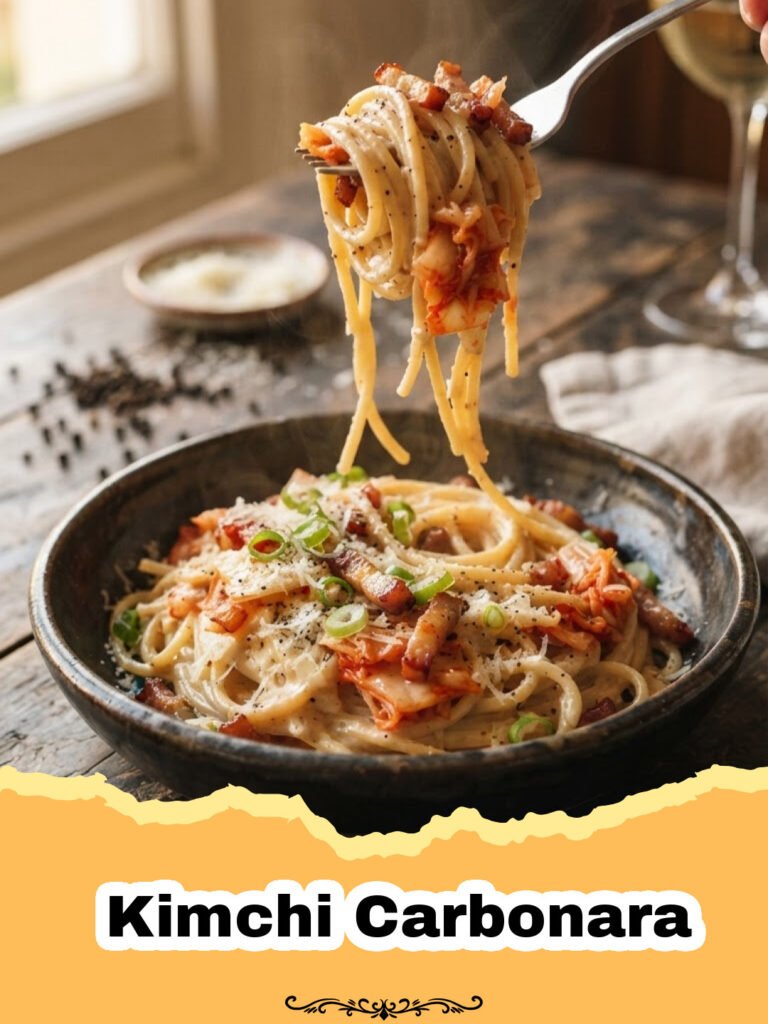
Kimchi Carbonara
A delightful fusion dish combining the creamy richness of classic Italian carbonara with the tangy, spicy kick of fermented Korean kimchi. This quick and easy recipe is packed with umami and flavor.
- Total Time: 30 minutes
- Yield: 4 servings 1x
Ingredients
12 oz (340g) spaghetti or bucatini
4 slices bacon or pancetta, diced (optional, but recommended)
1 cup chopped kimchi, well-fermented
2 large eggs
2 large egg yolks
1 cup grated Pecorino Romano or Parmigiano-Reggiano cheese, plus more for serving
1/2 teaspoon freshly ground black pepper, plus more for serving
2 green onions, chopped, for garnish (optional)
Salt for pasta water
Instructions
Step 1: Cook the Pasta. Bring a large pot of salted water to a rolling boil. Add spaghetti or bucatini and cook according to package directions until al dente. Reserve 1.5 cups of starchy pasta water before draining.
Step 2: Prepare the Eggs and Cheese. In a medium bowl, whisk together 2 whole eggs and 2 egg yolks. Stir in 1/2 cup of the grated Pecorino Romano/Parmesan cheese and 1/2 teaspoon of freshly ground black pepper. Set aside.
Step 3: Crisp the Bacon. In a large skillet over medium heat, cook diced bacon or pancetta until crispy. Remove bacon with a slotted spoon, leaving about 1-2 tablespoons of rendered fat in the pan. Set crispy bacon aside.
Step 4: Sauté the Kimchi. Add the chopped kimchi (and 1-2 tablespoons of its juice) to the skillet with the rendered fat. Sauté for 3-5 minutes, stirring occasionally, until softened and fragrant.
Step 5: Combine Pasta and Kimchi. Drain the al dente pasta (remembering the reserved water!) and immediately add it to the skillet with the sautéed kimchi. Toss well to combine and cool the pasta slightly.
Step 6: Create the Carbonara Sauce. Remove the skillet from heat. Gradually whisk about 1/2 cup of the hot reserved pasta water into the egg and cheese mixture to temper the eggs. Pour the tempered egg mixture over the pasta in the skillet. Toss vigorously and continuously with tongs, adding more pasta water a tablespoon at a time, until a creamy, emulsified sauce forms that coats all the pasta. Stir in the crispy bacon, if using.
Step 7: Season and Serve. Taste and adjust seasoning as needed. Serve the Kimchi Carbonara immediately, garnished with the remaining grated cheese, extra black pepper, and chopped green onions or fresh parsley.
Notes
For the best result, use well-fermented kimchi that has developed a good sour and umami flavor. Freshly grated cheese is essential for a smooth sauce. Don’t overheat the sauce when adding the eggs, as it can scramble them; the residual heat of the pasta is enough to emulsify the sauce. If you don’t have bacon, you can omit it or use a tablespoon of olive oil to sauté the kimchi instead.
- Prep Time: 10 minutes
- Cook Time: 20 minutes
- Category: Dinner Dishes
- Cuisine: Korean, Italian
Nutrition
- Serving Size: 1.5 cups
- Calories: 580 kcal
- Sugar: 5 g
- Sodium: 1200 mg
- Fat: 25 g
- Saturated Fat: 12 g
- Unsaturated Fat: 10 g
- Trans Fat: 0.5 g
- Carbohydrates: 65 g
- Fiber: 4 g
- Protein: 25 g
- Cholesterol: 220 mg
Keywords: kimchi carbonara, fusion pasta, korean italian, spicy pasta, creamy pasta, weeknight dinner, kimchi recipes, carbonara recipe, quick dinner