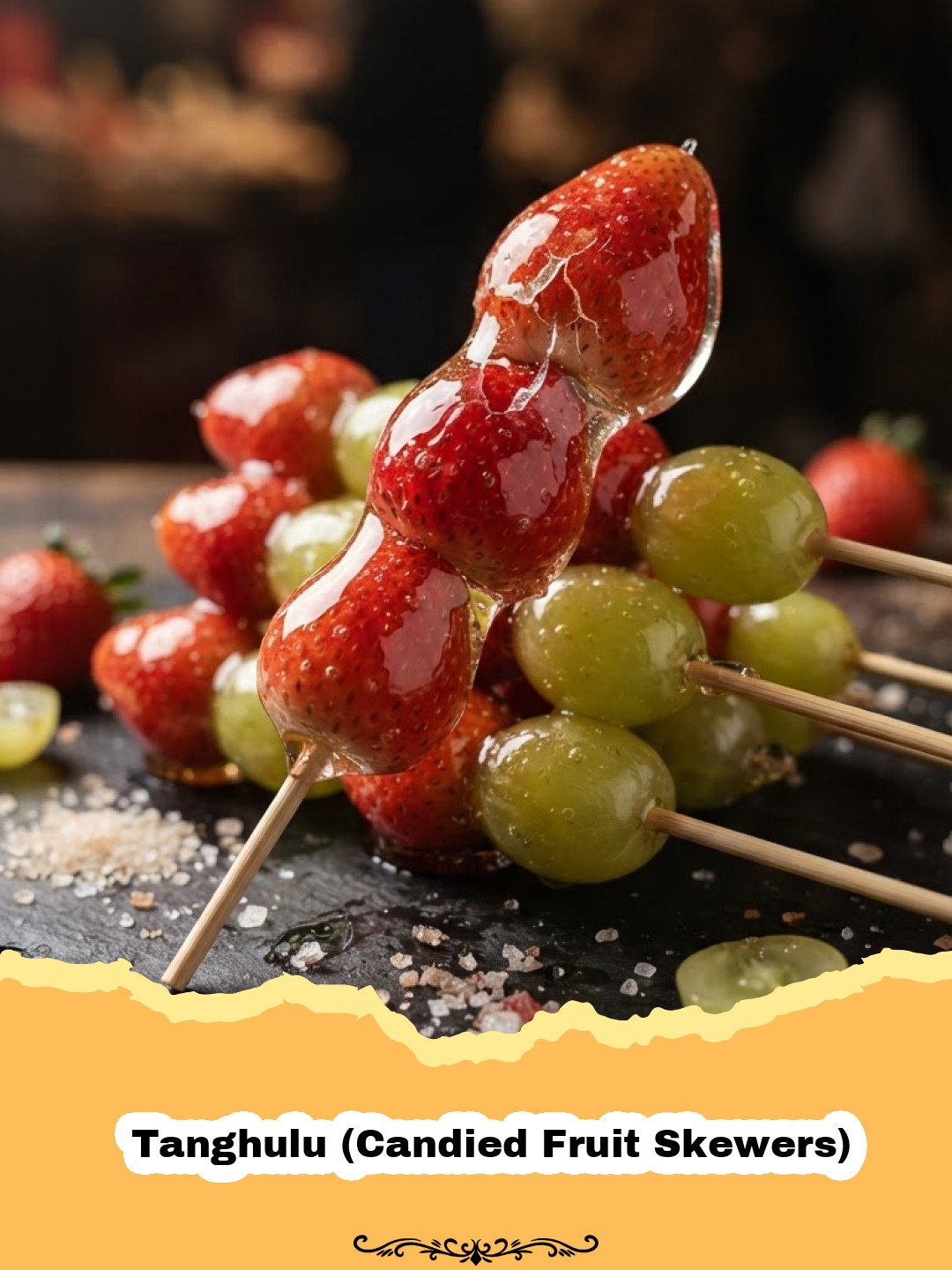
I remember the first time I saw Tanghulu (Candied Fruit Skewers) – it wasn’t on a bustling street food market in Beijing, as you might imagine. No, it was a viral video, scrolling through my feed late one night. A seemingly ordinary strawberry was dipped into a molten, clear syrup, pulled out, and in seconds, transformed into a glistening, jewel-like orb. The ASMR crunch that followed was utterly mesmerizing. I was hooked. It reminded me of my grandmother’s candied apples during autumn fairs, but with a delicate, almost ethereal quality. There was something so magical about that transformation, taking simple, fresh fruit and elevating it into a dazzling, crispy sweet treat. I tried to replicate it that very week, armed with a tiny saucepan and a bag of strawberries. The result? A sticky, clumpy mess that refused to harden. My kitchen looked like a sugar bomb had exploded, and my ‘candied’ fruit was more like ‘caramelized goo’. My first attempt at Tanghulu (Candied Fruit Skewers) was a complete disaster, a sticky testament to my impatience. But like any good food enthusiast, I was undeterred. I dove deep into researching the art and science behind this ancient Chinese delicacy. I learned about sugar stages, temperature control, and the critical role of humidity. It took several more attempts, a few burnt fingers, and a lot of wasted sugar, but finally, I achieved it: that perfect, glass-like crunch, shattering with every bite, giving way to the juicy sweetness of the fruit within. That moment, when the candy shell cracked with a satisfying *ping* and the fresh fruit burst forth, was pure bliss. It’s a treat that looks complex but is surprisingly simple once you understand a few key principles. And today, I’m so excited to share all my hard-won secrets with you so you can skip the sticky failures and go straight to the sweet success of making your own incredible Tanghulu (Candied Fruit Skewers). Get ready to impress yourself and everyone you share these with!
Why This Recipe is a Must-Try
- Visually Stunning: These glistening, crystal-coated fruits are an absolute showstopper, perfect for parties, celebrations, or just brightening up a dreary day.
- Satisfying Texture Play: The incredible crunch of the candy shell followed by the burst of juicy, fresh fruit creates an addictive textural experience unlike any other dessert.
- Highly Customizable: While traditional Tanghulu (Candied Fruit Skewers) often feature hawthorn berries, you can use almost any fruit, allowing for endless creativity and flavor combinations.
- Simple Ingredients, Big Impact: With just sugar, water, and fruit, you can create an elegant, impressive treat that tastes as good as it looks, making Tanghulu (Candied Fruit Skewers) a must-try.
Key Ingredient Notes
Crafting perfect Tanghulu (Candied Fruit Skewers) hinges on understanding a few key ingredients:
Sugar: The Star of the Show
The type of sugar you use matters. While granulated white sugar is standard, some recipes call for rock sugar for a slightly clearer finish. Consistency is key here. The sugar-to-water ratio is crucial for achieving that delicate, brittle candy shell. Too much water, and your syrup won’t harden properly; too little, and it might crystallize too quickly or burn. We’re aiming for a specific sugar concentration to reach the ‘hard crack’ stage, which gives Tanghulu (Candied Fruit Skewers) their signature crunch.
Fruit: Freshness and Dryness are Paramount
The success of your Tanghulu (Candied Fruit Skewers) largely depends on your fruit. Always use fresh, firm fruit that is free from blemishes. Strawberries, grapes, clementines, blueberries, and even kiwi slices work wonderfully. The most critical step with the fruit is ensuring it is absolutely, 100% dry. Any moisture on the fruit will prevent the candy coating from adhering properly and can lead to a sticky, gooey mess instead of a crisp shell. Wash your fruit thoroughly, then pat it dry with paper towels, and let it air dry for a bit longer if needed. You can even place them in front of a fan for a few minutes. If you’re a fan of unique, viral snack sensations that blend unexpected flavors, you absolutely must try making Tanghulu (Candied Fruit Skewers). This treat, much like the equally intriguing Ultimate Homemade Chamoy Pickle, proves that some of the most exciting flavors come from bold combinations.
Water: Just Enough to Dissolve
Water’s role in the syrup is simple: to dissolve the sugar. However, using too much or too little can throw off your sugar concentration. The ideal ratio allows the sugar to cook evenly to the hard crack stage without burning. It’s not about adding flavor; it’s about providing the medium for the sugar to transform. Don’t be tempted to add more water than specified, as it will significantly lengthen your cooking time and increase the risk of failure for your Tanghulu (Candied Fruit Skewers).
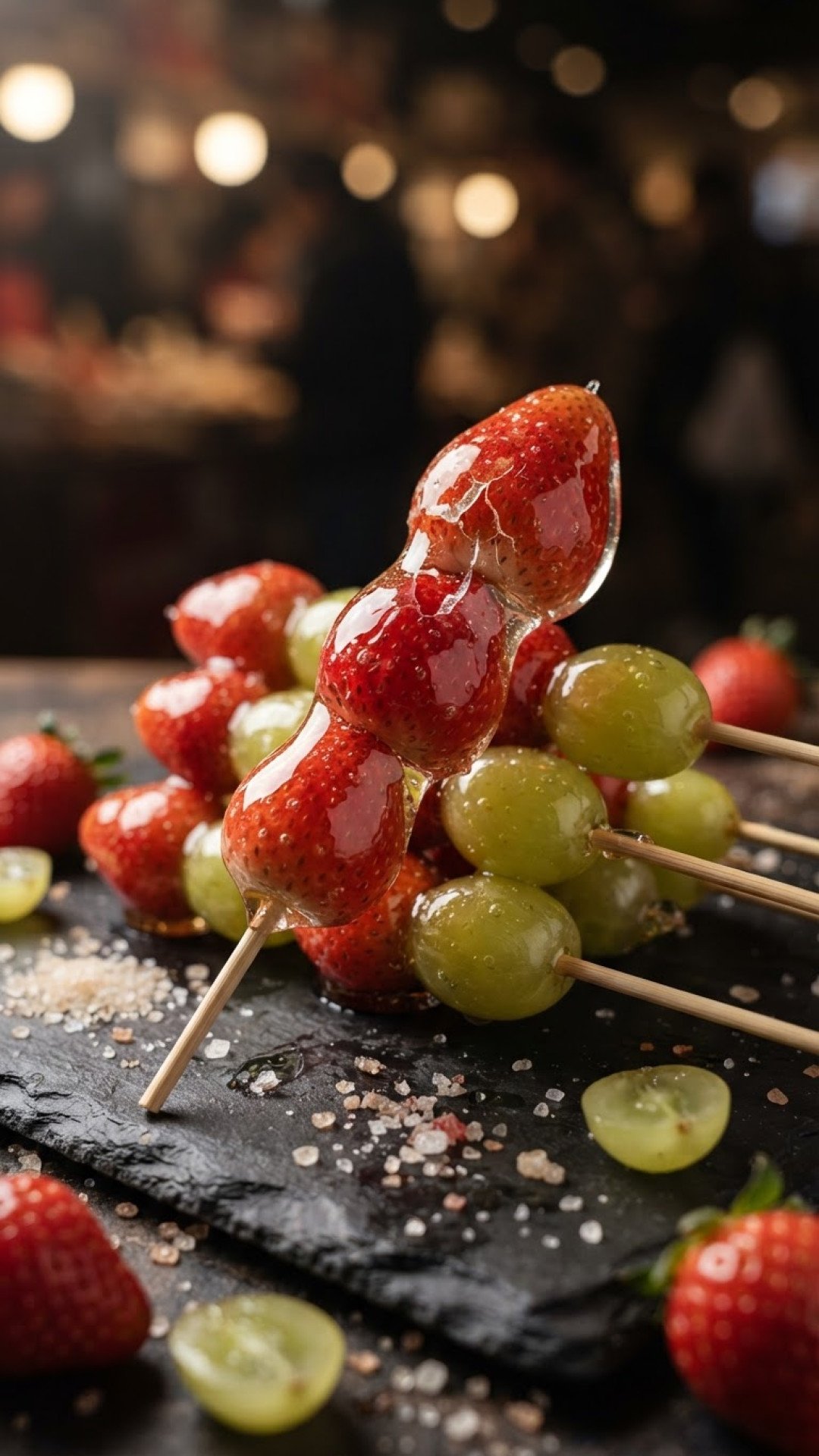
Step-by-Step Guide with Pro Tips
Making Tanghulu (Candied Fruit Skewers) might seem daunting, but with these detailed steps and pro tips, you’ll be a master in no time!
Preparation is Key
Gather Your Tools: A heavy-bottomed saucepan, a candy thermometer (non-negotiable!), skewers, parchment paper or a silicone mat, and a bowl of ice water (for testing the syrup). Make sure your workspace is clear and your fruit is prepped.
Preparing the Fruit
- Wash and thoroughly dry your chosen fruits. Remember, absolute dryness is critical for the candy to stick. Pat them well with paper towels.
- Gently skewer the fruit. Don’t overcrowd the skewers; typically 3-4 pieces per skewer is ideal, leaving space between each piece for even coating. If using larger fruits like strawberries, stick to fewer per skewer.
Crafting the Perfect Syrup
- In a heavy-bottomed saucepan, combine the granulated sugar and water. The heavy bottom helps distribute heat evenly and prevents burning.
- Place the saucepan over medium-high heat. Do NOT stir the mixture once it begins to heat up. Stirring can cause sugar crystals to form on the sides of the pan, leading to a cloudy or grainy candy coating. If you see crystals forming, you can gently brush them down with a wet pastry brush.
- Insert your candy thermometer. Bring the syrup to a boil. It will go through various stages: thread, soft ball, firm ball, hard ball, soft crack, and finally, hard crack.
- Monitor the temperature closely. For Tanghulu (Candied Fruit Skewers), you want the syrup to reach the ‘hard crack’ stage, which is typically between 300°F (149°C) and 310°F (154°C). The ideal temperature is often cited as 300-305°F (149-152°C).
- Once it hits the target temperature, immediately remove the pan from the heat. The residual heat will continue to cook the sugar, so act fast.
The Dipping Technique
- Working quickly, take one fruit skewer and dip it into the hot sugar syrup. Rotate the skewer to ensure an even, thin coating over all the fruit. A thin coating is what gives you that beautiful, shatteringly crisp result.
- Lift the skewer out, allowing any excess syrup to drip off back into the pan.
- Immediately place the coated fruit skewer onto the prepared parchment paper or silicone mat. Do not let them touch each other.
Cooling and Setting
- Allow the Tanghulu (Candied Fruit Skewers) to cool completely at room temperature. This usually takes about 10-15 minutes. As they cool, the candy shell will harden and become brittle.
- Avoid cooling in the refrigerator, as the humidity can make the candy sticky and lose its crispness.
Pro Tips for Success:
- Temperature Check: Calibrate your candy thermometer before you start.
- Patience is a Virtue: Don’t rush the syrup making. Let it reach the correct temperature without stirring.
- Work Fast: The sugar syrup hardens quickly, so have everything ready before you start dipping.
- Humidity is the Enemy: Make Tanghulu (Candied Fruit Skewers) on a dry day if possible. Humidity can turn your crunchy coating into a sticky mess.
- Safety First: Hot sugar syrup is extremely hot! Be very careful to avoid burns. Keep children and pets away from your workspace.
Variations & Serving Suggestions
While the classic Tanghulu (Candied Fruit Skewers) with strawberries or grapes is delightful, there’s a world of possibilities to explore!
Fruit Variations:
- Tropical Twist: Try pineapple chunks, mango cubes, or even small banana slices. Ensure tropical fruits are very dry.
- Citrus Burst: Small clementine segments or kumquats offer a lovely tangy counterpoint to the sweet candy.
- Berry Bonanza: Blueberries, raspberries, or blackberries on their own or mixed.
- Unique Combinations: Consider apple slices, kiwi rounds, or even small cherry tomatoes for an unexpected savory-sweet combination.
Flavor Boosters:
- Sesame Seeds: Sprinkle black or white sesame seeds onto the hot candy coating just after dipping for a nutty flavor and added crunch.
- Matcha Powder: Dust with a tiny bit of matcha for an earthy, slightly bitter note.
- Edible Glitter: For an extra festive touch, add edible glitter to the still-warm coating.
Serving Suggestions:
- Party Platter: Arrange a colorful display of different Tanghulu (Candied Fruit Skewers) for an eye-catching dessert or snack table. They’re perfect for birthdays, holidays, or any gathering where you want to impress.
- Elegant Dessert: Serve a single skewer alongside a scoop of vanilla bean ice cream or a dollop of whipped cream for a sophisticated finish to a meal.
- Snack Time Delight: Enjoy them as a refreshing and fun afternoon snack.
- Pair with a Drink: Tanghulu (Candied Fruit Skewers) pairs wonderfully with a light, refreshing drink. Imagine enjoying the sweet crunch of candied fruit alongside a tall glass of Refreshing Whipped Creamy Lemonade. The bright, tangy notes of the lemonade beautifully complement the sweetness of the candied fruit, creating a perfect balance for any occasion, from a casual afternoon snack to a sophisticated dessert.
Once your beautiful Tanghulu (Candied Fruit Skewers) are ready, you might wonder about storage. While best enjoyed fresh, if you have any leftovers or want to prep ingredients, storing them properly is key. Keep any leftover candied fruit in an airtight container in a cool, dry place – preferably not the fridge, as humidity is the enemy of that crisp candy shell. For general food prep and storage, I swear by high-quality glass containers. They’re fantastic for everything from pre-chopping fruit to storing other delicious ingredients. Check out these durable Basics Glass Food Storage containers; they’re a game-changer in my kitchen.
Nutrition Information
Here’s an estimated nutritional breakdown for one serving of Tanghulu (Candied Fruit Skewers), typically 2-3 candied fruit pieces, assuming a mix of fruits. Please note these are estimates and can vary based on fruit type and exact sugar coating thickness.
| Nutrient | Amount Per Serving |
|---|---|
| Calories | 180 kcal |
| Carbohydrates | 45 g |
| Sugar | 40 g |
| Protein | 1 g |
| Fat | 0 g |
| Saturated Fat | 0 g |
| Trans Fat | 0 g |
| Unsaturated Fat | 0 g |
| Fiber | 2 g |
| Cholesterol | 0 mg |
| Sodium | 2 mg |
Tanghulu (Candied Fruit Skewers) is primarily a source of carbohydrates from sugar and fruit. While it’s a sweet treat, the fruit does provide some natural vitamins and fiber!
And there you have it – your comprehensive guide to creating perfectly crunchy, absolutely irresistible Tanghulu (Candied Fruit Skewers) right in your own kitchen! From my initial sticky struggles to now making this delightful treat with confidence, it’s been a sweet journey, and I’m so happy to share it with you. Remember the key principles: dry fruit, precise sugar temperature, and quick work. Don’t be discouraged if your first attempt isn’t absolutely perfect; practice makes perfect, especially with candy making. Soon, you’ll be wowing everyone with your shimmering, glass-like Tanghulu (Candied Fruit Skewers). Enjoy the crunch!
FAQs
What kind of fruit is best for Tanghulu (Candied Fruit Skewers)?
The best fruits for Tanghulu (Candied Fruit Skewers) are firm, fresh, and low in water content. Popular choices include strawberries, grapes, hawthorn berries (traditional), clementine segments, and blueberries. The most important thing is to ensure the fruit is completely dry before dipping, as any moisture will prevent the candy from setting properly.
Why does my Tanghulu (Candied Fruit Skewers) turn sticky instead of crunchy?
There are a few reasons your Tanghulu (Candied Fruit Skewers) might be sticky: the sugar syrup didn’t reach the correct ‘hard crack’ temperature (300-305u00b0F or 149-152u00b0C), the fruit was not completely dry, or there’s too much humidity in the air. Ensure you use a candy thermometer, thoroughly dry your fruit, and ideally make them on a dry day.
Can I store Tanghulu (Candied Fruit Skewers) in the refrigerator?
It is generally not recommended to store Tanghulu (Candied Fruit Skewers) in the refrigerator. The humidity inside the fridge can cause the crisp candy shell to become sticky and lose its signature crunch. They are best enjoyed immediately after cooling. If you must store them, keep them in an airtight container at cool room temperature for a very short period (a few hours).
What is the secret to a perfectly clear candy coating for Tanghulu (Candied Fruit Skewers)?
The secret to a clear candy coating for Tanghulu (Candied Fruit Skewers) lies in two main factors: not stirring the sugar syrup once it starts boiling (to prevent crystallization) and reaching the precise hard crack stage temperature (300-305u00b0F). If sugar crystals form on the sides of your pan, gently brush them down with a wet pastry brush. Also, using fresh, good quality sugar helps.
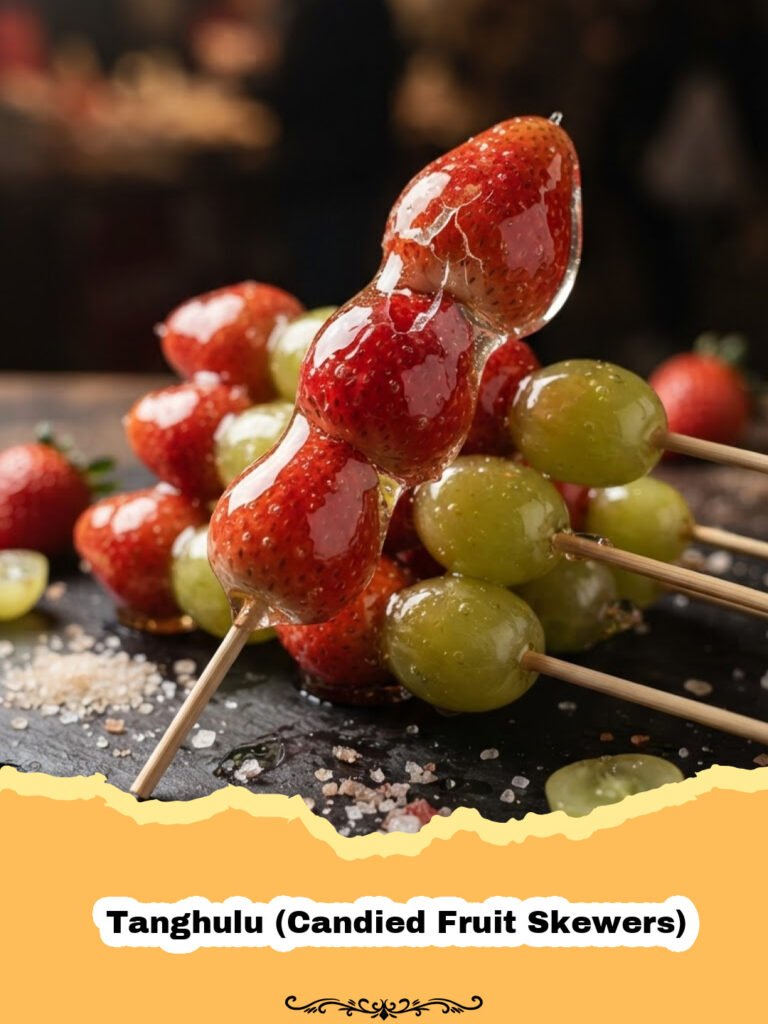
Tanghulu (Candied Fruit Skewers)
Tanghulu (Candied Fruit Skewers) are a traditional Chinese candied fruit snack that has captured hearts worldwide. Featuring fresh fruit coated in a shimmering, brittle sugar shell, these skewers offer an irresistible combination of juicy sweetness and a satisfyingly crisp crunch. Perfect for a unique dessert or a delightful party treat!
- Total Time: 45 minutes
- Yield: 8 servings (approx. 2-3 skewers per serving) 1x
Ingredients
2 cups granulated sugar
1 cup water
3 cups mixed fresh fruit (e.g., strawberries, grapes, clementine segments, blueberries), washed and thoroughly dried
8–10 bamboo skewers
Instructions
Step 1: Thoroughly wash and dry all your chosen fruits. It is absolutely crucial that the fruit is completely dry; any moisture will prevent the candy from adhering properly. You can pat them dry with paper towels and then let them air dry for an additional 10-15 minutes.
Step 2: Gently thread the dried fruit onto bamboo skewers. Don’t overcrowd them; leave a little space between each piece for even coating. Typically, 3-4 pieces of fruit per skewer work best.
Step 3: In a heavy-bottomed saucepan, combine the granulated sugar and water. Place the pan over medium-high heat. Do NOT stir the mixture once it begins to heat. Stirring can cause sugar crystals to form, making your candy coating cloudy or grainy. If crystals form on the sides of the pan, gently brush them down with a wet pastry brush.
Step 4: Insert a candy thermometer into the sugar syrup, ensuring it does not touch the bottom of the pan. Bring the syrup to a boil and continue cooking without stirring until the thermometer reads between 300°F (149°C) and 305°F (152°C). This is the ‘hard crack’ stage, essential for the brittle candy shell.
Step 5: Immediately remove the saucepan from the heat once it reaches the correct temperature. Have a sheet of parchment paper or a silicone mat ready on your countertop for cooling the candied fruit.
Step 6: Working quickly but carefully, take one fruit skewer and dip it into the hot sugar syrup. Rotate the skewer to ensure the fruit is evenly coated with a thin layer of candy. A thin coating gives the best crunch.
Step 7: Lift the skewer from the syrup, allowing any excess syrup to drip back into the pan for a moment. Then, immediately place the coated fruit skewer onto the prepared parchment paper or silicone mat.
Step 8: Repeat with the remaining fruit skewers, working quickly. If your syrup starts to harden too much, you can gently reheat it over low heat for a very short time, but be careful not to burn it.
Step 9: Allow the Tanghulu (Candied Fruit Skewers) to cool completely at room temperature for about 10-15 minutes. As they cool, the candy shell will harden and become beautifully brittle. Do not refrigerate, as humidity can make the candy sticky.
Step 10: Serve immediately and enjoy the satisfying crunch! These are best consumed fresh.
Notes
Humidity is the greatest enemy of Tanghulu. Try to make this on a dry day. Also, use a heavy-bottomed pan and a reliable candy thermometer for the best results. Do not stir the sugar syrup once it starts to boil to prevent crystallization.
- Prep Time: 30 minutes
- Cook Time: 15 minutes
- Category: Appetizers & Snacks
- Cuisine: Chinese
Nutrition
- Serving Size: 2-3 skewers
- Calories: 180 kcal
- Sugar: 40 g
- Sodium: 2 mg
- Fat: 0 g
- Saturated Fat: 0 g
- Unsaturated Fat: 0 g
- Trans Fat: 0 g
- Carbohydrates: 45 g
- Fiber: 2 g
- Protein: 1 g
- Cholesterol: 0 mg
Keywords: Tanghulu, Candied Fruit, Fruit Skewers, Chinese Dessert, Street Food, Crunchy Candy, Sweet Treat, Homemade Candy, Easy Dessert, Fruit Recipe