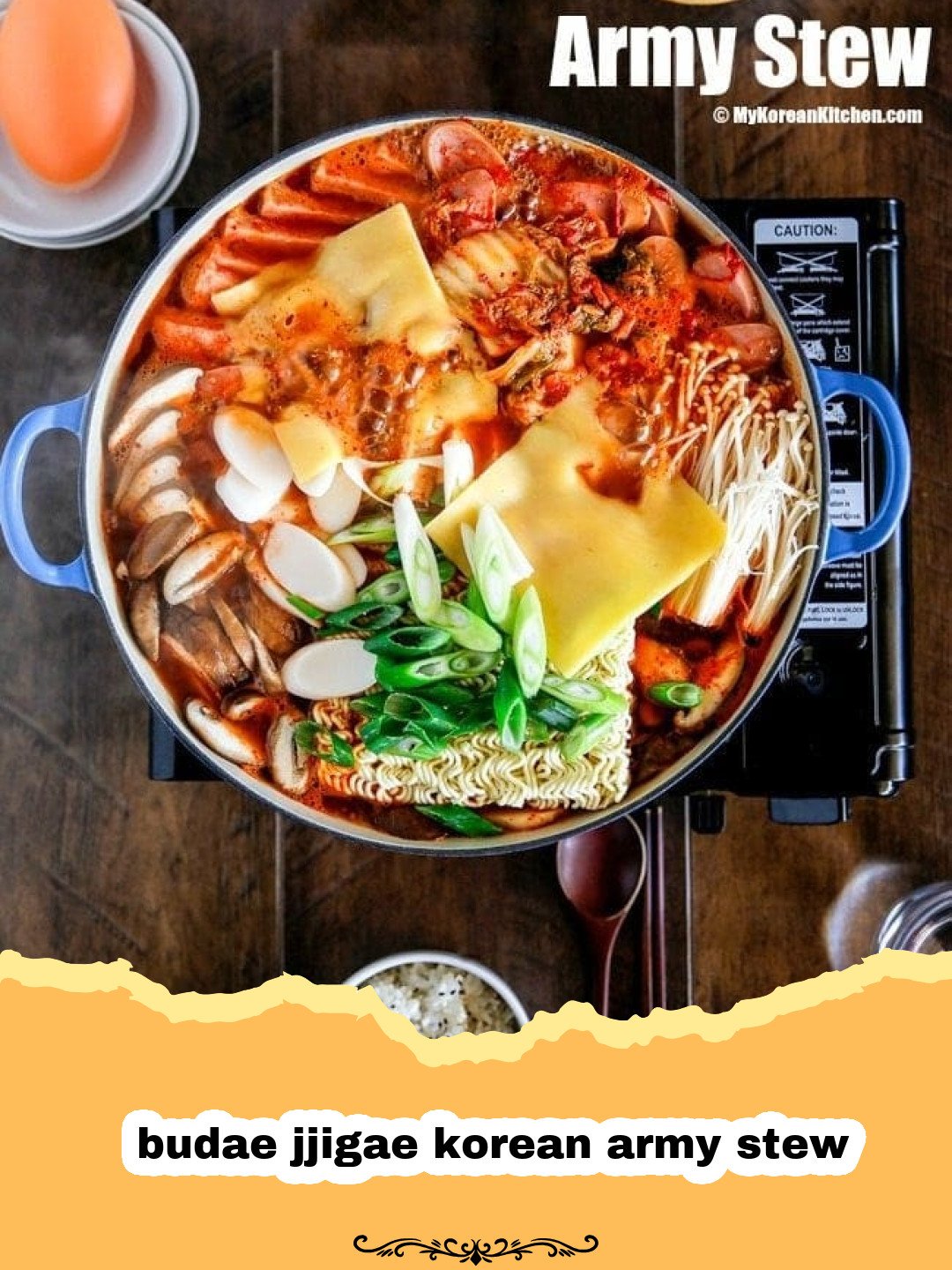
There are some dishes that just stick with you, weaving themselves into the fabric of your memories and becoming synonymous with comfort. For me, one such dish is the incredible budae jjigae korean army stew. I still remember the first time I tried it. It was a chilly evening, I was studying abroad in Seoul, and a local friend dragged me to a bustling, no-frills restaurant where the air was thick with savory aromas and the sound of bubbling pots. As the server placed a large, shallow pot overflowing with colorful ingredients – crimson kimchi, pale tofu, vibrant green onions, a mix of sausages, and those irresistible instant ramen noodles – on the tabletop burner, I was captivated. The broth began to simmer, releasing an intoxicating scent of spicy gochujang and rich umami. Each spoonful was a revelation: the chewy noodles, the tender meats, the tangy kimchi, all bathed in that gloriously spicy, warming broth. It wasn’t just a meal; it was an experience, a communal ritual that instantly made me feel at home in a foreign land. Since then, making budae jjigae has become my personal culinary hug, a dish I turn to whenever I need a taste of that heartwarming Korean hospitality and a belly full of pure, unadulterated comfort. It’s truly a celebration in a pot, and I can’t wait to share my ultimate recipe for this iconic stew with you.
Why This Recipe is a Must-Try
- Unbeatable Comfort Food: Budae jjigae korean army stew is the epitome of comfort food – warm, spicy, savory, and incredibly satisfying, perfect for chilly evenings or a gathering with loved ones.
- Flavor Explosion: A delightful balance of spicy gochujang, tangy kimchi, savory meats, and rich broth creates a complex flavor profile that will tantalize your taste buds with every bite.
- Highly Customizable: This stew is incredibly versatile! Feel free to add your favorite ingredients, making each pot of budae jjigae uniquely yours. It’s a great way to use up leftover bits in the fridge.
- Communal Eating Experience: Traditionally cooked and served right at the table, budae jjigae encourages sharing and conversation, making it a fantastic dish for entertaining or a cozy family meal.
- Surprisingly Easy to Make: Despite its impressive appearance and depth of flavor, making budae jjigae korean army stew is quite straightforward, making it accessible even for beginner cooks.
Key Ingredient Notes
The beauty of budae jjigae lies in its medley of ingredients, but a few stand out as essential for achieving that authentic, irresistible flavor.
Kimchi: The Heart of the Stew
No budae jjigae is complete without aged kimchi. The fermentation process gives kimchi its characteristic sour, tangy, and spicy notes, which are crucial for the stew’s depth of flavor. While fresh kimchi is delicious for eating straight, for budae jjigae, slightly older, more fermented kimchi works wonders. It breaks down more easily and infuses the broth with its rich umami and tartness. If your kimchi isn’t quite sour enough, you can add a splash of kimchi juice for an extra kick.
Gochujang & Gochugaru: The Spicy Soul
These two Korean chili powerhouses are non-negotiable for a proper budae jjigae korean army stew. Gochujang is a savory, sweet, and spicy fermented chili paste, providing a robust base flavor. Gochugaru, or Korean chili flakes, adds heat and a beautiful red hue without overwhelming the stew. Adjust the amounts to your spice preference, but don’t skip them entirely! They are what give budae jjigae its signature fiery character.
Instant Ramen Noodles: The Iconic Filler
While you might think of ramen as a standalone meal, in budae jjigae, instant ramen noodles are an absolute star. They soak up all the incredible broth, becoming deliciously chewy and flavorful. Discard the seasoning packets that come with the ramen, as we’re building our own rich broth. Any brand of instant ramen will do, but I often reach for Shin Ramyun or Neoguri for their fantastic texture and ability to absorb flavor.
Step-by-Step Guide with Pro Tips
Let’s dive into making your very own pot of incredible budae jjigae korean army stew. This recipe is designed to be straightforward yet packed with authentic flavor!
Step 1: Prepare Your Ingredients. Gather all your ingredients and slice them. Cut sausages and Spam into bite-sized pieces. Slice tofu, mushrooms, onions, and green onions. Have your kimchi ready. This prep work, known as mise en place, makes the cooking process seamless. If you enjoy other Korean dishes, preparing Korean Spicy Rice Cake Skewers alongside can be a fun way to use similar ingredients!
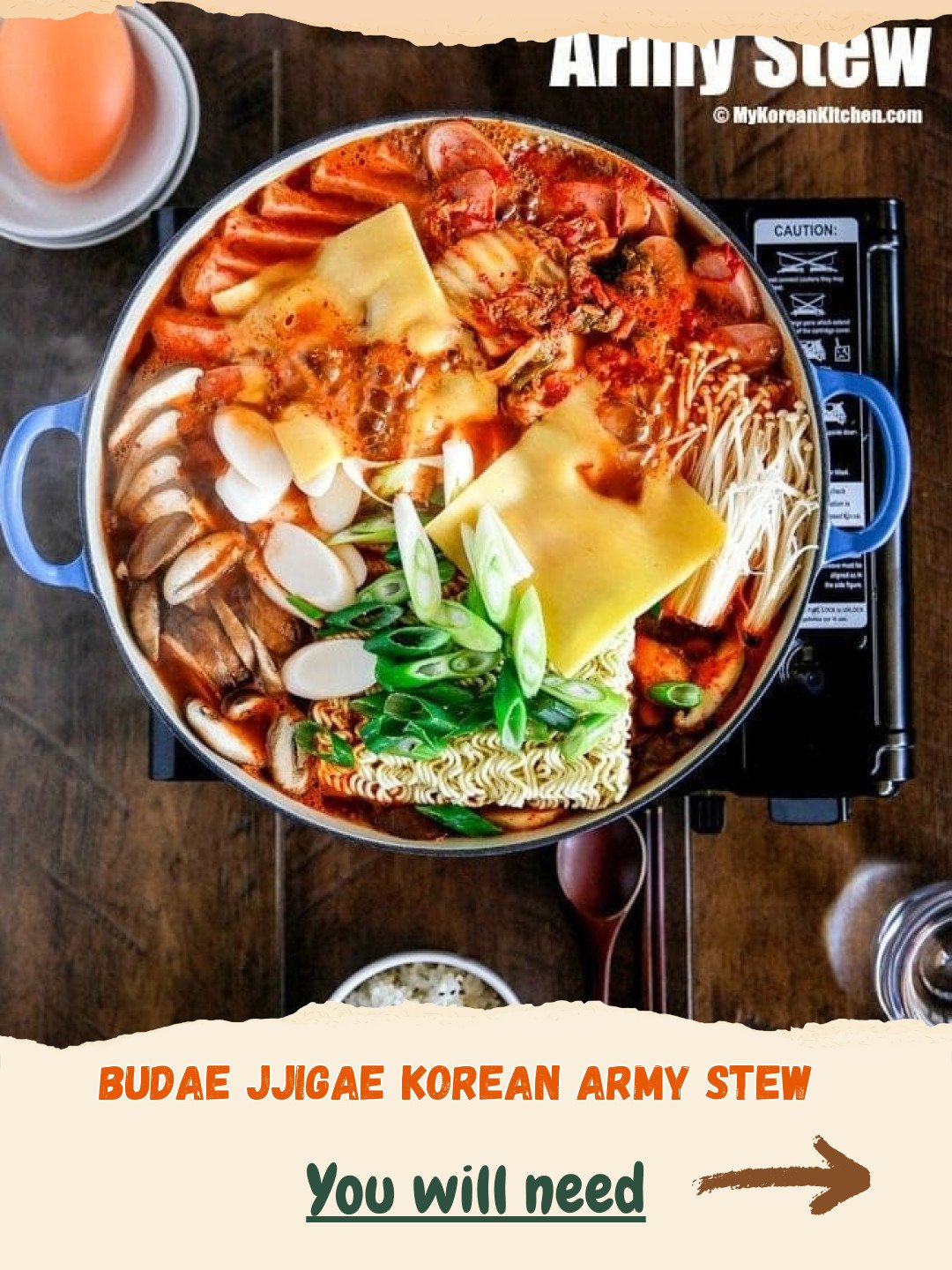
Step 2: Arrange Ingredients in a Pot. In a large, shallow pot (a wide pot is ideal for sharing), artfully arrange the sliced ingredients: kimchi, sausages, Spam, tofu, mushrooms, onions, and any other vegetables you’re using. Place the instant ramen noodles in one section, and cheese slices (if using) can go on top or around the edges.
Step 3: Prepare the Sauce. In a small bowl, whisk together the gochujang, gochugaru, soy sauce, minced garlic, sugar, and black pepper. This is the flavor bomb for your budae jjigae! You can also add a teaspoon of mirin for a touch of sweetness and depth.
Step 4: Add Broth and Sauce. Pour the broth (chicken, beef, or vegetable) over the arranged ingredients in the pot. Then, spoon the prepared sauce mixture right in the center of the pot. Don’t stir yet!
Step 5: Cook the Stew. Place the pot over medium-high heat. Bring the stew to a boil, then reduce the heat to medium-low and let it simmer. As it simmers, the sauce will melt into the broth, and the flavors will meld beautifully. You can gently stir the sauce into the broth after about 5-7 minutes of simmering.
Step 6: Add Final Touches. Once the ramen noodles are almost cooked (they should still have a slight bite), stir in the sliced green onions. If you added cheese, it should be melted and gooey by now. Continue to simmer until everything is cooked through and the flavors are fully developed. A delicious budae jjigae korean army stew is just moments away!
Step 7: Serve and Enjoy! Serve your bubbling budae jjigae korean army stew directly from the pot at the table. Encourage everyone to dig in, savoring the warmth and complex flavors. Don’t forget to have extra rice on hand to soak up the amazing broth. Any leftovers can be stored in airtight containers – I love using Basics Glass Food Storage for easy reheating!
Variations & Serving Suggestions
One of the best things about budae jjigae korean army stew is how wonderfully adaptable it is. Here are some ideas to make it your own:
- Add More Meat: Feel free to include thinly sliced pork belly, ground beef, or even hot dogs in addition to or instead of Spam and sausages.
- Vegetable Power-Up: Boost the nutrition and texture with more veggies like cabbage, enoki mushrooms, bean sprouts, or zucchini.
- Cheese Lovers Rejoice: Beyond American cheese slices, try adding mozzarella for extra meltiness or even a sprinkle of parmesan for a different kind of savory kick.
- Seafood Twist: A handful of shrimp or mussels can add a delicious oceanic flavor to your budae jjigae.
- Rice Cakes (Tteok): For a chewy texture, add some Korean rice cakes (tteokbokki tteok) to the stew. They soak up the broth wonderfully.
- Serving Suggestions: Always serve budae jjigae with plenty of steamed white rice to balance the spice and soak up the delicious broth. A refreshing side like a Japanese Cucumber Salad can also provide a nice contrast to the rich flavors.
Nutrition Information
Here’s a breakdown of the estimated nutrition information for one serving of Budae Jjigae Korean Army Stew. Please note these are estimates and can vary based on specific brands and quantities used.
| Nutrient | Amount (per serving) |
|---|---|
| Calories | 550 kcal |
| Carbohydrate Content | 60g |
| Cholesterol Content | 65mg |
| Fat Content | 25g |
| Fiber Content | 6g |
| Protein Content | 28g |
| Saturated Fat Content | 10g |
| Serving Size | 1 bowl |
| Sodium Content | 1800mg |
| Sugar Content | 8g |
| Trans Fat Content | 0.5g |
| Unsaturated Fat Content | 15g |
As you can see, budae jjigae korean army stew is a hearty and fulfilling meal, providing a good balance of macronutrients. The sodium content is typical for many flavorful stews, so enjoy in moderation, especially if you’re watching your intake.
Conclusion
There’s something truly magical about a steaming pot of budae jjigae korean army stew bubbling away on the table, filling the room with its incredible aroma. It’s more than just a meal; it’s an experience, a journey through history, and a testament to the power of delicious comfort food. Whether you’re a long-time fan or new to this iconic Korean dish, I hope this recipe inspires you to create your own heartwarming memories around a pot of budae jjigae. So gather your ingredients, call your friends and family, and get ready to dive into the ultimate Korean army stew. Happy cooking!
FAQs
What is Budae Jjigae Korean Army Stew?
Budae Jjigae, or Korean Army Stew, is a hearty and spicy Korean hot pot dish made with a variety of ingredients such as Spam, sausages, instant ramen noodles, kimchi, tofu, and vegetables, all simmered in a rich, spicy broth, often with gochujang (Korean chili paste).
Why is it called ‘Army Stew’?
The dish originated after the Korean War when food was scarce. Koreans used surplus foods from U.S. army bases, such as Spam, hot dogs, and canned beans, combining them with traditional Korean ingredients like kimchi and gochujang to create a filling and flavorful stew.
Can I customize the ingredients in Budae Jjigae?
Absolutely! Budae Jjigae is incredibly versatile. You can add other meats like ground beef or pork belly, different types of mushrooms, various vegetables (cabbage, bean sprouts), rice cakes (tteok), or even extra cheese. It’s designed to be adaptable to your preferences.
What should I serve with Budae Jjigae?
Budae Jjigae is best served hot and bubbling directly from the pot at the table. It’s traditionally eaten with steamed white rice to help balance the spicy and savory flavors. Simple side dishes like a refreshing cucumber salad or kimchi (if you want more!) also complement it well.
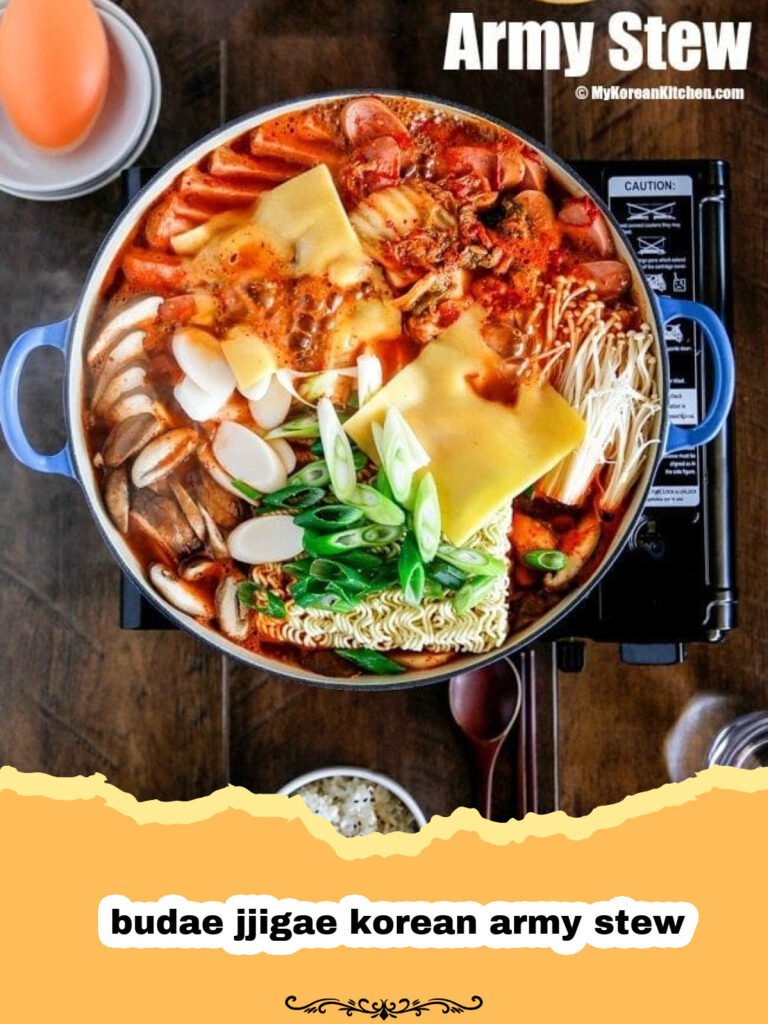
Ultimate Budae Jjigae Korean Army Stew
A hearty, spicy, and incredibly flavorful Korean army stew, packed with savory meats like Spam and sausages, tangy kimchi, chewy ramen noodles, fresh vegetables, and a rich, umami-laden broth. Perfect for sharing and a true comfort food.
- Total Time: 40 minutes
- Yield: 4–6 servings 1x
Ingredients
1/2 block (7 oz) firm or soft tofu, sliced into 1/2-inch thick pieces
1/2 cup aged kimchi, chopped
4 oz Spam, sliced into 1/4-inch thick pieces
4 oz sausages (e.g., hot dogs, Vienna sausages), sliced diagonally
1/2 cup sliced mushrooms (e.g., enoki, shiitake, oyster)
1/2 medium onion, thinly sliced
1 instant ramen noodle block (discard seasoning packet)
2–3 slices American cheese (optional)
2 green onions, sliced diagonally for garnish
4 cups chicken, beef, or vegetable broth
For the Sauce:
2 tbsp gochujang (Korean chili paste)
1 tbsp gochugaru (Korean chili flakes)
1 tbsp soy sauce
1 tbsp minced garlic
1 tsp sugar
1/4 tsp black pepper
Instructions
Step 1: Prepare all your ingredients. Slice the tofu, chop the kimchi, slice Spam and sausages, slice mushrooms and onion, and prepare the ramen noodles by discarding the seasoning packet. Set aside sliced green onions for garnish.
Step 2: In a large, shallow pot or wide pan, artfully arrange the sliced tofu, chopped kimchi, sliced Spam, sliced sausages, sliced mushrooms, and sliced onion. Place the instant ramen noodle block in an open section of the pot.
Step 3: In a small bowl, whisk together the gochujang, gochugaru, soy sauce, minced garlic, sugar, and black pepper to create the flavorful stew sauce.
Step 4: Pour the broth over the arranged ingredients in the pot. Then, spoon the prepared sauce mixture directly into the center of the pot.
Step 5: Place the pot over medium-high heat and bring the stew to a boil. Once boiling, reduce the heat to medium-low and let it simmer for about 10-15 minutes, or until the ingredients are cooked through and the broth is rich and flavorful. Gently stir the sauce into the broth after a few minutes of simmering.
Step 6: During the last 5 minutes of cooking, add the American cheese slices (if using) on top of the noodles or other ingredients, allowing them to melt into the stew. Stir in the sliced green onions just before serving.
Step 7: Serve the bubbling budae jjigae directly from the pot at the table, encouraging everyone to enjoy it communally with plenty of steamed white rice.
Notes
For an extra layer of flavor, you can add a tablespoon of baked beans to the stew. If you don’t have fresh mushrooms, dried shiitake mushrooms rehydrated in hot water work wonderfully, and you can even use the soaking liquid as part of your broth for added umami. Adjust the spice level by adding more or less gochugaru. This stew is excellent for meal prepping as well; simply portion it into containers for easy lunches!
- Prep Time: 15 minutes
- Cook Time: 25 minutes
- Category: Dinner Dishes
- Cuisine: Korean
Nutrition
- Serving Size: 1 bowl
- Calories: 550 kcal
- Sugar: 8g
- Sodium: 1800mg
- Fat: 25g
- Saturated Fat: 10g
- Unsaturated Fat: 15g
- Trans Fat: 0.5g
- Carbohydrates: 60g
- Fiber: 6g
- Protein: 28g
- Cholesterol: 65mg
Keywords: budae jjigae, korean army stew, spicy stew, korean hot pot, ramen stew, comfort food, kimchi stew, easy korean recipe