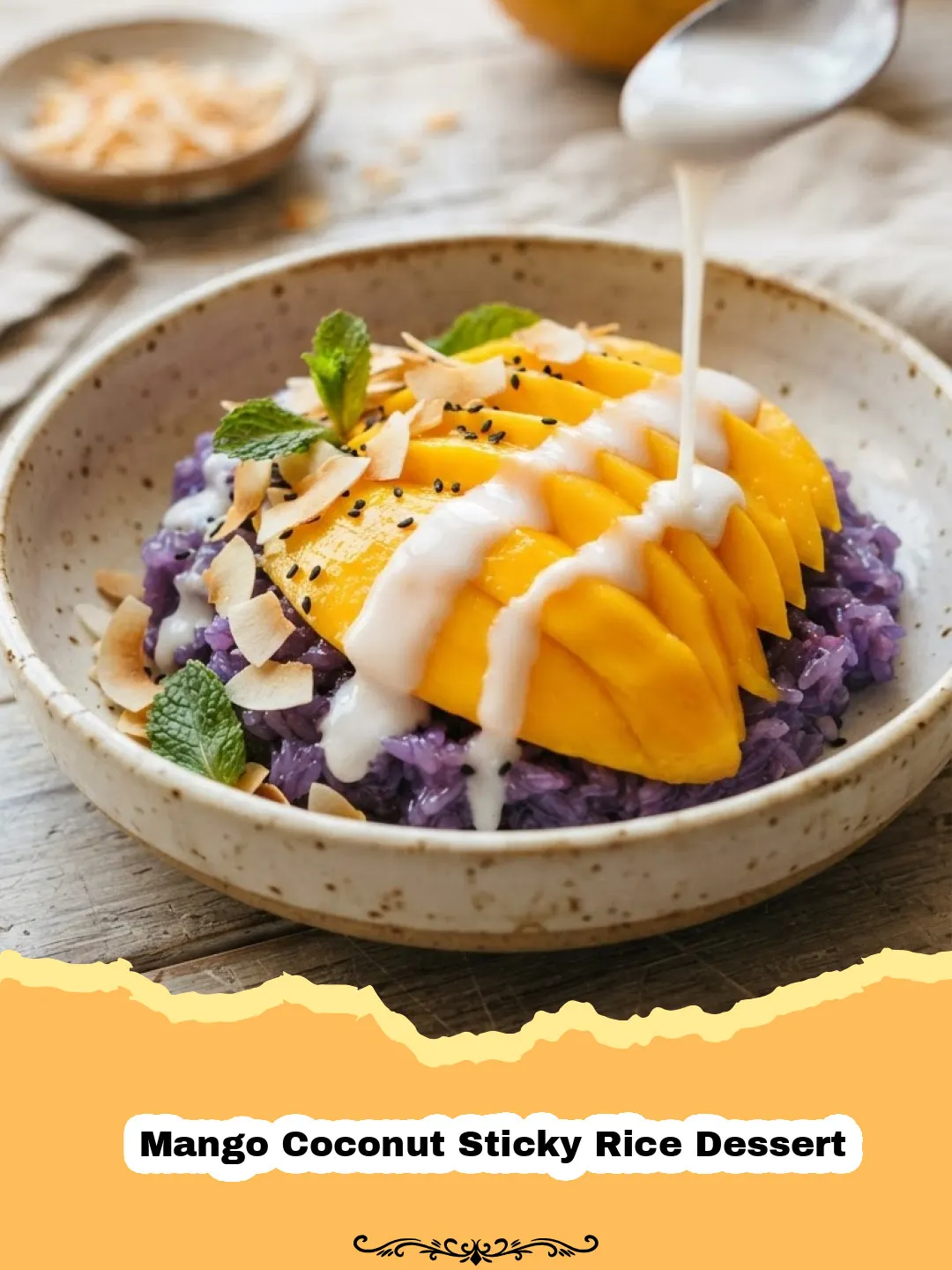
I still remember my first bite of Mango Coconut Sticky Rice Dessert. It was during a sweltering summer evening in Bangkok, perched on a tiny stool beside a bustling street food stall. The air was thick with exotic aromas, and then, this vibrant plate arrived: glistening sticky rice, drenched in rich coconut cream, crowned with perfectly ripe, golden mango slices. It wasn’t just a dessert; it was an experience, a symphony of sweet, creamy, and subtly salty flavors that instantly stole my heart. Ever since that moment, perfecting this beloved Thai classic in my own kitchen has been a culinary quest, and today, I’m thrilled to share my ultimate rendition of Mango Coconut Sticky Rice Dessert with you. It’s a simple pleasure that never fails to transport me back to those bustling streets, reminding me of the sheer joy a humble dish can bring.
Why This Recipe is a Must-Try
- Authentic Tropical Escape: This Mango Coconut Sticky Rice Dessert recipe brings the vibrant flavors of Southeast Asia right to your kitchen. Each bite is a mini-vacation, evoking sun-drenched beaches and exotic markets.
- Irresistibly Creamy & Sweet: The combination of perfectly cooked glutinous rice, rich coconut cream, and ripe, juicy mangoes creates a dessert that’s both comforting and exotic. The balance of textures and tastes is truly divine in this Mango Coconut Sticky Rice Dessert.
- Surprisingly Simple to Make: While it looks impressive and tastes incredibly gourmet, this Mango Coconut Sticky Rice Dessert is incredibly straightforward, even for novice cooks. Minimal ingredients, maximum flavor, and a rewarding cooking process!
- Naturally Gluten-Free & Vegan-Friendly: A delicious treat that caters to various dietary preferences, making it perfect for sharing with everyone. This makes the Mango Coconut Sticky Rice Dessert a versatile option for gatherings.
Key Ingredient Notes
Glutinous Rice (Sweet Rice)
The true star of our Mango Coconut Sticky Rice Dessert, glutinous rice is not just any rice. It’s a short-grain rice with a unique starch composition that makes it wonderfully sticky and chewy when cooked, rather than fluffy. This is crucial for achieving the characteristic texture of sticky rice. Do not substitute it with regular white rice or jasmine rice; you won’t achieve the signature texture, and your Mango Coconut Sticky Rice Dessert won’t be authentic. Look for it in Asian grocery stores, often labeled as “sweet rice” or “sticky rice.” Soaking it beforehand is an absolute must for even cooking and the best, most tender texture, allowing each grain to properly absorb moisture.
Full-Fat Coconut Milk
This is where the magic happens for the creamy, rich sauce that drenches our Mango Coconut Sticky Rice Dessert. Full-fat coconut milk provides the luscious texture and deep, sweet coconut flavor that lighter versions simply cannot replicate. Using anything less will compromise the richness and authenticity of the dish. Always shake the can well before opening to ensure the thick cream and thinner liquid are fully integrated, creating a smooth consistency. I highly recommend using a good quality, unsweetened full-fat brand for the best taste and creamiest finish. This ingredient is truly non-negotiable for an authentic and decadent experience that defines the perfect Mango Coconut Sticky Rice Dessert.
Ripe Mangoes
The type and ripeness of your mangoes make all the difference in this dessert, elevating it from good to truly sublime. For the ultimate Mango Coconut Sticky Rice Dessert experience, opt for varieties like Ataulfo (often called honey mangoes) or Alphonso mangoes when they are in season. These varieties are highly prized for their incredibly sweet, floral flavor and smooth, non-fibrous flesh. Make sure they are perfectly ripe – slightly soft to the touch with a sweet, fragrant aroma at the stem end. Underripe mangoes will be tart, firm, and fibrous, which can detract from the dessert’s balance, while overripe ones can be mushy. The natural sweetness of a perfectly ripe mango is the ideal complement to the rich coconut rice.
Step-by-Step Guide with Pro Tips
Creating the perfect Mango Coconut Sticky Rice Dessert is all about paying attention to a few key details. Follow these steps closely, and you’ll be enjoying a truly authentic, restaurant-quality tropical treat in no time!
Prep the Rice Right
Step 1: Rinse the glutinous rice thoroughly under cold running water until the water runs clear. This essential step removes excess starch, preventing the rice from becoming overly gluey. Soak the rinsed rice in cold water for at least 3-4 hours, or preferably overnight (up to 8 hours). This crucial pre-soaking ensures the rice cooks evenly and achieves that beautiful translucent, delightfully chewy texture. Do not skip this step for the best Mango Coconut Sticky Rice Dessert!
Perfect Steaming
Step 2: Drain the soaked rice completely. Prepare a steamer by lining the basket with a damp cheesecloth or a clean, porous kitchen towel, or even a banana leaf if you’re feeling authentic. Place the drained rice evenly in the steamer basket, spreading it into a thin layer for even cooking. Steam for 25-30 minutes, or until the rice is tender, translucent, and perfectly chewy. Ensure your steamer has enough water at the bottom and keep it at a rolling boil throughout the steaming process. Avoid over-steaming, which can make the rice too soft or mushy, losing its desirable chewiness.
Crafting the First Coconut Sauce
Step 3: While the rice is steaming, prepare the primary coconut cream sauce for the rice. In a small saucepan, combine 1.5 cups of the full-fat coconut milk with 1/2 cup granulated sugar and 1/4 teaspoon salt. Heat over medium-low heat, stirring constantly with a whisk or spoon, until the sugar is fully dissolved and the mixture is warm but not boiling. This is the main sweetener and moisturizer for our sticky rice, forming the heart of our Mango Coconut Sticky Rice Dessert. Remove from heat immediately once the sugar is dissolved to prevent the coconut milk from curdling.
Infusing the Rice
Step 4: Once the sticky rice is cooked, immediately transfer it to a large, heatproof bowl. Pour about 3/4 of the warm coconut cream sauce over the hot rice. Stir gently with a spoon or a paddle, using a folding motion to ensure every single grain of rice is thoroughly coated with the creamy sauce. Cover the bowl tightly with a lid or plastic wrap and let it sit undisturbed for 20-30 minutes. This resting period allows the rice to absorb all that creamy, sweet goodness, causing it to swell and become wonderfully glossy and infused with rich coconut flavor. This step is vital for the rice to fully absorb the sauce and become truly sticky, tender, and deeply flavored. If you happen to have any leftover sticky rice, store it in Basics Glass Food Storage containers in the fridge for up to two days, though this Mango Coconut Sticky Rice Dessert is best fresh.
The Drizzle of Delight
Step 5: While the rice is resting and absorbing flavor, prepare the garnishing coconut sauce. In a separate, very small saucepan, combine the remaining 1/2 cup of full-fat coconut milk with 2 tablespoons of granulated sugar and 1/4 teaspoon salt. Heat over low heat, stirring gently until the sugar dissolves completely. Bring the mixture to a very gentle simmer, then remove from heat. This slightly thinner, extra-sweet sauce will be generously drizzled over the finished Mango Coconut Sticky Rice Dessert, adding another layer of coconut richness and a beautiful sheen.
Mango Preparation
Step 6: Prepare the mangoes. Carefully peel the ripe mangoes using a vegetable peeler or a small knife. Slice the delicious flesh away from the large, flat pit, then cut into attractive, uniform slices or cubes. For the best Mango Coconut Sticky Rice Dessert, as mentioned, ensure your mangoes are perfectly ripe – soft but not mushy, and intensely sweet. The vibrant sweetness of the mangoes truly complements the rich, subtly salty coconut rice, creating a harmonious flavor profile.
Assemble and Serve
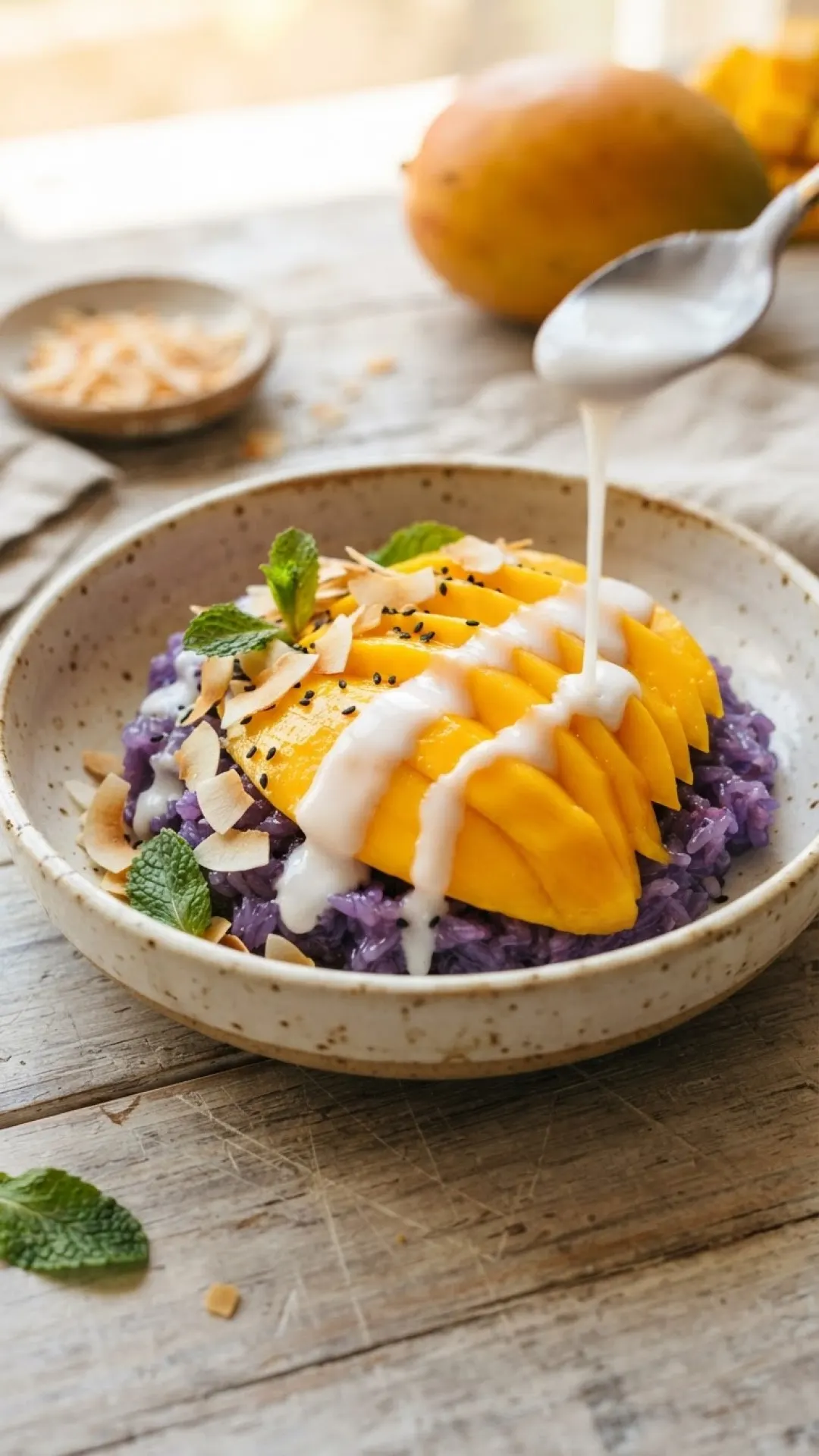
Step 7: To serve, scoop a generous portion of the warm, sweetened sticky rice onto individual plates. Artfully arrange the fresh mango slices beside the rice, creating an appealing presentation. Drizzle generously with the reserved garnishing coconut sauce. Optionally, sprinkle with a pinch of toasted sesame seeds for a subtle nutty crunch and garnish with a sprig of fresh mint for a pop of color and freshness. This Mango Coconut Sticky Rice Dessert is best enjoyed warm or at room temperature for the most delightful experience. Prepare to be transported!
Variations & Serving Suggestions
While the classic Mango Coconut Sticky Rice Dessert is a masterpiece of perfection on its own, there are always wonderful ways to personalize and elevate this tropical treat. Don’t be afraid to experiment and make it truly your own!
Fruit Alternatives
No mangoes? No problem! While mango is undoubtedly the traditional and most popular accompaniment, this sticky rice pairs wonderfully with other tropical fruits. Try it with ripe jackfruit for a different sweetness, durian (if you’re adventurous and love its pungent aroma!), or even sliced peaches or berries for a seasonal twist that still offers a delightful fruity contrast. For another delightful coconut and fruit combo that explores similar flavors, you might love my recipe for Tropical Bliss in a Bowl: My Favorite Coconut & Lime Sticky Rice with Fruit Salsa, offering a zesty twist on sticky rice.
Toasted Add-ins
Beyond the traditional toasted sesame seeds, consider other crunchy garnishes to add an interesting textural contrast to the soft rice and mango. Toasted coconut flakes (lightly browned in a dry pan), chopped toasted peanuts, or even a sprinkle of chopped pistachios can introduce new dimensions of flavor and crunch. A small scoop of high-quality coconut ice cream or a dollop of coconut whipped cream on the side can also take your Mango Coconut Sticky Rice Dessert to the next level of indulgence, especially on a hot day.
Sweetness Levels
The beauty of homemade Mango Coconut Sticky Rice Dessert is the ability to adjust the sweetness to your personal preference and the natural sweetness of your mangoes. If your mangoes are exceptionally sweet and ripe, you might find yourself reducing the sugar slightly in the coconut sauces. Conversely, if they’re a bit tart, a touch more sugar can help balance the flavors perfectly. Always taste and adjust! If you’re a fan of rich, sweet rice desserts with a creamy texture, you might also enjoy my Velvety Comfort: My Favorite Indonesian Sweet Coconut Rice Pudding (Bubur Sumsum), which offers a different but equally delightful take on sweet coconut rice.
Nutrition Information
Here’s a breakdown of the estimated nutritional values for one serving of our Mango Coconut Sticky Rice Dessert. Please note that these are estimates and can vary based on specific ingredient brands, the ripeness of your mangoes, and slight variations in portion sizes.
| Nutrient | Amount per serving |
|---|---|
| Calories | 550 kcal |
| Carbohydrates | 80 g |
| Cholesterol | 0 mg |
| Fat | 25 g |
| Fiber | 4 g |
| Protein | 5 g |
| Saturated Fat | 20 g |
| Serving Size | 1 serving |
| Sodium | 300 mg |
| Sugar | 45 g |
| Trans Fat | 0 g |
| Unsaturated Fat | 5 g |
Conclusion
And there you have it – your very own slice of tropical heaven with this irresistible Mango Coconut Sticky Rice Dessert! From the fragrant, perfectly cooked glutinous rice to the rich, creamy coconut sauce and the juicy, incredibly sweet mangoes, every element comes together to create a dessert that’s both deeply comforting and exhilaratingly exotic. It’s a dish that evokes sunny memories and promises pure culinary joy with every spoonful. This Mango Coconut Sticky Rice Dessert is more than just a recipe; it’s an invitation to experience a taste of Thailand, right in your home. So go ahead, whip up a batch, close your eyes, and let this delightful Mango Coconut Sticky Rice Dessert transport you to a blissful beachside escape. Happy cooking, and even happier eating!
FAQs
What kind of rice should I use for Mango Coconut Sticky Rice Dessert?
You must use glutinous rice, also known as sweet rice or sticky rice. Regular white rice or jasmine rice will not yield the correct sticky, chewy texture essential for this dessert. Look for it in Asian grocery stores for the best Mango Coconut Sticky Rice Dessert.
Can I make Mango Coconut Sticky Rice Dessert ahead of time?
While the sticky rice and coconut sauces can be prepared a few hours in advance, it’s best to assemble and serve the Mango Coconut Sticky Rice Dessert fresh. The mangoes should always be sliced just before serving to prevent browning and maintain their freshness and vibrant flavor.
What if I can’t find fresh ripe mangoes?
Fresh, ripe mangoes are truly key for the best Mango Coconut Sticky Rice Dessert. However, if they are out of season or unavailable, you can sometimes find good quality frozen mango chunks. Thaw them completely and pat dry before serving, though the texture might be slightly different from fresh.
Is Mango Coconut Sticky Rice Dessert vegan and gluten-free?
Yes, this traditional Mango Coconut Sticky Rice Dessert recipe is naturally vegan, as it uses full-fat coconut milk instead of dairy, and glutinous rice is a naturally gluten-free grain. Always double-check your coconut milk and other ingredients to ensure no hidden animal products or gluten-containing additives.
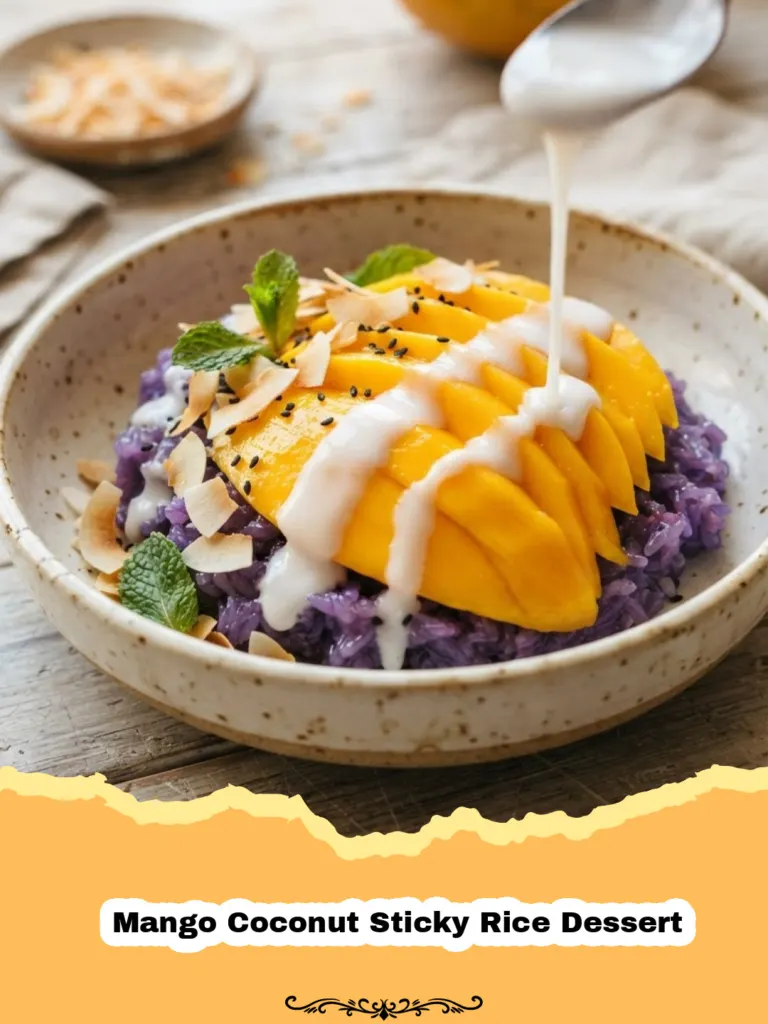
Perfect Mango Coconut Sticky Rice Dessert
A classic Thai dessert featuring sweet, glutinous rice cooked in coconut milk, served with fresh, ripe mango slices and an extra drizzle of sweetened coconut cream. It’s a harmonious blend of creamy, sweet, and fruity flavors that’s surprisingly easy to make.
- Total Time: 65 minutes
- Yield: 4 servings 1x
Ingredients
1.5 cups glutinous rice (sweet rice), short grain
2 cups full-fat coconut milk, divided
1/2 cup granulated sugar, plus 2 tbsp for garnish
1/2 teaspoon salt, divided
2 large ripe mangoes (preferably Ataulfo or Alphonso)
1 tbsp toasted sesame seeds (optional, for garnish)
Fresh mint leaves (optional, for garnish)
Instructions
Step 1: Rinse the glutinous rice thoroughly under cold running water until the water runs clear. This removes excess starch, preventing the rice from becoming too sticky. Soak the rinsed rice in cold water for at least 3-4 hours, or preferably overnight.
Step 2: Drain the soaked rice completely. Prepare a steamer by lining the basket with a damp cheesecloth or banana leaf. Place the drained rice evenly in the steamer basket. Steam for 25-30 minutes, or until the rice is tender, translucent, and perfectly chewy. Ensure your steamer has enough water and keep it at a rolling boil throughout.
Step 3: While the rice is steaming, prepare the coconut cream sauce for the rice. In a small saucepan, combine 1.5 cups of the full-fat coconut milk with 1/2 cup granulated sugar and 1/4 teaspoon salt. Heat over medium-low heat, stirring constantly, until the sugar is fully dissolved and the mixture is warm but not boiling. Remove from heat.
Step 4: Once the sticky rice is cooked, immediately transfer it to a heatproof bowl. Pour about 3/4 of the warm coconut cream sauce over the hot rice. Stir gently with a spoon or a paddle, ensuring every grain of rice is coated. Cover the bowl with a lid or plastic wrap and let it sit for 20-30 minutes to allow the rice to absorb all the creamy goodness. The rice will swell and become wonderfully glossy.
Step 5: While the rice is resting, prepare the garnishing coconut sauce. In a separate small saucepan, combine the remaining 1/2 cup of full-fat coconut milk with 2 tablespoons of granulated sugar and 1/4 teaspoon salt. Heat over low heat, stirring until the sugar dissolves. Bring to a very gentle simmer, then remove from heat. This sauce will be drizzled over the finished dessert.
Step 6: Prepare the mangoes. Peel the ripe mangoes carefully. Slice the flesh away from the pit, then cut into attractive, uniform slices or cubes. For the best Mango Coconut Sticky Rice Dessert, make sure your mangoes are perfectly ripe – soft but not mushy, and intensely sweet.
Step 7: To serve, scoop a generous portion of the warm, sweetened sticky rice onto individual plates. Arrange the fresh mango slices artfully beside the rice. Drizzle generously with the reserved garnishing coconut sauce. Optionally, sprinkle with toasted sesame seeds and garnish with a sprig of fresh mint. Enjoy your homemade Mango Coconut Sticky Rice Dessert!
Notes
For the best results, use good quality full-fat coconut milk and very ripe, sweet mangoes. Ataulfo or Alphonso mangoes are highly recommended for their buttery texture and intense sweetness. Serve warm or at room temperature.
- Prep Time: 20 minutes
- Cook Time: 45 minutes
- Category: Sweet Breakfasts
- Cuisine: Thai
Nutrition
- Serving Size: 1 serving
- Calories: 550 kcal
- Sugar: 45 g
- Sodium: 300 mg
- Fat: 25 g
- Saturated Fat: 20 g
- Unsaturated Fat: 5 g
- Trans Fat: 0 g
- Carbohydrates: 80 g
- Fiber: 4 g
- Protein: 5 g
- Cholesterol: 0 mg
Keywords: Mango Coconut Sticky Rice Dessert, Thai dessert, sweet sticky rice, mango dessert, coconut milk recipe, glutinous rice, Thai sweet rice, vegan dessert, gluten-free dessert, tropical dessert