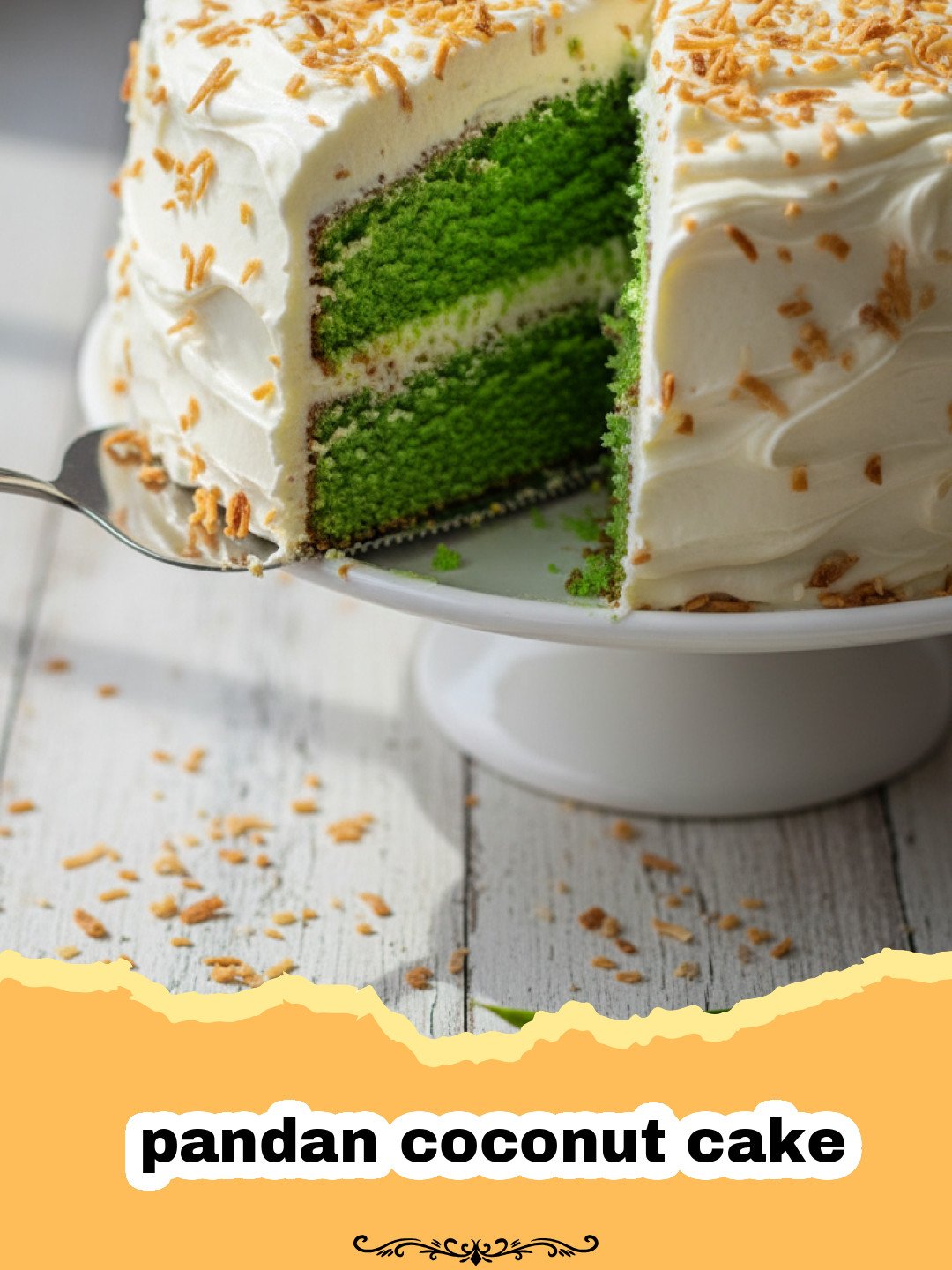
This pandan coconut cake is the kind of dessert that instantly transports you to a sun-drenched tropical paradise with just one bite. My first encounter with the enchanting aroma of pandan was in a small, humid kitchen in Southeast Asia, where my grandmother was tying long, blade-like green leaves into intricate knots to toss into a pot of simmering rice. The scent—a heavenly mix of vanilla, toasted nuts, and fresh grass—filled the house, signaling something special was coming. When she finally presented her signature pandan coconut cake, its vibrant green hue was so striking I almost didn’t want to eat it. But when I did, the combination of the light, airy sponge and the rich, creamy essence of coconut changed my perspective on baking forever. This recipe is my attempt to recreate that nostalgia and share the magic of ‘the vanilla of the East’ with you. Whether you are a seasoned baker or a curious beginner, this cake is a rewarding project that yields a show-stopping result.
Why This Recipe is a Must-Try
- Unique Natural Flavor: Unlike standard vanilla or chocolate cakes, the pandan coconut cake offers a sophisticated, botanical flavor profile that is both refreshing and deeply comforting.
- Breathtaking Visuals: The natural chlorophyll from the pandan leaves creates a stunning emerald green color that looks incredible on any dessert table without the need for artificial dyes.
- Perfect Texture Balance: By using a chiffon-style method, we achieve a crumb that is incredibly light and fluffy, yet moist enough to melt in your mouth thanks to the addition of rich coconut milk.
- Crowd-Pleasing Aroma: The scent of this cake baking in your oven is better than any scented candle; it creates an inviting, cozy atmosphere that guests will notice the moment they walk in.
Key Ingredient Notes
To make the perfect pandan coconut cake, the quality of your ingredients is paramount. First and foremost is the pandan itself. While fresh leaves are the gold standard for extraction, many home bakers find that a high-quality pandan paste or extract provides a more concentrated flavor and that iconic green color. If you are using fresh leaves, you will need to blend them with a small amount of water and strain them to create a potent juice.
Secondly, the coconut milk should be full-fat and unsweetened. The fat content in the coconut milk is what provides the ‘tender’ in our tender crumb. Low-fat versions often lead to a drier, less flavorful cake. Much like The Ultimate Earl Grey Pound Cake Recipe, which relies on the infusion of tea for its character, this cake relies on the harmony between the leaf essence and the creamy coconut base. Finally, ensure your eggs are at room temperature. Cold eggs will not whip to the same volume, and volume is the secret to the chiffon’s ethereal height.
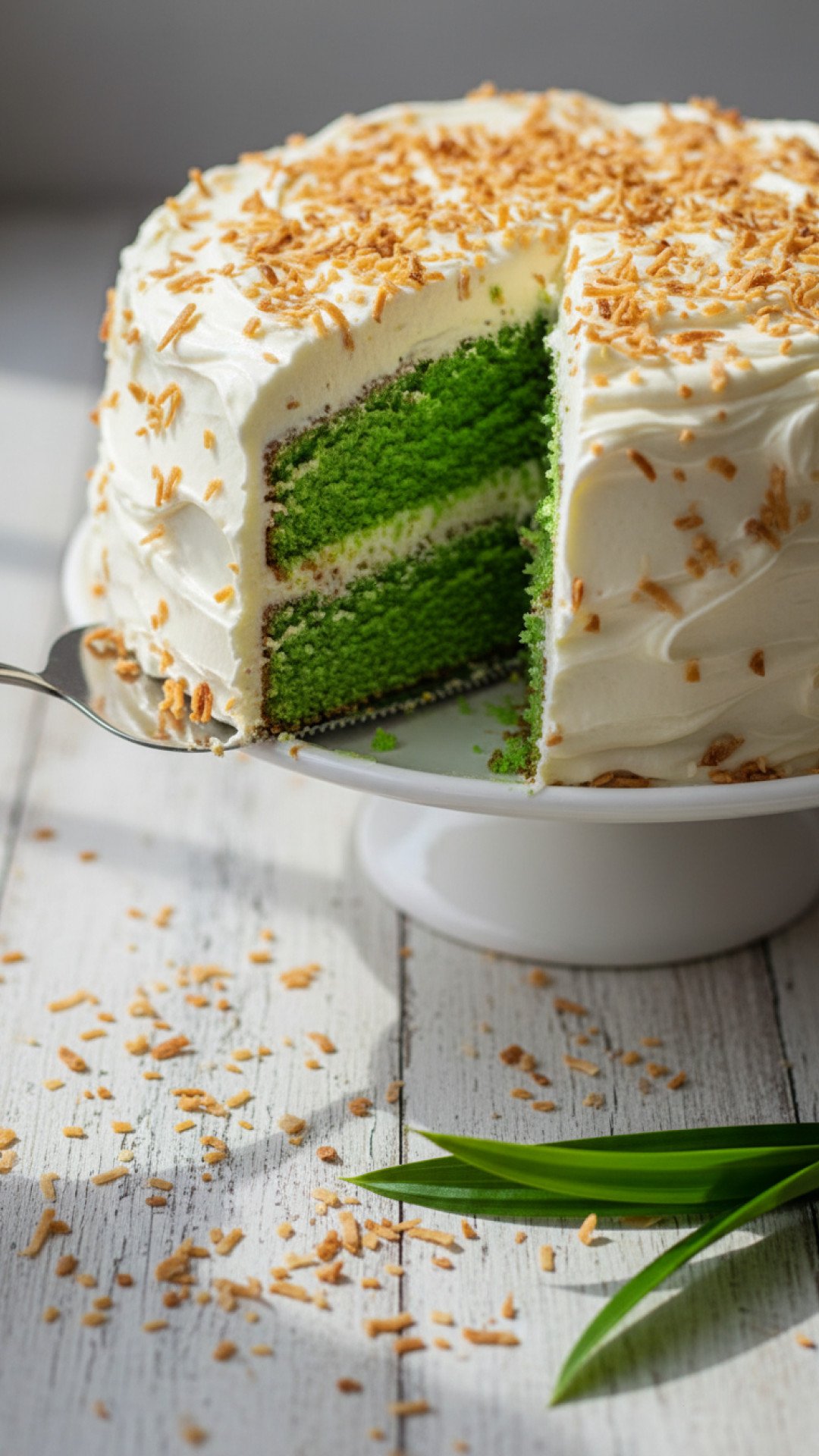
Step-by-Step Guide with Pro Tips
Baking a pandan coconut cake requires a bit of finesse, especially when it comes to maintaining the aeration of the egg whites. If you enjoy the delicate process of making fruit-based desserts, you might find similarities to The Most Flavorful Apple Almond Cake in terms of achieving that perfect moisture balance.
Preparing the Base
Begin by whisking together your dry ingredients: cake flour, baking powder, and a pinch of salt. In a separate large bowl, combine the egg yolks, sugar, coconut milk, oil, and pandan extract. Whisk until the mixture is smooth and vibrant green. Slowly sift the dry ingredients into the green mixture, folding gently until just combined. Do not overmix at this stage, or you risk developing too much gluten, which results in a tough cake.
Mastering the Meringue
The soul of the pandan coconut cake lies in the meringue. In a clean, grease-free bowl, beat the egg whites with a pinch of cream of tartar until soft peaks form. Gradually add the remaining sugar and continue beating until stiff, glossy peaks form. When you lift the whisk, the peak should stand straight up without drooping. This structure is what allows the cake to rise and stay airy.
Folding and Baking
Gently fold the meringue into the pandan batter in three batches. Use a spatula to cut through the center and lift from the bottom, rotating the bowl as you go. This preserves the air bubbles. Pour the batter into an ungreased tube pan. It is crucial not to grease the pan, as the cake needs to ‘climb’ the walls to rise. Bake until a skewer comes out clean and the top springs back when touched. Once removed from the oven, immediately invert the pan and let it cool completely upside down to prevent the cake from collapsing under its own weight.
Variations & Serving Suggestions
The beauty of the pandan coconut cake is its versatility. For a more decadent treat, you can frost the cake with a coconut cream cheese frosting or a simple gula melaka (palm sugar) glaze. If you prefer a lighter touch, a dusting of powdered sugar and a side of fresh mango or lychee works beautifully. You can even bake the batter in cupcake tins for portable, tropical treats.
For those who love to experiment, try adding a layer of shredded sweetened coconut between the layers if you are making a layer cake. This adds a delightful textural contrast to the soft sponge. If you have leftovers, they keep wonderfully when stored properly. I recommend using high-quality containers like Basics Glass Food Storage to keep the cake moist and prevent it from absorbing other fridge odors.
Nutrition Information
| Nutrient | Amount per Serving |
|---|---|
| Calories | 285 kcal |
| Carbohydrate Content | 38g |
| Cholesterol Content | 55mg |
| Fat Content | 14g |
| Fiber Content | 1g |
| Protein Content | 5g |
| Saturated Fat Content | 8g |
| Serving Size | 1 slice (1/12th of cake) |
| Sodium Content | 120mg |
| Sugar Content | 22g |
| Trans Fat Content | 0g |
| Unsaturated Fat Content | 6g |
Conclusion
Mastering the pandan coconut cake is a journey into the heart of Southeast Asian dessert culture. Its unique flavor and cloud-like texture make it a standout choice for any occasion, from afternoon tea to birthday celebrations. By following these steps and paying close attention to the meringue, you will create a masterpiece that is as beautiful as it is delicious. I hope this pandan coconut cake brings as much joy to your kitchen as it has to mine over the years. Happy baking!
FAQs
Can I use pandan extract instead of fresh leaves for pandan coconut cake?
Yes, you can absolutely use pandan extract or paste. In fact, many professional bakers prefer it for its consistent flavor and the vibrant green color it provides. Use about 1-2 teaspoons for this recipe.
Why did my pandan coconut cake collapse after baking?
The most common reason a chiffon cake collapses is not cooling it upside down. Because the structure is so light, it needs to hang to maintain its volume until it is completely cool. Also, ensure you do not grease the pan.
How do I store leftover pandan coconut cake?
Store leftovers in an airtight container at room temperature for up to 2 days, or in the refrigerator for up to 5 days. For best results, use glass storage to keep the cake fresh and prevent odors from entering.
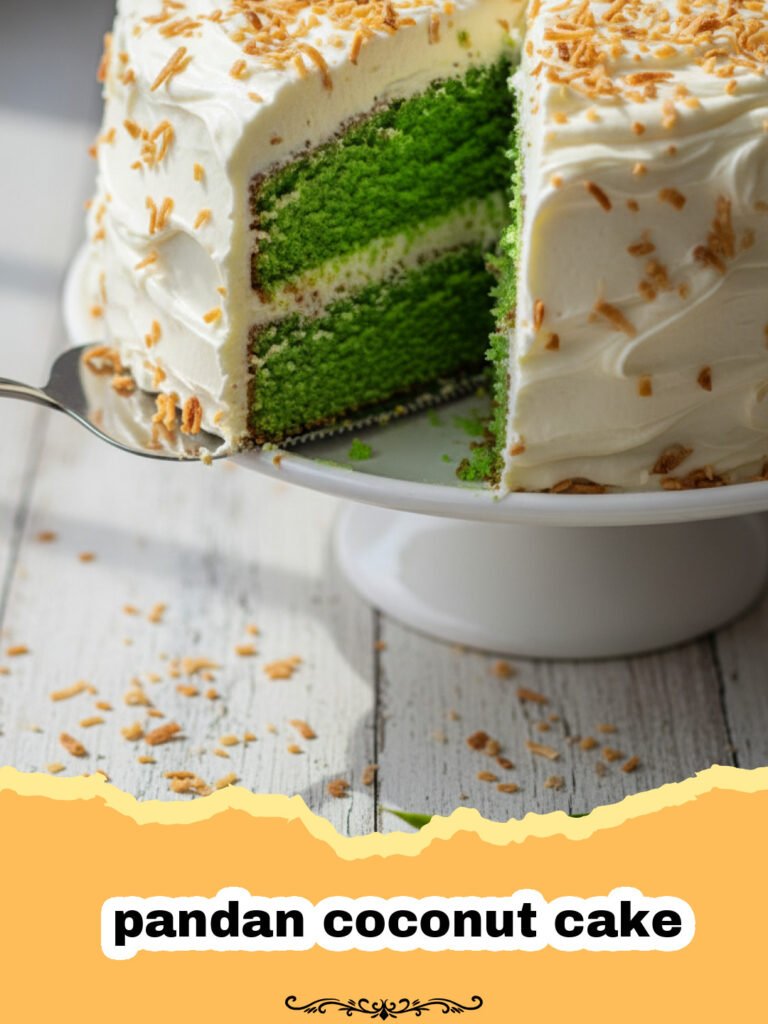
The Ultimate Pandan Coconut Cake
A light and airy chiffon-style pandan coconut cake infused with the tropical flavors of fresh pandan and rich coconut milk.
- Total Time: PT1H15M
- Yield: 12 servings 1x
Ingredients
2 cups cake flour, sifted
1.5 cups granulated sugar, divided
1 tablespoon baking powder
1/2 teaspoon salt
6 large egg yolks, room temperature
6 large egg whites, room temperature
3/4 cup full-fat coconut milk
1/2 cup vegetable oil
2 teaspoons pandan paste or 1/4 cup fresh pandan juice
1/2 teaspoon cream of tartar
Instructions
Step 1: Preheat your oven to 325°F (165°C). Ensure you have a 10-inch tube pan ready, but do not grease it.
Step 2: In a large bowl, whisk together the sifted cake flour, 1 cup of sugar, baking powder, and salt.
Step 3: Create a well in the center of the dry ingredients and add the egg yolks, coconut milk, vegetable oil, and pandan paste. Whisk until the batter is smooth and free of lumps.
Step 4: In a separate, perfectly clean glass or metal bowl, beat the egg whites with the cream of tartar on medium speed until foamy.
Step 5: Gradually add the remaining 1/2 cup of sugar to the egg whites while increasing the speed to high. Beat until stiff, glossy peaks form.
Step 6: Gently fold about 1/4 of the egg whites into the pandan batter to lighten it. Then, fold in the remaining whites in two batches using a gentle over-and-under motion until no white streaks remain.
Step 7: Pour the batter into the ungreased tube pan and smooth the top with a spatula. Tap the pan on the counter once or twice to release large air bubbles.
Step 8: Bake for 50-55 minutes, or until the top of the cake is golden brown and a wooden skewer inserted into the center comes out clean.
Step 9: Immediately invert the pan onto a wire rack or a bottle neck. Let the cake cool completely in the inverted position for at least 1-2 hours before removing it from the pan.
Notes
Always use a non-greased tube pan for this recipe. The cake needs to stick to the sides to rise properly. If using fresh pandan juice, reduce the coconut milk by 2 tablespoons.
- Prep Time: PT25M
- Cook Time: PT50M
- Category: Baked Goods
- Cuisine: Southeast Asian
Nutrition
- Serving Size: 1 slice
- Calories: 285 kcal
- Sugar: 22g
- Sodium: 120mg
- Fat: 14g
- Saturated Fat: 8g
- Unsaturated Fat: 6g
- Trans Fat: 0g
- Carbohydrates: 38g
- Fiber: 1g
- Protein: 5g
- Cholesterol: 55mg
Keywords: pandan coconut cake, chiffon cake, tropical cake, southeast asian dessert, green cake