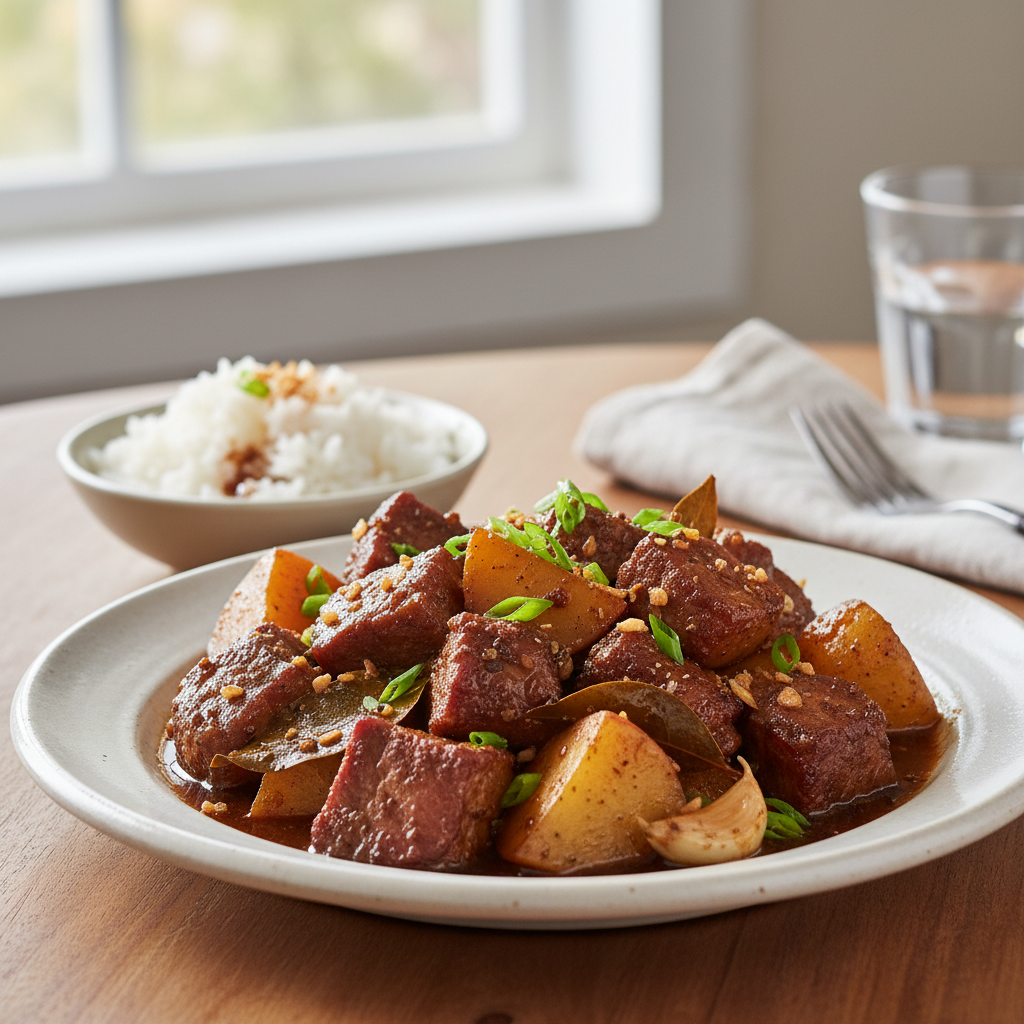
Pork Adobo is a classic Filipino dish, beloved for its incredible blend of savory, tangy, and subtly sweet flavors. This version, enhanced with humble potatoes, takes comfort food to a whole new level. The magic happens with a simple yet powerful combination of soy sauce, vinegar, and garlic, creating a rich sauce that truly defines Filipino cuisine. Adding potatoes isn’t just a filler; they absorb all those delightful flavors like a sponge, making every bite a tender, savory experience. Want to elevate the dish even further? Using pork belly introduces a luscious richness that melts in your mouth, though pork shoulder also works wonderfully for a balanced bite.
Cooking Pork Adobo might seem intricate, but it’s surprisingly straightforward. Whether you opt for a traditional stovetop simmer or a hands-off slow cooker approach, the results are always a deeply satisfying meal. This dish stands out as a true star among Filipino pork recipes, delivering a cozy, heartwarming hug from your kitchen. We’ll guide you through every step, offering tips and ideas to make your pork adobo tastier and truly unforgettable!
Key Takeaways
- Pork Adobo is a beloved Filipino pork recipe renowned for its perfect balance of savory and tangy flavors.
- The dish features a rich sauce crafted from soy sauce, vinegar, and garlic, with potatoes added for a unique, flavor-absorbing twist.
- For an extra layer of richness, consider using pork belly when you make pork adobo.
- Achieve a flavorful adobo sauce by simmering the pork in soy sauce and vinegar until tender.
- Don’t hesitate to experiment with different pork cuts to make your adobo recipe even more delicious and personalized.
Introduction to Pork Adobo with Potatoes
Embarking on the culinary journey of Pork Adobo with Potatoes is like diving headfirst into a fiesta of flavors! This iconic Filipino dish, deeply rooted in history and tradition, is a testament to how simple ingredients can create a symphony for the senses. Enriched with aromatic spices, sharp vinegar, and umami-rich soy sauce, it creates a savory melody that’s hard to resist. The inclusion of potatoes in this Filipino pork recipe not only adds a comforting starchiness but also thickens the sauce and absorbs its complex flavors, turning every forkful into a delightful treat.
Imagine tender, succulent pork bathing in a mouth-watering adobo sauce, with soft potatoes soaking up all that goodness. It’s a taste sensation that’s truly unique! And if you’re looking for ideas to make your pork adobo tastier, a little secret is to marinate the pork longer. This simple step can be a game-changer, infusing the meat with even more depth and flavor before it even hits the heat.
Did you know that Filipino pork dishes like this one are more than just meals? They’re an invitation to gather, share stories, and craft beautiful memories around the table. The aroma alone can stir up quite an appetite and fill your home with warmth. So, the next time you’re craving something rich, fulfilling, and utterly delicious, remember Pork Adobo with Potatoes. It’s a delightful dish that promises to charm your taste buds and leave you wanting more.
Essential Ingredients for Your Adobo
To truly master the art of adobo, understanding its core ingredients is key. At the heart of our pork adobo with potatoes recipe, you’ll find succulent pork belly or shoulder and hearty potatoes acting as the star players. These components are perfect for soaking up that rich adobo sauce, delivering bursts of savory goodness with every bite. But what else makes this dish truly sing? A generous splash of good quality soy sauce, a hint of fragrant garlic, and of course, the indispensable vinegar. It’s the sharp, tangy twist from the vinegar that cuts through the richness and keeps you coming back for more.
For a perfect batch, mixing your soy sauce with minced garlic, and letting your pork rest in this marinade for a bit, works wonders. Just like magic, the flavors mingle and deepen, setting the stage for a culinary masterpiece. The potatoes then come into play, not only adding substance but also becoming little sponges for the exquisite sauce. This Filipino pork recipe isn’t just food—it’s a heartfelt expression of flavor and tradition. Try it, savor it, and share it with your loved ones. Ready to cook? Grab your apron and get ready to create something truly delicious!
Step-by-Step Cooking Instructions
Here’s how you can whip up this incredibly tasty Pork Adobo with Potatoes recipe in your own kitchen. This process is designed to bring out the deepest flavors, ensuring a truly authentic and satisfying meal. For more ways to cook with potatoes, check out our guide on Crispy Honey Bacon Roasted Potatoes.
Preparing the Pork and Potatoes
To get started with this Pork adobo with potatoes recipe, begin by chopping your chosen pork cut (belly or shoulder) into uniform chunks and slicing the potatoes into even pieces. In a sturdy pan or Dutch oven, heat some cooking oil and toss in the minced garlic. Let it sizzle until it’s beautifully golden and aromatic. Next, add the pork, browning it nicely on all sides to seal in the juices, then sprinkle in whole peppercorns for that authentic spicy kick.
Once the kitchen is filled with these delicious aromas, pour in the soy sauce and water, and drop in the bay leaves. Bring the mixture to a gentle boil, then reduce the heat, cover, and let it simmer. This crucial step allows the pork to become incredibly tender, practically melting in your mouth. After the pork is tender, add the vinegar (without stirring for the first few minutes to allow the acidity to mellow) and then the potatoes. Continue to simmer, allowing the potatoes to cook through and soak up all those rich, savory flavors. For an exciting twist, try marinating the pork in the sauce beforehand, or give the cooked pork a quick fry for more depth and crispy edges.
Creating the Perfect Adobo Sauce
Crafting the ultimate adobo sauce is an artful blend of core flavors that transform any pork adobo with potatoes recipe into a masterpiece. Begin with a generous splash of good quality soy sauce, adding a pinch of freshly ground black pepper and a couple of aromatic bay leaves. This forms the deeply savory foundation of your sauce, promising a rich and complex taste.
Next, introduce the vital element: vinegar. This step is crucial for achieving that iconic adobo tang that perfectly balances the savory notes. Let the sauce simmer gently, allowing these powerful flavors to meld and harmonize. Patience is truly a virtue here; slow cooking allows the sauce to deepen, creating a rich, profound flavor that’s unmatched. As the sauce continues to simmer, the potatoes join the party. They act like sponges, eagerly soaking up all those delicious juices and becoming incredibly flavorful themselves. Don’t rush this part; give them ample time to soften and fully absorb the adobo’s essence.
Feeling a bit adventurous? A tiny sprinkle of sugar can work wonders, balancing the acidity of the vinegar and creating a more rounded, harmonious flavor profile. And there you have it – your adobo sauce, perfectly crafted and ready to dance with the pork and potatoes, creating a delightful dish that will win over even the pickiest eaters.
Tips for Enhancing Flavor
To truly unlock the best taste from your pork adobo with potatoes recipe, consider these expert tips. Experimenting with different cuts of pork, such as a mix of belly and shoulder, can add incredible depth and complexity to your sauce. Marinating your pork in the adobo sauce for several hours, or even overnight, before cooking is a fantastic way to infuse the meat with intense flavor. Trust me, it’s like giving your pork a mini-vacation in flavor town!
A small pinch of sugar can gracefully round out the sharpness of the vinegar, creating a more balanced and appealing taste profile. For an irresistible texture, consider pan-frying the cooked pork until it’s beautifully crisp and slightly caramelized. This step adds a satisfying crunch and a more intense, savory flavor that elevates the entire dish.
For a deliciously creamy twist, add a splash of coconut milk towards the end of the cooking process. Coconut milk beautifully mellows the bold flavors of the adobo sauce, lending it a subtle sweetness and a delightful tropical flair. Finally, don’t forget the power of fresh aromatics! A sprinkle of freshly chopped scallions or cilantro as a garnish can add a burst of freshness and a touch of elegance. And remember, cooking should be a joyful, intuitive process – taste along the way and let your palate guide you to perfection!
Popular Variations of Pork Adobo
Exploring the many different styles of Pork Adobo is a culinary adventure that uncovers a world of taste and texture. Our featured Pork Adobo with Potatoes recipe is a beloved twist, with the potatoes soaking up the excess flavors and transforming the dish into a hearty, comforting meal. You might also try including hard-boiled eggs for a unique take; they absorb the savory flavors beautifully, becoming little flavor bombs with every bite.
For a different tang, experiment with various types of vinegar. Using cane vinegar or opting for a more nuanced coconut vinegar can introduce a new zing, much like how different music genres change the feel of the same song. Another popular variation involves “double-cooking” the adobo, where the pork is cooked until tender, then sometimes fried or reduced further, resulting in a thicker, more intense sauce. This technique deepens the flavors significantly.
If you’re looking for a bolder taste, consider tossing in some pineapple chunks or a splash of pineapple juice. This adds a delightful sweet and tangy punch that pairs surprisingly well with the savory pork. For those who enjoy a bit of heat, incorporating fresh chili peppers or a dash of chili flakes can give your adobo a fiery finish. For another savory meal idea, you might enjoy learning How to Make Taco Spaghetti: A Flavorful Twist.
Choosing the Best Pork Cuts
Selecting the finest pork cuts is a pivotal step for crafting an unforgettable Pork Adobo with Potatoes recipe. For a dish rich in flavor and tender texture, pork shoulder (kasim) or pork belly (liempo) are often considered the top choices. Pork shoulder offers a good balance of lean meat and fat, which breaks down beautifully during simmering, enriching the adobo sauce. Pork belly, on the other hand, provides a more luxurious, melt-in-your-mouth experience due to its higher fat content. These cuts deliver a hearty texture, significantly enhancing the overall adobo experience.
If you prefer a leaner option, pork loin can be used, though it’s less fatty and might require careful cooking to prevent drying out. A clever trick is to mix different cuts – for example, combining pork belly with shoulder – which adds layers of flavor and texture, creating a truly symphonic dish. Remember, balance is key: too much fat might overpower the traditional adobo flavors, while too little could leave the dish feeling less rich. Don’t be shy; experiment with various cuts to discover your personal perfect combination! Marinating the pork beforehand, regardless of the cut, ensures it absorbs all those savory flavors, making every bite a delight. Ready to cook? Grab your favorite pork cut, some potatoes, and let’s create a culinary masterpiece!
Storing and Reheating Adobo
Ensuring your delicious adobo remains fresh and flavorful is crucial for enjoying your Pork Adobo with Potatoes recipe long after it’s cooked. You can easily store it in an airtight container in the refrigerator for up to seven days, and many believe it tastes even better the next day as the flavors continue to meld. If you wish to store it for a longer period, it freezes wonderfully! Simply place it in a freezer-safe, airtight container, ensuring there’s minimal air, and it will keep well for up to three months.
When the craving strikes and you’re ready to enjoy your adobo again, reheating is an absolute breeze. If frozen, let it thaw in the refrigerator overnight. Then, gently warm it up on the stovetop over medium-low heat, or use a microwave. A pro tip: add a splash of water or broth when reheating, especially on the stovetop, to prevent it from drying out and to revive that saucy consistency. For an extra touch of deliciousness, you can even sizzle the reheated pork pieces in a pan for a few minutes to bring back some of that delicious, fresh-cooked crispiness. Don’t be shy about making extra; the convenience of having a tasty, ready-to-eat meal waiting for you, packed with even deeper flavors, is truly a gift!
Nutritional Information for Pork Adobo with Potatoes
Curious about the nutritional makeup of your delightful Pork Adobo with Potatoes recipe? Dive right in! This Filipino favorite not only bursts with incredible flavors but also packs a hearty punch in the nutrition department, making it a fulfilling meal. The star ingredient, pork, is a powerhouse of protein, essential for muscle repair and growth, fueling your body like a superhero’s snack. When you add potatoes, you’re incorporating a balanced source of carbohydrates, which provide sustained energy. They also absorb the rich, savory sauce, making every bite deliciously satisfying and nutritious.
Feeling adventurous with your diet? You can easily adjust your potato and rice portions to control your carbohydrate intake, much like playing with puzzle pieces where you dictate the nutritional balance. And for those who appreciate good fats, the natural fats from the pork contribute to the dish’s incredible richness and mouthfeel, ensuring a truly lip-smacking experience. It’s a meal that offers a wonderful blend of macronutrients, making it both indulgent and substantial.
Conclusion
In conclusion, cooking Pork Adobo with Potatoes is far more than just preparing a meal; it’s an embarkation on a delightful culinary adventure. It’s a testament to the magic that happens when simple ingredients come together to create something truly extraordinary. The harmonious blend of savory soy sauce and tangy vinegar creates a dance of flavors that resonates deeply, a taste that’s universally loved and incredibly comforting. And those potatoes? They are the unsung heroes, diligently soaking up every drop of that exquisite sauce, adding a soft, yummy bite to each forkful.
Beyond the ingredients and steps, cooking this dish is about connecting, sharing, and creating beautiful memories around the table. Whether you are a seasoned chef or trying your hand at adobo for the very first time, this recipe promises a delicious and rewarding journey. So, gather your ingredients, don your apron, and grab your spatula. Your homemade Pork Adobo with Potatoes awaits, promising warm smiles, satisfied tummies, and a truly unforgettable dining experience.
FAQs
What’s the best pork cut for adobo?
Pork belly is a favorite due to its rich flavor and tenderness. Pork shoulder is also great, offering a good balance of meat and fat. Both cuts enhance the sauce’s richness and create a delightful dish.
How do I make my adobo less salty?
To reduce saltiness, use low-sodium soy sauce or dilute regular soy sauce with a bit of water. Balancing it with a pinch of sugar can also help mellow the flavor. Adding more potatoes to absorb excess saltiness is another effective trick.
Can I add vegetables to my adobo?
Absolutely! Many people enjoy adding vegetables like carrots, bell peppers, or green beans for extra flavor, color, and nutrition. Simply toss them in with the potatoes during the simmering stage.
Is it okay to marinate the pork overnight?
Yes, marinating the pork overnight is highly recommended as it significantly deepens the flavors and makes the pork more tender and succulent. Always keep the marinating pork in the refrigerator to prevent spoilage.

Pork Adobo with Potatoes
Pork Adobo is a tasty Filipino dish with a twist that blends savory with tangy flavors, thanks to a rich sauce made from soy sauce, vinegar, and garlic. Adding potatoes makes it special, as they beautifully soak up all the delicious flavors.
- Total Time: 1 hour 5 minutes
- Yield: 4–6 servings 1x
Ingredients
500g pork belly or shoulder, cut into 1.5-inch chunks
2 medium potatoes, peeled and cut into 1-inch cubes
2 tbsp cooking oil
4 cloves garlic, minced
1 tsp whole black peppercorns
1/2 cup soy sauce
1/4 cup vinegar (cane or white vinegar)
1 cup water
2–3 bay leaves
Optional: 1 tsp sugar (to balance acidity)
Instructions
Step 1: Prepare the ingredients. Cut the pork belly or shoulder into uniform chunks and peel and cube the potatoes.
Step 2: In a large pot or Dutch oven, heat the cooking oil over medium heat. Sauté the minced garlic until fragrant, about 1-2 minutes. Add the pork chunks and brown them on all sides.
Step 3: Add the whole black peppercorns to the pot. Pour in the soy sauce and water, then add the bay leaves. Bring the mixture to a boil, then reduce the heat to low, cover, and simmer for 30 minutes, or until the pork is tender. For an interesting historical context, you can learn more about Adobo and its variations on Wikipedia.
Step 4: Add the vinegar to the pot (do not stir for the first 5 minutes after adding vinegar to allow the strong acetic acid to cook off). Then, add the cubed potatoes and optional sugar. Continue to simmer, uncovered, for another 10-15 minutes, or until the potatoes are fork-tender and the sauce has thickened slightly. Stir occasionally to prevent sticking.
Step 5: Taste and adjust seasoning if necessary. Remove bay leaves before serving. Serve hot with steamed white rice.
Notes
For an even richer flavor, marinate the pork in soy sauce and garlic for at least 30 minutes (or overnight) before cooking. You can also pan-fry the cooked pork until slightly crispy before serving for added texture. Leftover adobo often tastes even better the next day!
- Prep Time: 20 minutes
- Cook Time: 45 minutes
- Category: Main Course
- Method: Braising, Simmering
- Cuisine: Filipino
- Diet: High-protein
Nutrition
- Serving Size: 1 serving
- Calories: 350 kcal
- Sugar: 5g
- Sodium: 700mg
- Fat: 18g
- Saturated Fat: 7g
- Unsaturated Fat: 10g
- Trans Fat: 0g
- Carbohydrates: 30g
- Fiber: 3g
- Protein: 25g
- Cholesterol: 70mg
Keywords: Pork adobo, Filipino recipe, pork with potatoes, adobo sauce, easy pork recipe, comfort food