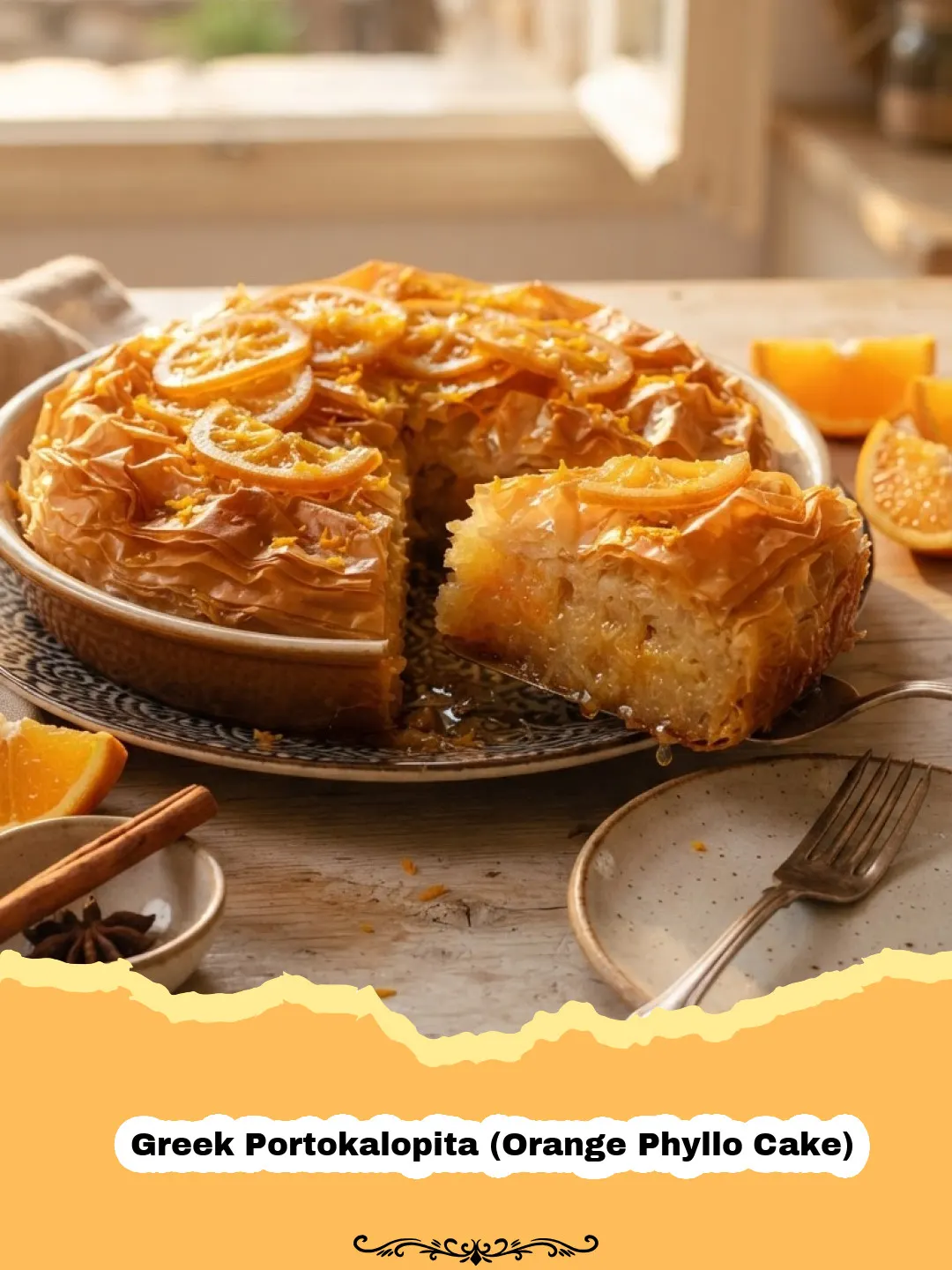
I still remember the scent, vivid and comforting, of my yiayia’s kitchen during Greek Easter. It wasn’t just the savory lamb or the rich tsoureki; it was the intoxicating aroma of oranges and sugar caramelizing, signaling the arrival of her legendary Greek Portokalopita (Orange Phyllo Cake). This wasn’t just a dessert; it was a warm hug, a sweet memory woven into the fabric of family gatherings, a tradition passed down through generations. Every bite transported me back to sun-drenched Greek islands, to laughter around a bustling table, and to the sheer joy of simple, delicious food. Now, I’m thrilled to share with you the very recipe that brings that same magic into my home, hoping it creates cherished memories in yours too.
Why This Recipe is a Must-Try
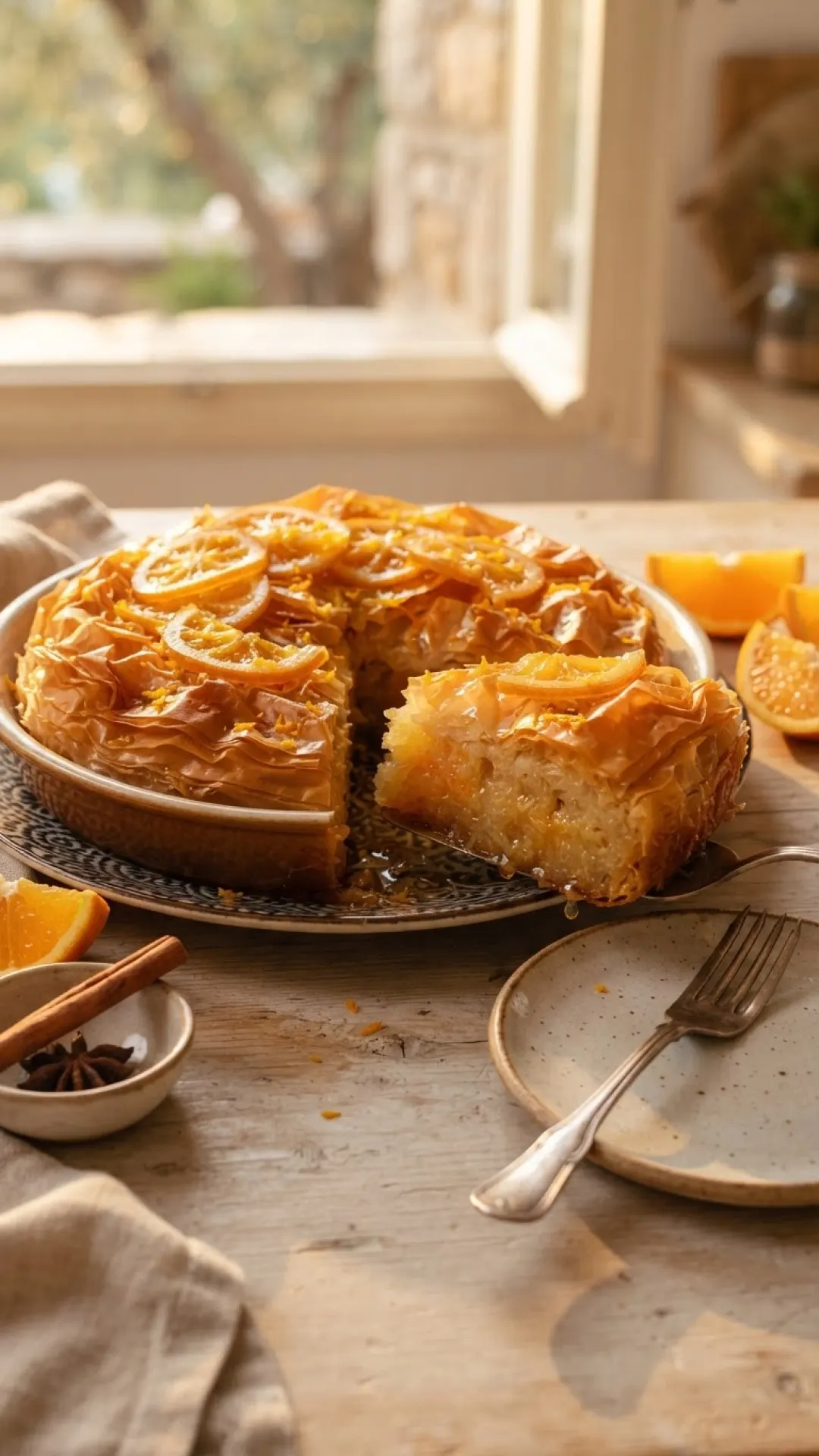
A Symphony of Textures: Unlike traditional cakes, Greek Portokalopita (Orange Phyllo Cake) boasts a unique combination of crispy, shrivelled phyllo dough on top and a wonderfully moist, custardy interior that soaks up every drop of that fragrant orange syrup. It’s a texture experience unlike any other!
Explosion of Citrus Flavor: This cake is a celebration of fresh orange. From the zest in the batter to the abundant juice in the syrup, every element sings with bright, tangy, and sweet orange notes, making it incredibly refreshing yet deeply satisfying.
Impressive, Yet Deceptively Simple: Don’t let the elegant appearance fool you. While it looks like a masterpiece, the technique of tearing and scrunching phyllo is surprisingly forgiving and fun, making this a perfect dessert for both seasoned bakers and confident beginners.
The Ultimate Crowd-Pleaser: Whether you’re hosting a dinner party, a family brunch, or simply want a special treat, Greek Portokalopita (Orange Phyllo Cake) is always a hit. Its unique flavor profile and comforting warmth make it universally loved, and it pairs beautifully with a scoop of vanilla ice cream or a strong Greek coffee.
Key Ingredient Notes
The beauty of Greek Portokalopita (Orange Phyllo Cake) lies in its reliance on a few key, high-quality ingredients. Getting these right is half the battle!
Phyllo Dough
This is the star of the show! You’ll typically find phyllo dough in the freezer section of your grocery store. It’s paper-thin and delicate, so handling it requires a bit of care. Always thaw it completely in the refrigerator overnight, or for several hours at room temperature, while still in its packaging. This prevents it from drying out and cracking. Once open, work quickly or keep the unused sheets covered with a damp cloth to maintain their pliability. The magic here is that we’re not layering it perfectly; we’re tearing it into strips and scrunching it up, which gives Greek Portokalopita (Orange Phyllo Cake) its signature rustic, crispy texture.
Fresh Oranges
Forget the bottled stuff; fresh oranges are non-negotiable for an authentic Greek Portokalopita (Orange Phyllo Cake). You’ll need both the zest and the juice. Opt for navel or Valencia oranges for their sweetness and abundant juice. The zest is packed with aromatic oils that infuse the cake with a deep orange essence, while the fresh juice forms the backbone of the glorious syrup.
Greek Yogurt
A crucial ingredient for moisture and a subtle tang. Full-fat Greek yogurt will yield the richest, most tender cake, but you can use lower-fat versions if preferred. It contributes to the cake’s custardy texture and balances the sweetness of the syrup. Don’t substitute with regular yogurt; the thicker consistency of Greek yogurt is essential here. If you’re looking for another zesty dessert, my Limoncello Tiramisu also benefits from rich, creamy dairy!
Step-by-Step Guide with Pro Tips
Making Greek Portokalopita (Orange Phyllo Cake) is a truly enjoyable process. Here’s how to master it:
For the Syrup:
- Step 1: In a medium saucepan, combine the sugar, water, orange juice, orange zest, and cinnamon stick (if using). Bring the mixture to a boil over medium-high heat, stirring until the sugar dissolves.
- Step 2: Reduce the heat to low and let it simmer for about 5-7 minutes. You want it slightly thickened but still pourable. Remove from heat and stir in the brandy or orange blossom water, if using. Set aside to cool completely. This is critical – a cold syrup on a hot cake prevents sogginess in your Greek Portokalopita (Orange Phyllo Cake).
For the Cake:
- Step 1: Preheat your oven to 350°F (175°C). Lightly grease a 9×13 inch (23×33 cm) baking dish.
- Step 2: Unwrap the thawed phyllo dough. Tear or cut the phyllo sheets into rough 1-inch wide strips. Don’t worry about perfection; the crinkled texture is what we want! Spread the torn phyllo strips loosely in a single layer on a large baking sheet.
- Step 3: Bake the phyllo strips for 10-15 minutes, or until they are lightly golden and dried out. This crucial step ensures that satisfying crispy texture in your Greek Portokalopita (Orange Phyllo Cake). Remove from the oven and let cool slightly.
- Step 4: In a large bowl, whisk together the eggs and sugar until light and fluffy, about 2-3 minutes.
- Step 5: Gradually whisk in the olive oil, Greek yogurt, orange zest, and baking powder until well combined.
- Step 6: Gently fold in the cooled, dried phyllo strips. The phyllo will break up a bit more, which is fine. Make sure all the phyllo is coated with the wet mixture.
- Step 7: Pour the phyllo-batter mixture into your prepared baking dish, spreading it evenly.
- Step 8: Bake for 40-50 minutes, or until the cake is golden brown on top and a skewer inserted into the center comes out clean.
Assembling your Portokalopita:
- Step 1: Immediately upon removing the hot cake from the oven, slowly and evenly pour the completely cold syrup all over the hot cake. You will hear a satisfying sizzle! The cake will absorb the syrup.
- Step 2: Let the Greek Portokalopita (Orange Phyllo Cake) sit at room temperature for at least 2-3 hours (or even better, overnight) to allow it to fully absorb the syrup and cool down. This resting period is essential for the best texture and flavor.
- Step 3: Serve at room temperature, garnished with extra orange zest or finely chopped pistachios, if desired. Leftovers can be stored in an airtight container at room temperature for up to 3 days, or in the refrigerator for up to 5 days. For optimal freshness, I often use Basics Glass Food Storage containers.
Variations & Serving Suggestions
While classic Greek Portokalopita (Orange Phyllo Cake) is perfect as is, there are always ways to personalize it:
Spiced Portokalopita: Add a pinch of ground cardamom or a tiny bit of star anise to the syrup for an extra layer of warmth and complexity. A small amount of vanilla extract can also be added to the batter.
Nutty Topping: Before baking, sprinkle some finely chopped almonds or walnuts over the phyllo mixture for an added crunch. After soaking, a garnish of pistachios or candied orange peel is always a beautiful touch.
Serve with a Twist: While excellent on its own, Greek Portokalopita (Orange Phyllo Cake) shines alongside a scoop of vanilla bean ice cream, a dollop of thick Greek yogurt, or a sprinkle of cinnamon.
Lemon Zest Addition: For an even brighter, tangier syrup, add the zest of one lemon along with the orange zest. This subtle addition can lift the entire flavor profile of the Greek Portokalopita (Orange Phyllo Cake).
Nutrition Information
| Nutrient | Amount per serving |
|---|---|
| Calories | 380 kcal |
| Carbohydrates | 55g |
| Cholesterol | 55mg |
| Fat | 16g |
| Fiber | 2g |
| Protein | 6g |
| Saturated Fat | 3g |
| Serving Size | 1 slice (approx. 1/12th of cake) |
| Sodium | 120mg |
| Sugar | 38g |
| Trans Fat | 0g |
| Unsaturated Fat | 13g |
Conclusion
Making and sharing this Greek Portokalopita (Orange Phyllo Cake) is more than just baking; it’s about connecting with a rich culinary heritage and creating new, sweet memories. The way the crispy phyllo soaks up the fragrant orange syrup is truly magical, creating a dessert that is both comforting and exhilarating. I hope this recipe brings a slice of Greek sunshine into your home, just as it does mine. Don’t be afraid to make it your own, and most importantly, enjoy every single, orange-infused bite. Kali Orexi!
FAQs
What is Greek Portokalopita (Orange Phyllo Cake)?
Portokalopita is a traditional Greek dessert featuring torn and crinkled phyllo dough baked into a cake-like base, then drenched in a fragrant, sweet syrup made primarily from fresh oranges. It’s known for its unique crispy-chewy texture and vibrant citrus flavor.
Can I make Portokalopita ahead of time?
Absolutely! Greek Portokalopita (Orange Phyllo Cake) actually benefits from sitting overnight, allowing the cake to fully absorb the syrup and for the flavors to meld beautifully. Store it at room temperature, covered, for up to 3 days, or in the refrigerator for up to 5 days.
Why is my Portokalopita soggy?
The most common reason for a soggy Portokalopita is pouring warm syrup over a warm cake. The key is to have a completely cold syrup and a hot cake (fresh out of the oven). This temperature difference creates a shock that allows the cake to absorb the syrup effectively without becoming mushy. Also, ensure the phyllo is dried and lightly toasted before adding it to the batter.
What kind of phyllo dough should I use for Greek Portokalopita (Orange Phyllo Cake)?
You should use standard frozen phyllo dough, typically found in the freezer section of most grocery stores. Thaw it completely in the refrigerator overnight before use. Don’t worry about keeping the sheets perfectly intact, as this recipe calls for tearing or cutting them into strips.
Greek Portokalopita (Orange Phyllo Cake)
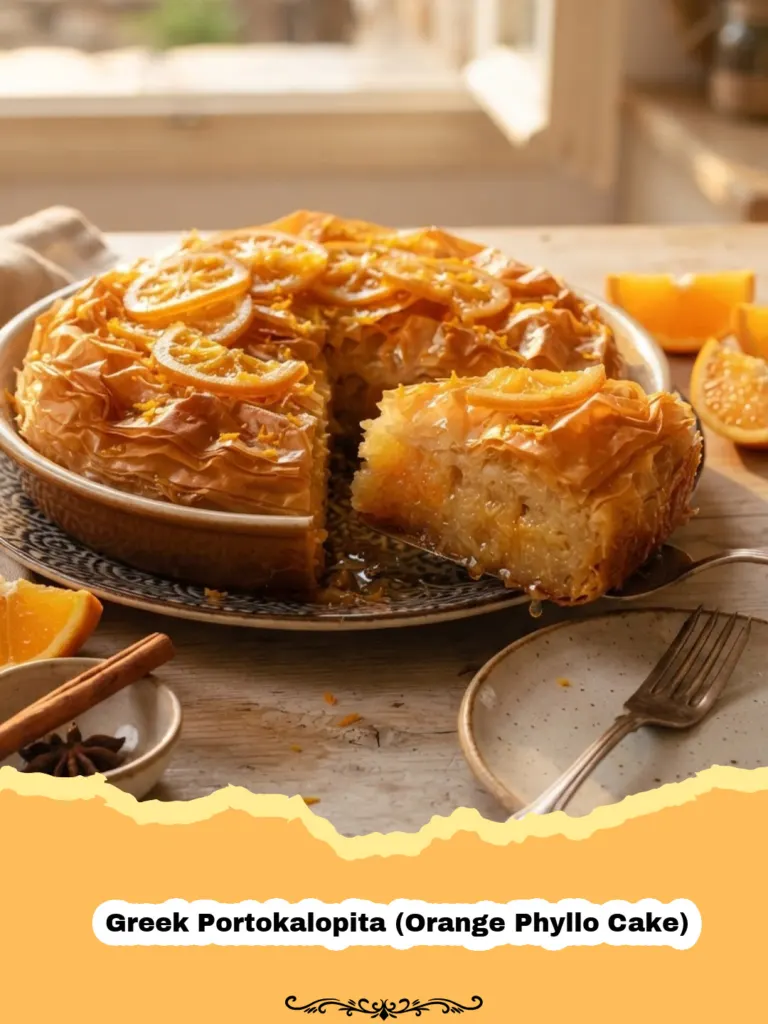
A traditional Greek orange phyllo cake, Portokalopita is known for its unique texture of crispy, torn phyllo dough soaked in a sweet, fragrant citrus syrup. This recipe captures the essence of a sun-drenched Greek kitchen, delivering a moist, aromatic, and utterly irresistible dessert perfect for any occasion.
- Total Time: 80 minutes (plus cooling time)
- Yield: 12 servings 1x
Ingredients
1 (16 ounce) package phyllo dough, thawed
1 cup granulated sugar (for cake)
4 large eggs
1/2 cup olive oil
1 cup full-fat Greek yogurt
2 teaspoons baking powder
Zest of 2 large oranges (for cake batter)
1 1/2 cups granulated sugar (for syrup)
1 1/2 cups water
1 cup fresh orange juice
Zest of 1 large orange (for syrup)
1 cinnamon stick (optional)
2 tablespoons brandy or orange blossom water (optional)
Instructions
Step 1: In a medium saucepan, combine 1 1/2 cups sugar, water, orange juice, zest of 1 orange, and cinnamon stick (if using). Bring to a boil over medium-high heat, stirring until sugar dissolves. Reduce heat to low, simmer for 5-7 minutes until slightly thickened. Remove from heat, stir in brandy or orange blossom water (if using). Set aside to cool completely.
Step 2: Preheat oven to 350°F (175°C). Lightly grease a 9×13 inch (23×33 cm) baking dish.
Step 3: Unwrap thawed phyllo dough. Tear or cut phyllo sheets into rough 1-inch wide strips. Spread loosely in a single layer on a large baking sheet. Bake for 10-15 minutes, until lightly golden and dried out. Remove and let cool slightly.
Step 4: In a large bowl, whisk together 1 cup sugar and eggs until light and fluffy (2-3 minutes).
Step 5: Gradually whisk in olive oil, Greek yogurt, zest of 2 oranges, and baking powder until well combined.
Step 6: Gently fold in the cooled, dried phyllo strips until all phyllo is coated with the wet mixture.
Step 7: Pour the mixture into the prepared baking dish, spreading evenly.
Step 8: Bake for 40-50 minutes, or until golden brown and a skewer inserted into the center comes out clean.
Step 9: Immediately upon removing the hot cake from the oven, slowly and evenly pour the completely cold syrup all over the hot cake.
Step 10: Let the cake sit at room temperature for at least 2-3 hours (or overnight) to fully absorb the syrup and cool. Serve at room temperature, garnished as desired.
Notes
For best results, ensure your phyllo dough is completely thawed. The syrup MUST be completely cold when poured over the hot cake to prevent a soggy texture and ensure maximum absorption. Allowing the cake to rest for several hours or overnight significantly improves its flavor and texture.
- Prep Time: 30 minutes
- Cook Time: 50 minutes
- Category: Baked Goods
- Cuisine: Greek
Nutrition
- Serving Size: 1 slice (approx. 1/12th of cake)
- Calories: 380 kcal
- Sugar: 38g
- Sodium: 120mg
- Fat: 16g
- Saturated Fat: 3g
- Unsaturated Fat: 13g
- Trans Fat: 0g
- Carbohydrates: 55g
- Fiber: 2g
- Protein: 6g
- Cholesterol: 55mg
Keywords: Portokalopita, Greek Orange Cake, Phyllo Cake, Mediterranean Dessert, Orange Syrup Cake, Traditional Greek Dessert, Citrus Cake, Baked Goods, Dessert Recipe