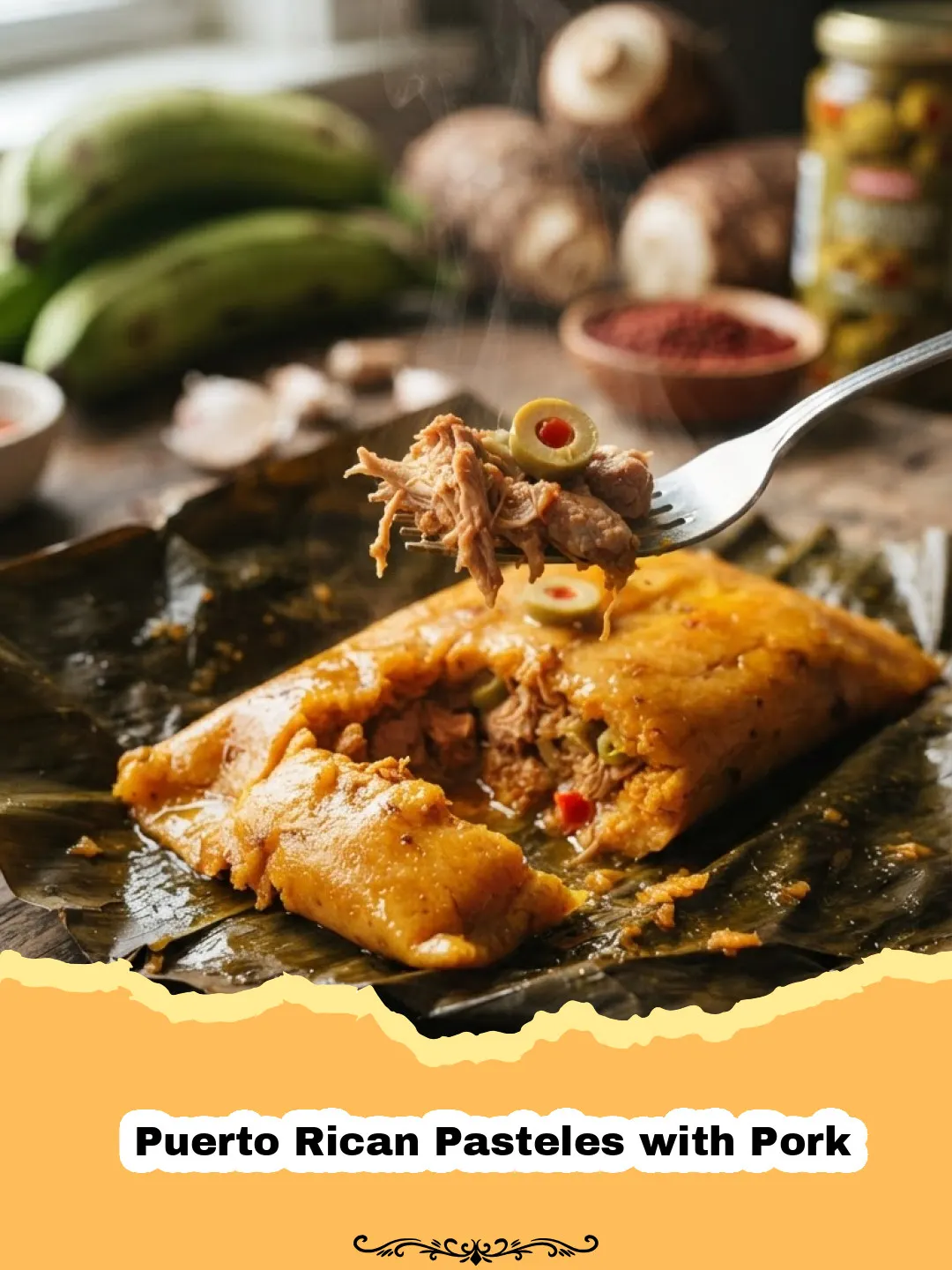
My grandmother’s kitchen around the holidays wasn’t just a room; it was a workshop of love and tradition, filled with the aroma of simmering pork and the rhythmic thump of plantains being grated. Every year, without fail, she would gather all her children and grandchildren to embark on the epic journey of making Puerto Rican Pasteles with Pork. It wasn’t just a recipe; it was a rite of passage, a bonding experience that brought our family closer. These savory, labor-intensive delights, wrapped in banana leaves and boiled to perfection, symbolize the heart of Puerto Rican Christmas. The scent of adobo and sofrito filled the air, promising a feast. Now, I carry on her legacy, sharing with you the magic of creating your own authentic Puerto Rican Pasteles with Pork, a dish that will undoubtedly become a cherished part of your family’s traditions.
Why This Recipe is a Must-Try
- A True Taste of Tradition: Making Puerto Rican Pasteles with Pork connects you directly to centuries of rich culinary heritage, a flavor profile unmatched by any other dish.
- Unforgettable Flavor Profile: The combination of the savory pork filling, aromatic sofrito, and the unique starchy ‘masa’ creates a symphony of flavors that is truly special.
- Perfect for Festive Gatherings: While they require effort, pasteles are the ultimate labor of love, ideal for sharing during Christmas, Nochebuena, or any significant family celebration. They make a statement!
- Rewarding Culinary Experience: The process of making Puerto Rican Pasteles with Pork from scratch is incredibly satisfying, culminating in a dish that will earn you rave reviews.
Key Ingredient Notes
The Masa: The Heart of the Pastel
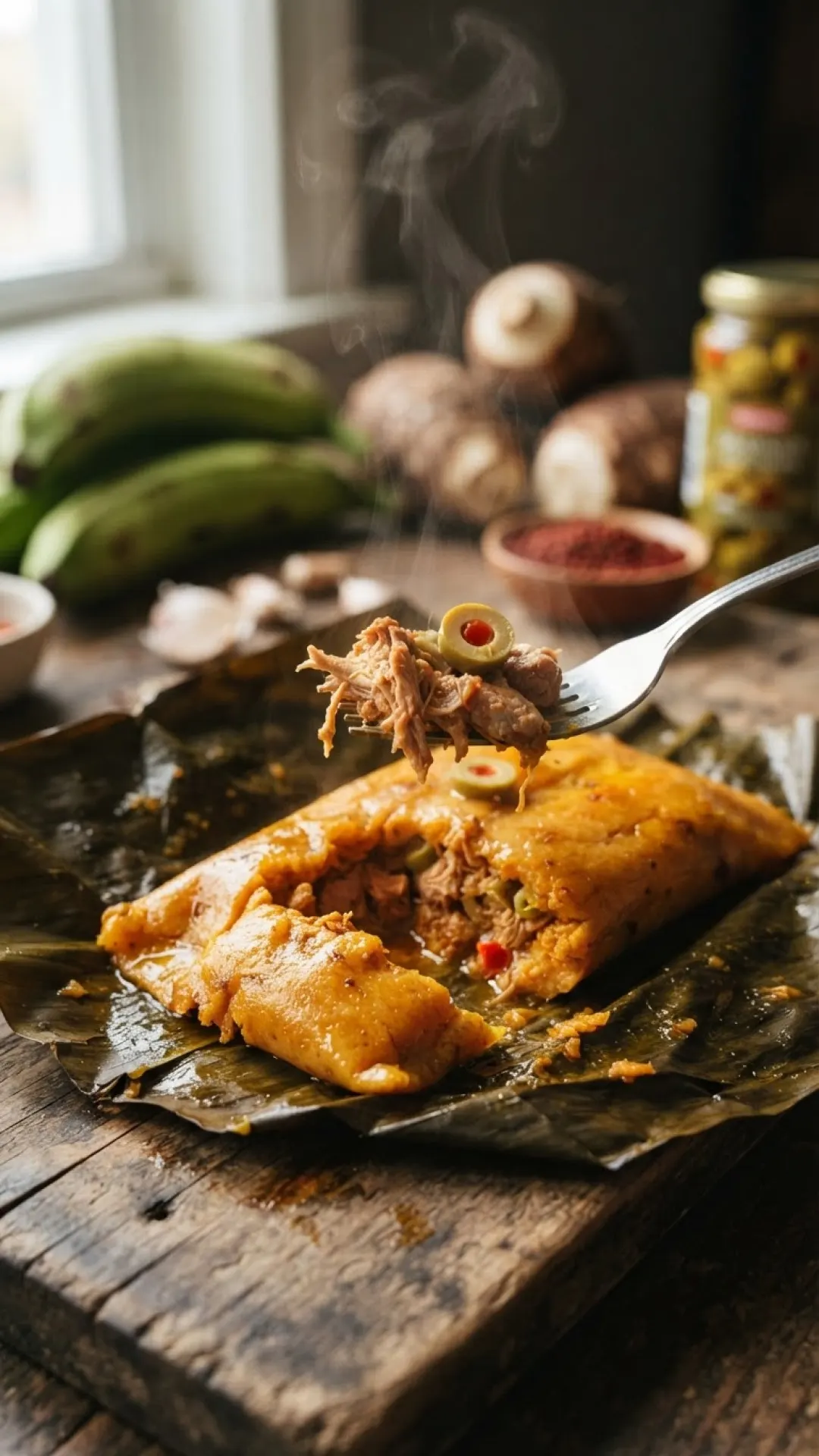
The masa, or dough, for Puerto Rican Pasteles with Pork is what sets them apart. It’s not a flour-based dough but a vibrant, starchy puree made from a blend of green plantains, green bananas (guineos verdes), yautía (taro root), and calabaza (West Indian pumpkin). The plantains and guineos provide the characteristic firm texture, while the yautía adds a smooth creaminess. Calabaza contributes a subtle sweetness and beautiful color. For the best results, use green plantains that are firm and free of any yellowing. The freshness of these root vegetables is paramount to achieving the right consistency and flavor for your Puerto Rican Pasteles with Pork.
The Pork Filling: Flavor Bomb
The success of your Puerto Rican Pasteles with Pork heavily relies on the intensely flavored pork filling. Typically, pork shoulder (pernil) is used because it becomes incredibly tender when slow-cooked. It’s seasoned generously with adobo, sazón, and a homemade sofrito. Sofrito, a blend of peppers, onions, garlic, and cilantro, is the aromatic backbone of Puerto Rican cuisine, infusing the pork with depth and warmth. Don’t skimp on the seasoning or the simmering time; a well-developed pork filling is crucial for the overall deliciousness of your Puerto Rican Pasteles with Pork.
Banana Leaves and Parchment Paper: The Authentic Wrapper
Traditionally, Puerto Rican Pasteles with Pork are wrapped in softened banana leaves, which impart a subtle, earthy flavor and keep the pasteles moist during cooking. While fresh banana leaves are ideal, you can often find them frozen in Latin American or Asian markets. They need to be cut, cleaned, and gently softened over a flame or in hot water to make them pliable. Parchment paper is used as an inner layer, not only for hygiene but also to make handling easier and to prevent the masa from sticking directly to the banana leaf. This double-wrapping method is essential for authentic Puerto Rican Pasteles with Pork.
Step-by-Step Guide with Pro Tips
Making Puerto Rican Pasteles with Pork is a labor of love, but every step brings you closer to a delicious reward. Here’s how to do it:
Preparing the Pork Filling
Step 1: Cut pork shoulder into 1/2-inch cubes. Season generously with adobo, sazón, and black pepper. Marinate for at least 30 minutes, or preferably overnight, in the refrigerator.
Step 2: In a large pot or Dutch oven, heat 2 tablespoons of olive oil over medium-high heat. Brown the pork cubes in batches until nicely seared on all sides. Remove pork and set aside.
Step 3: Reduce heat to medium. Add 1/4 cup of the sofrito to the pot, cooking for 3-5 minutes until fragrant. Add tomato sauce and cook for another 5 minutes, scraping up any browned bits from the bottom of the pot. This creates a rich base for your Puerto Rican Pasteles with Pork.
Step 4: Return pork to the pot. Add olives, capers, bay leaf, and beef broth. Bring to a simmer, then reduce heat to low, cover, and cook for 1.5 to 2 hours, or until pork is very tender and easily shreds. Remove bay leaf. Shred the pork with two forks and set aside to cool. Reserve about 1/2 cup of the cooking liquid; this will be used for the masa.
Preparing the Masa (Dough)
Step 5: Peel and roughly chop the green plantains, green bananas, yautía, and calabaza. It’s crucial to work quickly, as these starches oxidize and darken quickly. You can keep them submerged in acidulated water (water with a splash of vinegar or lemon juice) until ready to process.
Step 6: Using a food processor, work in batches to finely grate or puree the chopped vegetables until a smooth, thick batter forms. This is the foundation of your Puerto Rican Pasteles with Pork.
Step 7: In a separate bowl, whisk together the remaining 1/4 cup sofrito, achiote oil (or annatto oil), and the reserved pork cooking liquid. Season with adobo and sazón. Add this mixture to the pureed masa, mixing thoroughly until evenly colored and combined. The achiote oil not only adds flavor but also gives the masa its characteristic orange hue. Taste and adjust seasoning.
Assembling the Pasteles
Step 8: Prepare your banana leaves by washing them thoroughly. If using fresh leaves, pass them briefly over an open flame or immerse them in hot water until they become pliable. Cut them into approximately 10×10 inch squares. Cut parchment paper into slightly smaller squares (about 8×8 inches).
Step 9: Lay a banana leaf square flat, then place a parchment paper square on top. Brush the center of the parchment paper with a thin layer of achiote oil.
Step 10: Place about 1/4 cup of masa mixture onto the center of the parchment paper. Create a slight well in the center. Spoon about 2-3 tablespoons of the cooled pork filling into the well.
Step 11: Carefully fold the parchment paper over the filling, bringing one side of the masa to meet the other, enclosing the filling. Then fold the banana leaf over, creating a secure packet. Fold the ends of the banana leaf packet to create a tight, rectangular package. Some people tie them with kitchen twine for extra security, especially if making a large batch of Puerto Rican Pasteles with Pork. For easy storage and reheating, consider using Basics Glass Food Storage containers.
Cooking the Pasteles
Step 12: Bring a large pot of salted water to a rolling boil. Carefully add the pasteles, ensuring they are fully submerged. Cook for 1 to 1.5 hours, depending on their size. They are done when the masa is firm and cooked through.
Step 13: Carefully remove pasteles from the water using tongs. Let them rest for a few minutes before unwrapping. Serve hot and enjoy the fruits of your labor, these incredible Puerto Rican Pasteles with Pork!
Variations & Serving Suggestions
While the classic Puerto Rican Pasteles with Pork is a masterpiece on its own, there are several ways to adapt and enjoy them:
- Other Fillings: For those who prefer alternatives, try ground beef, chicken, or even a vegetarian filling with chickpeas and vegetables. The masa remains the same, but the heart of the dish changes.
- Serving: Pasteles are traditionally served with a side of arroz con gandules (rice with pigeon peas) and often a simple green salad or a generous dollop of hot sauce. They are also fantastic with a side of pique (Puerto Rican hot sauce) or a simple avocado salad.
- Freezing: Pasteles freeze beautifully! Once assembled and wrapped, you can freeze them uncooked. When ready to eat, simply boil them from frozen, adding an extra 30-45 minutes to the cooking time. This makes them perfect for holiday meal prep.
- Smaller Portions: If making a full-sized Puerto Rican Pasteles with Pork feels daunting, you can make smaller versions, often called ‘pastelillos de masa’, which cook faster and are great as appetizers.
Explore other savory pork dishes like these Ultimate Puebla Tacos Árabes with Shaved Pork or perhaps a lighter, yet flavorful option like Miso Corn Rice with Chili Cod for a weeknight meal.
Nutrition Information
| Nutrition Facts (per serving) | |
|---|---|
| Calories | 480 kcal |
| Carbohydrate Content | 45 g |
| Cholesterol Content | 90 mg |
| Fat Content | 25 g |
| Fiber Content | 6 g |
| Protein Content | 22 g |
| Saturated Fat Content | 10 g |
| Serving Size | 1 pastel |
| Sodium Content | 650 mg |
| Sugar Content | 3 g |
| Trans Fat Content | 0.5 g |
| Unsaturated Fat Content | 12 g |
These values are estimates and can vary based on specific ingredients and preparation methods for your Puerto Rican Pasteles with Pork.
Conclusion
Creating Puerto Rican Pasteles with Pork is more than just cooking; it’s an act of love, a connection to culture, and a celebration of flavor. While the process may seem intricate, the result is a deeply satisfying and incredibly delicious dish that embodies the warmth and richness of Puerto Rican traditions. So gather your ingredients, call upon your loved ones, and immerse yourself in the joyful experience of making these iconic pasteles. You’re not just making food; you’re making memories. Enjoy every savory bite of your homemade Puerto Rican Pasteles with Pork!
FAQs
What are Puerto Rican Pasteles with Pork?
Puerto Rican Pasteles with Pork are traditional savory dumplings made from a masa (dough) of grated green plantains, green bananas, yautu00eda, and calabaza. They are filled with a seasoned pork mixture, wrapped in banana leaves, and then boiled. They are a beloved and iconic dish, especially during the Christmas holidays in Puerto Rico.
Can I freeze Puerto Rican Pasteles with Pork?
Yes, Puerto Rican Pasteles with Pork freeze beautifully! After assembling and wrapping them in banana leaves and parchment paper, you can place them directly into the freezer. When you’re ready to cook, simply boil them from frozen, adding an additional 30-45 minutes to the cooking time compared to fresh ones.
What is the difference between pasteles and tamales?
While both pasteles and tamales are savory filled dumplings wrapped in leaves and steamed or boiled, their masa base is different. Tamales are typically made with a corn-based masa, often using masa harina. Puerto Rican Pasteles with Pork, on the other hand, use a masa made from grated starchy root vegetables like green plantains, green bananas, yautu00eda, and calabaza, giving them a distinct texture and flavor profile.
What can I serve with Puerto Rican Pasteles with Pork?
Puerto Rican Pasteles with Pork are traditionally served with arroz con gandules (rice with pigeon peas), a simple green salad, and often a bottle of pique criollo (Puerto Rican hot sauce) or hot sauce on the side. Some also enjoy them with a slice of avocado.
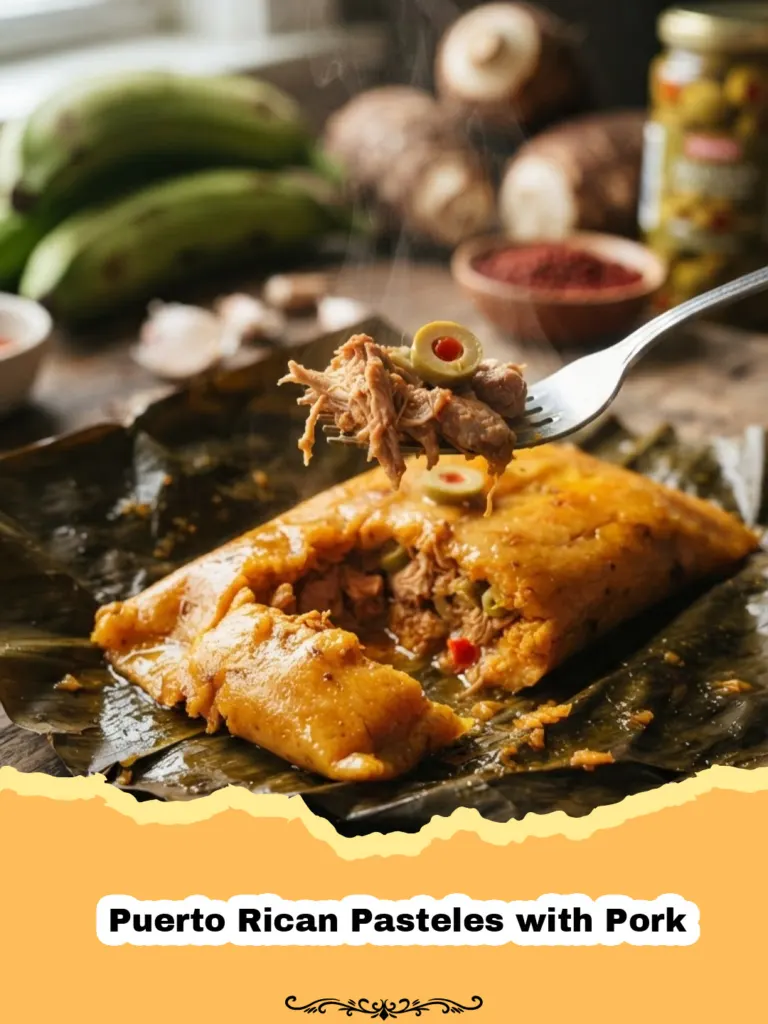
Traditional Puerto Rican Pasteles with Pork
Indulge in the rich, authentic flavors of Puerto Rico with these traditional pasteles, featuring a savory pork filling encased in a vibrant, starchy masa and wrapped in banana leaves. A beloved holiday dish, perfect for sharing.
- Total Time: 3 hours 30 minutes
- Yield: 24 pasteles 1x
Ingredients
2.5 lbs boneless pork shoulder, cut into 1/2-inch cubes
2 tablespoons Adobo seasoning
1 packet Sazón with achiote
1/2 teaspoon black pepper
4 tbsp olive oil, divided
1/2 cup homemade sofrito, divided
8 oz tomato sauce
1/4 cup pitted green olives, sliced
1 tablespoon capers
1 bay leaf
1 cup beef broth
6 green plantains, peeled and chopped
6 green bananas (guineos verdes), peeled and chopped
2 lbs yautía (taro root), peeled and chopped
1/2 lb calabaza (West Indian pumpkin), peeled and chopped
1/4 cup achiote oil (annatto oil)
Salt to taste
24 large squares (approx. 10x10 inches) banana leaves, softened
24 large squares (approx. 8x8 inches) parchment paper
Instructions
Step 1: Cut pork shoulder into 1/2-inch cubes. Season generously with Adobo seasoning, 1 packet Sazón, and black pepper. Marinate for at least 30 minutes, or preferably overnight, in the refrigerator.
Step 2: In a large pot or Dutch oven, heat 2 tablespoons of olive oil over medium-high heat. Brown the pork cubes in batches until nicely seared on all sides. Remove pork and set aside.
Step 3: Reduce heat to medium. Add 1/4 cup of the sofrito to the pot, cooking for 3-5 minutes until fragrant. Add tomato sauce and cook for another 5 minutes, scraping up any browned bits from the bottom of the pot.
Step 4: Return pork to the pot. Add olives, capers, bay leaf, and beef broth. Bring to a simmer, then reduce heat to low, cover, and cook for 1.5 to 2 hours, or until pork is very tender and easily shreds. Remove bay leaf. Shred the pork with two forks and set aside to cool. Reserve about 1/2 cup of the cooking liquid.
Step 5: Peel and roughly chop the green plantains, green bananas, yautía, and calabaza. Keep them submerged in acidulated water until ready to process to prevent oxidation.
Step 6: Using a food processor or a traditional ‘pilón’, work in batches to finely grate or puree the chopped vegetables until a smooth, thick batter (masa) forms.
Step 7: In a separate bowl, whisk together the remaining 1/4 cup sofrito, achiote oil, and the reserved pork cooking liquid. Season with Adobo and 1 packet Sazón. Add this mixture to the pureed masa, mixing thoroughly until evenly colored and combined. Taste and adjust seasoning.
Step 8: Prepare your banana leaves by washing thoroughly and softening them over a low flame or in hot water. Cut them into approximately 10×10 inch squares. Cut parchment paper into slightly smaller squares (about 8×8 inches).
Step 9: Lay a banana leaf square flat, then place a parchment paper square on top. Brush the center of the parchment paper with a thin layer of achiote oil.
Step 10: Place about 1/4 cup of masa mixture onto the center of the parchment paper. Create a slight well in the center. Spoon about 2-3 tablespoons of the cooled pork filling into the well.
Step 11: Carefully fold the parchment paper over the filling, bringing one side of the masa to meet the other, enclosing the filling. Then fold the banana leaf over, creating a secure packet. Fold the ends of the banana leaf packet to create a tight, rectangular package.
Step 12: Bring a large pot of salted water to a rolling boil. Carefully add the pasteles, ensuring they are fully submerged. Cook for 1 to 1.5 hours, depending on their size.
Step 13: Carefully remove pasteles from the water using tongs. Let them rest for a few minutes before unwrapping and serving hot.
Notes
For the best results, ensure your root vegetables for the masa are fresh and green. If you’re new to making pasteles, consider having a helper – it’s a wonderful bonding experience! Pasteles freeze exceptionally well, uncooked, for future enjoyment.
- Prep Time: 2 hours
- Cook Time: 1 hour 30 minutes
- Category: Christmas & Holiday Dishes
- Cuisine: Puerto Rican
Nutrition
- Serving Size: 1 pastel
- Calories: 480 kcal
- Sugar: 3 g
- Sodium: 650 mg
- Fat: 25 g
- Saturated Fat: 10 g
- Unsaturated Fat: 12 g
- Trans Fat: 0.5 g
- Carbohydrates: 45 g
- Fiber: 6 g
- Protein: 22 g
- Cholesterol: 90 mg
Keywords: Puerto Rican Pasteles with Pork, Pasteles recipe, Puerto Rican Christmas food, traditional pasteles, pork pasteles, banana leaf recipes, masa from scratch, holiday pasteles, authentic Puerto Rican, root vegetable dough