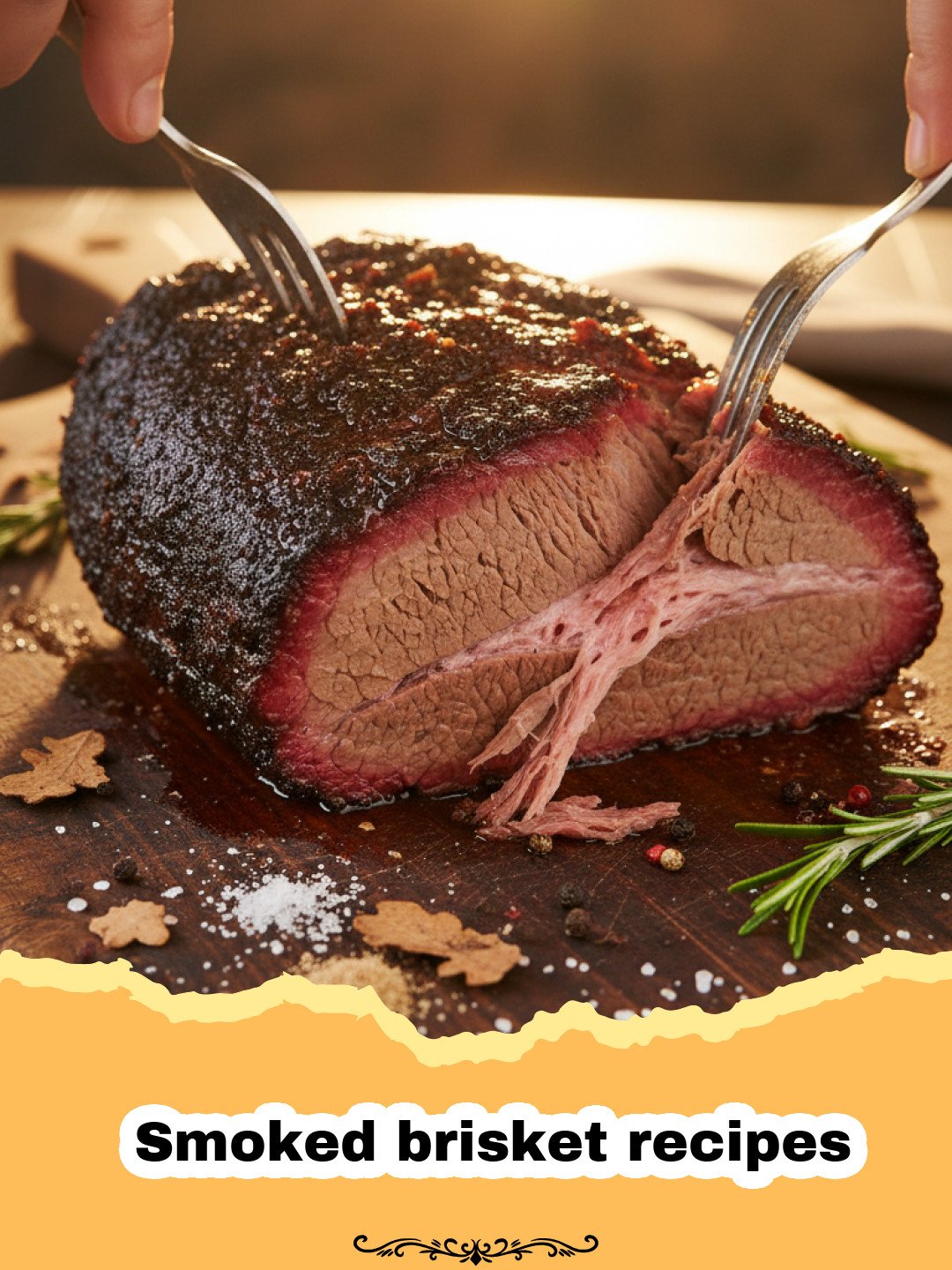
Smoked brisket recipes are the ultimate test of any backyard pitmaster, representing a culinary journey that requires patience, precision, and a deep love for the craft of barbecue. My own obsession with smoking meat began on a humid July afternoon at my grandfather’s house in Texas. He didn’t have a fancy pellet grill or a high-tech offset smoker; he had a rusted iron drum and a pile of post oak. I remember watching him tend to the fire for twelve hours, explaining that you can’t rush greatness. That first bite of bark-covered, rendered-fat-laden beef was a revelation. It wasn’t just food; it was an achievement. Since that day, I have spent years perfecting my own approach to Smoked brisket recipes, learning that while the ingredients are simple, the technique is everything. This guide is designed to take the intimidation out of the process, ensuring that your next cookout is the stuff of legends.
Why This Recipe is a Must-Try
- Unmatched Texture: When you follow high-quality Smoked brisket recipes, the collagen in the tough connective tissue transforms into gelatin, creating a melt-in-your-mouth experience that no other cut of beef can provide.
- Flavor Complexity: The combination of a simple salt-and-pepper rub, the essence of hardwood smoke, and the natural richness of the beef creates a flavor profile that is deep, smoky, and incredibly savory.
- Feeding a Crowd: A full packer brisket is a massive piece of meat, making Smoked brisket recipes perfect for family gatherings, holidays, or any occasion where you want to impress a large group.
- Versatility of Leftovers: Even if you can’t finish it all at once, the leftovers can be used for tacos, chili, or even a unique twist on leftover corned beef recipes.
Key Ingredient Notes
The success of Smoked brisket recipes starts with the quality of your meat. I always recommend looking for a ‘Prime’ grade packer brisket if your budget allows. Prime beef has significantly more intramuscular fat (marbling) than ‘Choice’ or ‘Select’ grades, which is crucial for preventing the meat from drying out during a 12-hour smoke. A ‘packer’ cut includes both the ‘flat’ and the ‘point’—the flat is leaner and easier to slice, while the point is fatty and packed with flavor.
Secondly, the rub is your primary tool for creating that iconic black ‘bark.’ While some Smoked brisket recipes call for complex spice blends, the traditional Texas method uses a ‘Dalmatian rub’—simply equal parts coarse kosher salt and 16-mesh black pepper. The coarse texture of the pepper is vital because it catches the smoke and helps build the crust. Finally, the wood choice matters. Oak, hickory, and pecan are the gold standards for Smoked brisket recipes, providing a robust smoke profile that complements the beef without being overly sweet like fruitwoods.
Step-by-Step Guide with Pro Tips
Preparing the meat is the first critical phase of any Smoked brisket recipes. Start by trimming the cold brisket. You want to remove the hard, waxy fat that won’t render and trim the ‘fat cap’ on the bottom down to about a quarter-inch thick. This allows the smoke to penetrate the meat while still providing a self-basting layer of fat. Once trimmed, apply your rub generously on all sides. Don’t be afraid to use a lot; this is a huge piece of meat and can handle the seasoning. Let the meat sit at room temperature for about 45 minutes while you fire up your smoker to 225°F or 250°F.
Place the brisket in the smoker, fat side down (or up, depending on your smoker’s heat source—you want the fat to protect the meat from the heat). This is where the ‘low and slow’ philosophy of Smoked brisket recipes truly begins. Maintain a steady temperature and avoid the temptation to open the lid. Around the 5 or 6-hour mark, you will likely encounter ‘the stall.’ This is when the internal temperature of the meat stops rising as moisture evaporates from the surface, cooling the meat down. This is the perfect time to employ the ‘Texas Crutch’—wrapping the brisket in peach butcher paper or heavy-duty foil. This traps heat and moisture, helping the meat push through the stall while preserving the bark. When the internal temperature reaches 203°F and the meat feels like room-temperature butter when poked with a probe, it is ready.
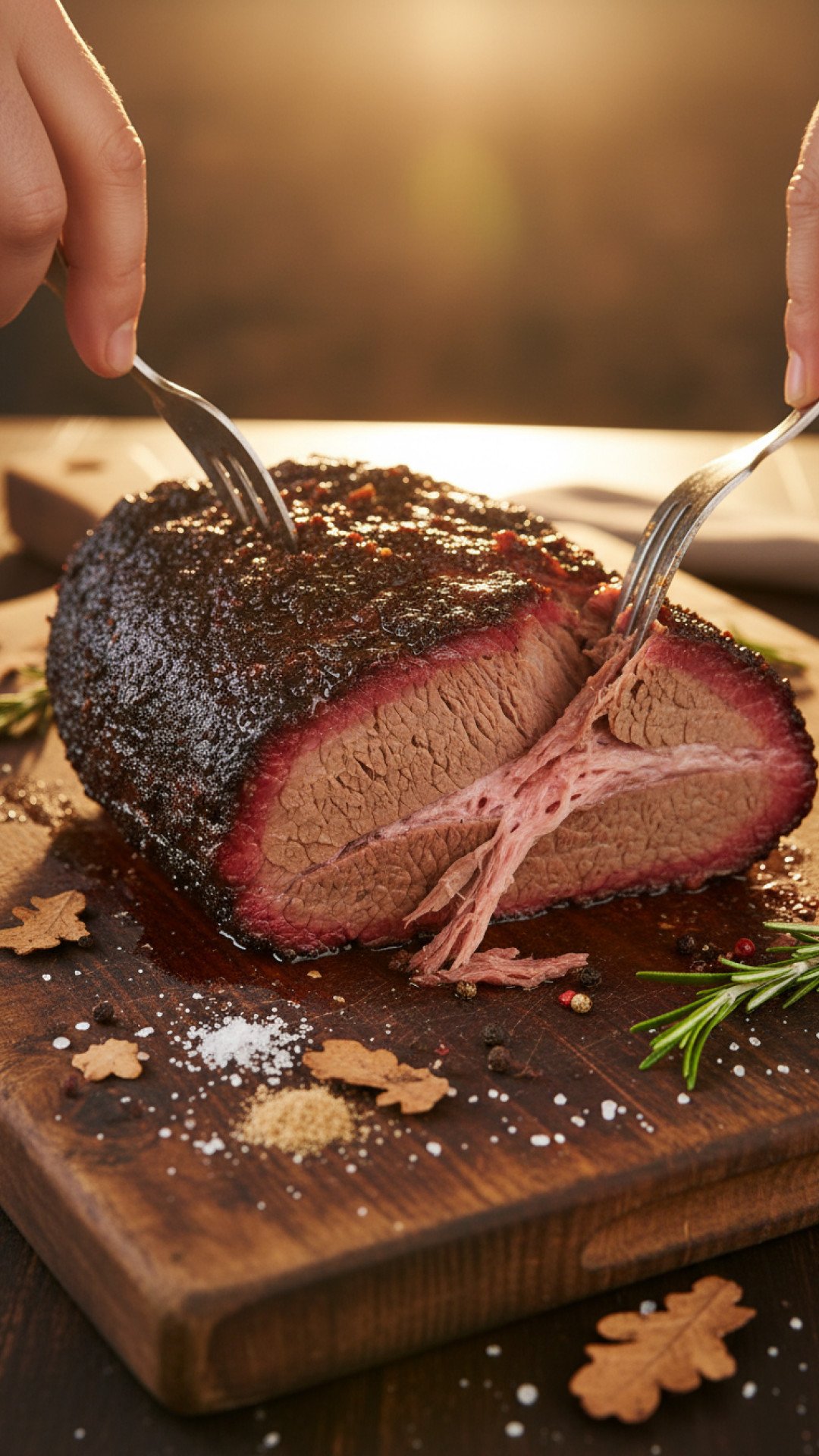
The most overlooked step in Smoked brisket recipes is the rest. You must let the brisket rest for at least two hours in an insulated cooler. This allows the juices to redistribute through the muscle fibers. Slicing too early will result in all that hard-earned moisture running out onto your cutting board. When it is time to serve, ensure you slice against the grain. Since the grain runs in different directions in the flat and the point, you will need to rotate the meat halfway through slicing to maintain maximum tenderness. For any leftovers you don’t finish, I highly recommend using high-quality Basics Glass Food Storage to keep the meat from drying out in the fridge.
Variations & Serving Suggestions
While the classic Texas style is king, there are many ways to adapt Smoked brisket recipes. Some people prefer a sweeter rub containing brown sugar and paprika for a Kansas City vibe. Others like to inject their brisket with beef broth or tallow to ensure maximum juiciness. If you are looking for the perfect side dish, the smoky richness of the beef pairs beautifully with a tangy German Potato Salad or a comforting Southern Squash Casserole. You can also serve it with pickled red onions and jalapeños to cut through the fat, or pile it onto toasted brioche buns for the ultimate BBQ sandwich.
Nutrition Information
| Nutrient | Amount per Serving |
|---|---|
| Calories | 450 kcal |
| Carbohydrate Content | 2g |
| Cholesterol Content | 110mg |
| Fat Content | 32g |
| Fiber Content | 0g |
| Protein Content | 38g |
| Saturated Fat Content | 12g |
| Serving Size | 6 oz |
| Sodium Content | 850mg |
| Sugar Content | 0g |
| Trans Fat Content | 0g |
| Unsaturated Fat Content | 18g |
As you can see from the data, Smoked brisket recipes provide a protein-heavy meal that is satisfying and rich. While high in fat, much of it is rendered out during the long cooking process, leaving behind tender, flavorful meat.
Conclusion
Mastering Smoked brisket recipes is a rite of passage for any home cook. It requires a bit of courage and a lot of patience, but the reward of a perfectly smoked, jiggly, and flavorful brisket is worth every minute spent tending the fire. I hope this guide inspires you to fire up your smoker and start your own tradition. Happy smoking!
FAQs
What is the best wood for smoked brisket recipes?
Oak, Hickory, and Mesquite are the most popular choices. Oak provides a medium smoke that is very traditional, while Hickory is stronger and Mesquite is the most intense. For a slightly sweeter profile, you can mix in Pecan wood.
Why is my brisket dry even though I followed the smoked brisket recipes?
Dryness is often caused by undercooking (not allowing the fats to render) or overcooking. It can also happen if you skip the resting phase. Resting for at least 2 hours is vital for juice redistribution.
What is ‘the stall’ in smoked brisket recipes?
The stall occurs when the internal temperature of the meat plateaus around 160-170u00b0F due to evaporative cooling. Wrapping the meat in butcher paper or foil helps trap heat and overcome this phase faster.
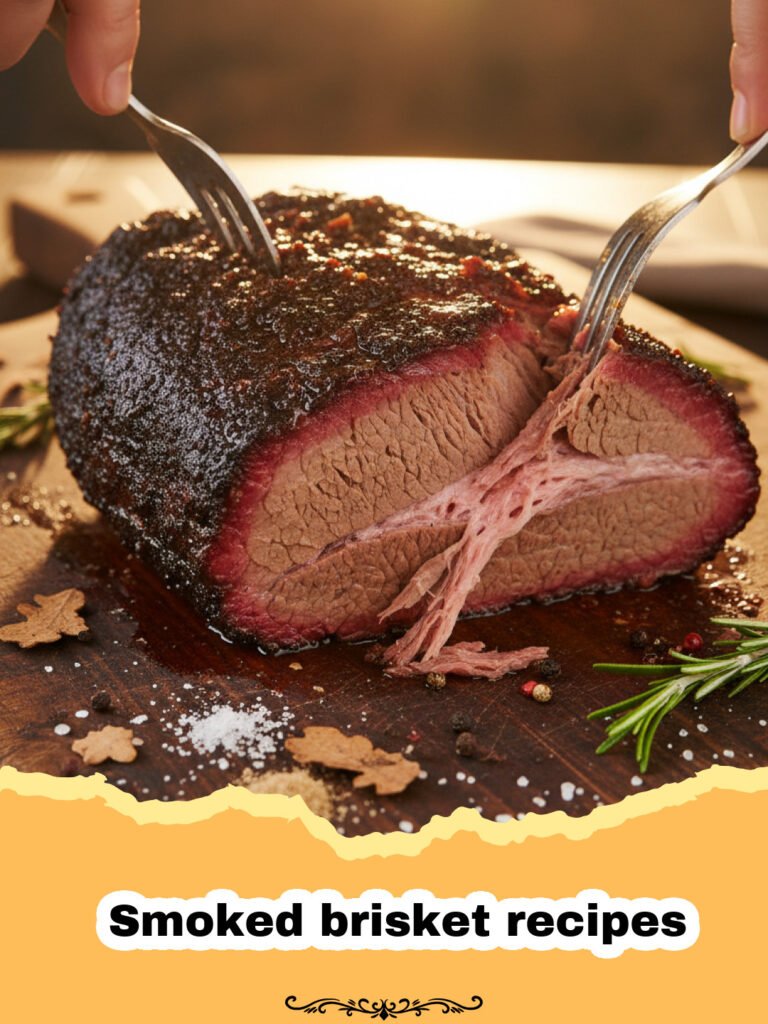
Ultimate Slow-Smoked Texas Brisket
A foolproof guide to creating the most tender, bark-covered smoked brisket you have ever tasted using the low and slow method.
- Total Time: 14 hours 45 minutes
- Yield: 12 servings 1x
Ingredients
1 full packer beef brisket (12–14 lbs)
1/2 cup coarse kosher salt
1/2 cup 16-mesh coarse black pepper
1/4 cup garlic powder (optional)
1 cup beef broth (for spritzing)
Peach butcher paper or aluminum foil
Instructions
Step 1: Trim the brisket while it is cold, removing the hard fat and leaving a 1/4-inch fat cap on the bottom.
Step 2: Mix the salt, pepper, and garlic powder to create the rub, then apply it generously to all sides of the meat.
Step 3: Preheat your smoker to 225°F using oak or hickory wood.
Step 4: Place the brisket in the smoker and cook until the internal temperature reaches approximately 165°F (usually 5-7 hours).
Step 5: Spritz the meat with beef broth every hour after the first 3 hours to keep the surface moist.
Step 6: Wrap the brisket tightly in peach butcher paper or foil and return it to the smoker.
Step 7: Continue cooking until the internal temperature reaches 203°F and the probe slides in like butter.
Step 8: Remove from the smoker and let the meat rest in an insulated cooler for at least 2 hours before slicing against the grain.
Notes
Always slice against the grain to ensure the meat is tender. If you slice with the grain, the meat will be chewy regardless of how well it was cooked.
- Prep Time: 45 minutes
- Cook Time: 12 hours
- Category: Main Dishes
- Cuisine: American BBQ
Nutrition
- Serving Size: 6 oz
- Calories: 450 kcal
- Sugar: 0g
- Sodium: 850mg
- Fat: 32g
- Saturated Fat: 12g
- Unsaturated Fat: 18g
- Trans Fat: 0g
- Carbohydrates: 2g
- Fiber: 0g
- Protein: 38g
- Cholesterol: 110mg
Keywords: smoked brisket recipes, BBQ brisket, low and slow, Texas brisket, brisket rub