Ingredients
2–3 pounds raw beef suet (kidney suet preferred)
1 cup cold water (for wet rendering, optional)
Instructions
Step 1: Prepare the Suet. Start by thoroughly cleaning your beef suet. Using a sharp knife, carefully trim away any visible bits of meat, blood, or connective tissue. Once cleaned, chop the suet into small, uniform pieces, about 1/2 to 1 inch in size. Alternatively, you can put the suet through a meat grinder for faster rendering.
Step 2: Choose Your Rendering Method. For beginners and for the purest, most neutral tallow, I recommend the wet rendering method. Place your chopped suet into a heavy-bottomed pot. Add about 1 cup of cold water for every 2-3 pounds of suet. If opting for dry rendering, place suet directly into the pot without water, requiring more vigilant stirring.
Step 3: Slow Cook for Perfection. Place the pot over low to medium-low heat. The key is slow, gentle heat. Stir occasionally to prevent sticking and promote even melting. Continue cooking until all the suet has melted and only small, crispy, golden-brown cracklings remain. This typically takes 3-4 hours.
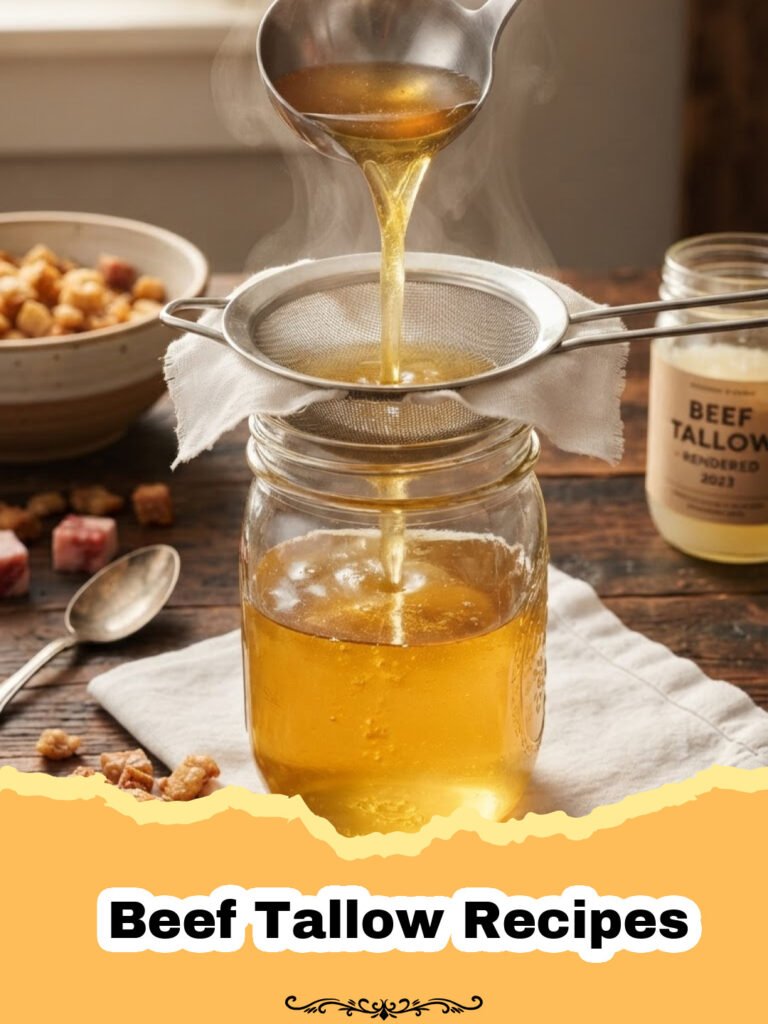
Step 4: Strain the Liquid Gold. Once all the fat has rendered and the cracklings are golden, remove the pot from the heat. Carefully strain the hot liquid through a fine-mesh sieve lined with several layers of cheesecloth or a coffee filter. Pour the strained tallow into clean, dry, heat-safe jars or containers.
Step 5: Cool and Store. Allow the tallow to cool completely at room temperature. As it cools, it will solidify into a beautiful, opaque, creamy white or pale yellow solid. Once fully solid, cover the jars tightly. Store your homemade beef tallow in a cool, dark pantry for several months, or in the refrigerator for up to a year. It can also be frozen indefinitely.
Notes
For the purest tallow, use high-quality suet from grass-fed or pasture-raised cattle. The smell will be much cleaner and the flavor superior. Ensure all equipment is very clean to avoid spoilage. Tallow is shelf-stable for months in a cool, dark place, or refrigerated for a year, and frozen indefinitely. Always keep an eye on the heat; low and slow is key to preventing burnt flavor.
- Prep Time: 30 minutes
- Cook Time: 3-4 hours
- Category: How To
- Cuisine: American
Nutrition
- Serving Size: 1 tbsp (14g)
- Calories: 126 kcal
- Sugar: 0 g
- Sodium: 0 mg
- Fat: 14 g
- Saturated Fat: 7 g
- Unsaturated Fat: 6.5 g
- Trans Fat: 0.4 g
- Carbohydrates: 0 g
- Fiber: 0 g
- Protein: 0 g
- Cholesterol: 14 mg
Keywords: beef tallow, rendering tallow, how to make tallow, beef fat, cooking fat, healthy fats, traditional cooking, suet, pastured beef, frying oil, sautéing, baking with tallow, beef tallow recipes
