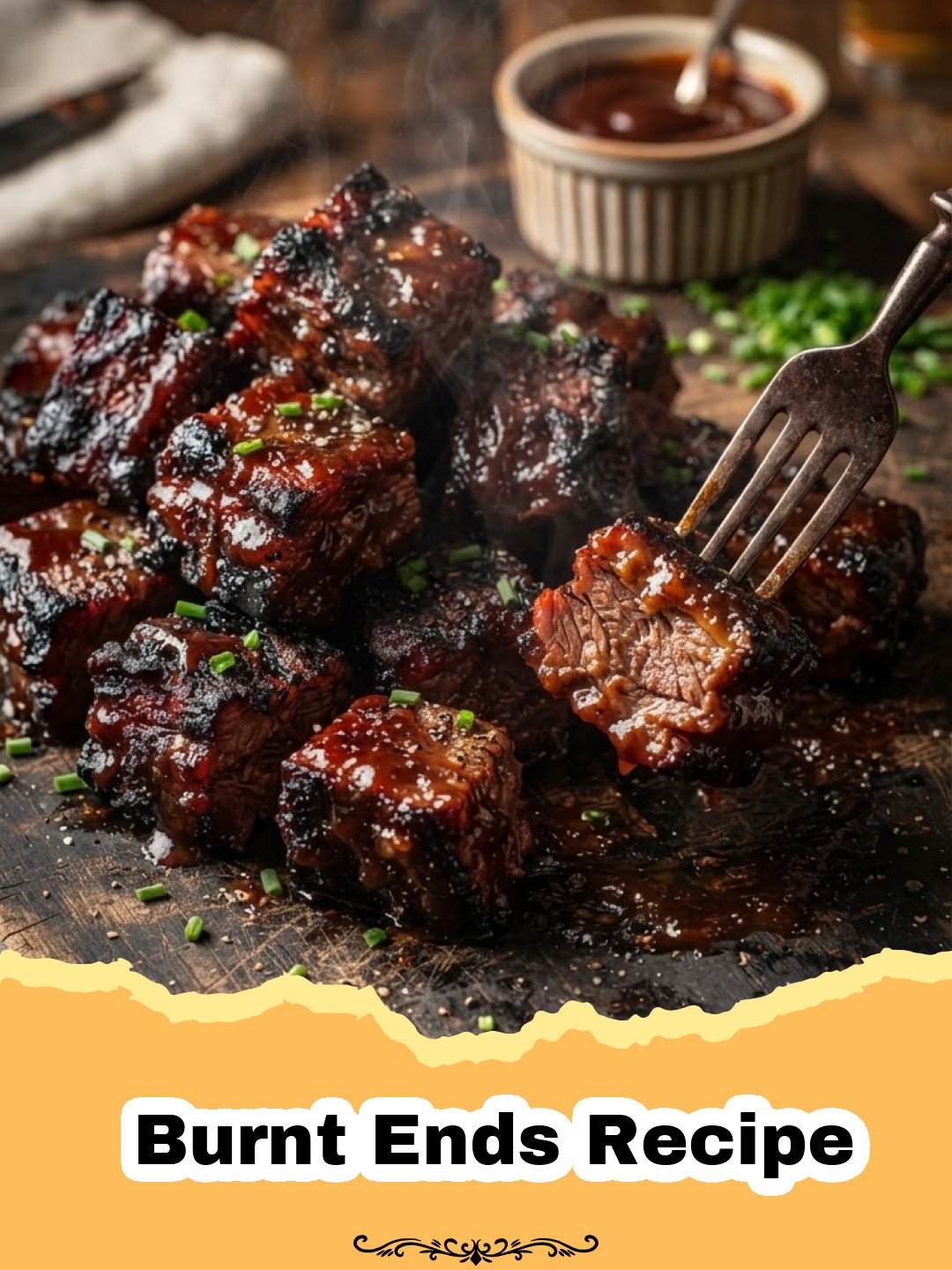
The first time I ever tasted authentic, melt-in-your-mouth burnt ends, I knew my life wouldn’t be the same. It was at a small, unassuming BBQ joint tucked away in rural Texas during a sweltering summer road trip. The air was thick with the scent of post oak smoke, and the sound of blues music drifted from a rusty speaker. I ordered a plate, not really knowing what to expect, and that first bite of perfectly caramelized, smoky, and unbelievably tender beef was a revelation. It was an incredible smoky, sweet, and savory explosion of flavor that etched itself into my memory and became the inspiration to perfect this Burnt Ends Recipe at home. Years of trial and error, countless hours tending to a smoker, and a few brisket mishaps later, I’ve finally cracked the code to making burnt ends that rival that unforgettable Texas experience. And today, I’m sharing every secret with you.
Why This Burnt Ends Recipe is a Must-Try
- Unforgettable Flavor Profile: Experience the perfect balance of smoky, sweet, savory, and spicy notes with every tender cube. This isn’t just meat; it’s a symphony of tastes.
- Impress Your Guests: Whether it’s a backyard BBQ, a game day feast, or a special occasion, serving up homemade burnt ends will solidify your reputation as a BBQ master. This Burnt Ends Recipe is a crowd-pleaser every time.
- Rewarding Cooking Experience: There’s a profound satisfaction in transforming a humble brisket into these nuggets of BBQ gold. The process, while requiring patience, is incredibly meditative and rewarding.
- Versatile Culinary Delight: While fantastic on their own, burnt ends are also incredible in sandwiches, tacos, atop mac and cheese, or even stirred into chili. The possibilities are endless for this amazing Burnt Ends Recipe.
Key Ingredient Notes for This Burnt Ends Recipe
Mastering a truly phenomenal Burnt Ends Recipe involves understanding the role each ingredient plays in creating that signature flavor and texture. Here are the stars of the show:
The Brisket Point: The Heart of Your Burnt Ends
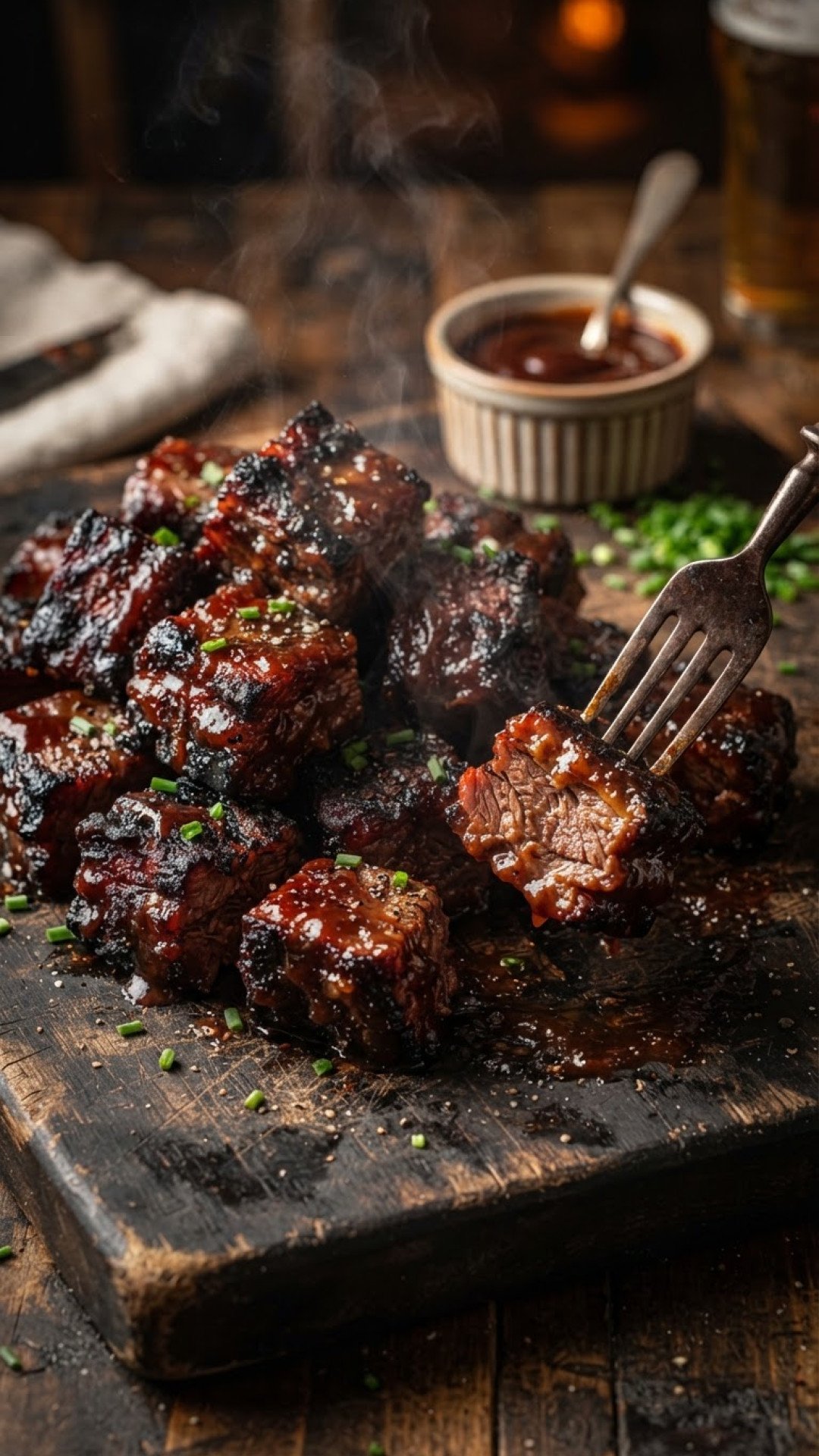
This Burnt Ends Recipe begins with choosing the right cut: the brisket point. A whole packer brisket is divided into two parts: the flat and the point. The flat is leaner, while the point is thick and riddled with intramuscular fat and connective tissue. This marbling is crucial because it renders down during the long smoking process, resulting in that incredibly tender, juicy, and gelatinous texture that defines a perfect burnt end. Don’t skimp on quality; look for a well-marbled, fresh brisket from a reputable butcher. Trim off any hard fat, but leave a decent fat cap for moisture.
The Rub: Building the Flavor Foundation
A good rub is essential for any Burnt Ends Recipe. It’s the first layer of flavor, forming the bark during the initial smoke. You want a blend that balances savory (salt, pepper, garlic powder, onion powder) with a touch of sweetness (brown sugar, paprika) and a hint of spice (cayenne, chili powder). My personal preference is a mix that creates a rich, dark bark without overpowering the natural beefy flavor. Apply it generously and let it sit for a few hours, or even overnight, to really penetrate the meat.
The BBQ Sauce: The Finishing Touch
The BBQ sauce is where the
FAQs
<!– wp:rank-math/faq-block {"questions":[{"id":"faq-6a92bc2a9afbb","visible":true,"title":"What cut of meat is best for a Burnt Ends Recipe?","content":"The absolute best cut for a traditional Burnt Ends Recipe is the point end of a beef brisket. This section is richly marbled with fat and connective tissue, which renders beautifully during the long smoking process, resulting in the incredibly tender, juicy, and gelatinous texture that makes burnt ends so irresistible. You can buy just the point, or separate it from a whole packer brisket."},{"id":"faq-6a92bc2a9afe4","visible":true,"title":"Why are they called 'burnt ends'?","content":"The name 'burnt ends' comes from their appearance and how they were traditionally made. Originally, they were the crispy, flavorful bits trimmed off the ends of a smoked brisket, often discarded or given away for free. These pieces, having more surface area, developed a dark, 'burnt' looking bark. Today, in our Burnt Ends Recipe, we intentionally cube and re-smoke the brisket point, often with sauce, to create that desirable caramelized, chewy, and smoky exterior."},{"id":"faq-6a92bc2a9aff0","visible":true,"title":"Can I make this Burnt Ends Recipe without a traditional smoker?","content":"While a dedicated smoker provides the best results for this Burnt Ends Recipe, you can adapt it. You can use a charcoal grill set up for indirect heat with wood chunks, or even an oven with a liquid smoke treatment (though the smoky flavor won't be as deep). If using an oven, you'd cook the brisket low and slow until tender, then cube, sauce, and return to a higher temperature to caramelize. However, for true BBQ flavor, a smoker is highly recommended."},{"id":"faq-6a92bc2a9b059","visible":true,"title":"How do I store and reheat leftover Burnt Ends?","content":"Leftover burnt ends can be stored in an airtight container in the refrigerator for 3-4 days. For longer storage, they freeze well for up to 3 months. To reheat, place them in an oven-safe dish with a splash of beef broth or water, cover with foil, and warm in a 300u00b0F (150u00b0C) oven until heated through. You can also reheat them gently on the stovetop or even in a microwave, though the oven method helps retain moisture and texture. They are perfect in Basics Glass Food Storage containers.”}]} –>What cut of meat is best for a Burnt Ends Recipe?
The absolute best cut for a traditional Burnt Ends Recipe is the point end of a beef brisket. This section is richly marbled with fat and connective tissue, which renders beautifully during the long smoking process, resulting in the incredibly tender, juicy, and gelatinous texture that makes burnt ends so irresistible. You can buy just the point, or separate it from a whole packer brisket.
Why are they called 'burnt ends'?
The name ‘burnt ends’ comes from their appearance and how they were traditionally made. Originally, they were the crispy, flavorful bits trimmed off the ends of a smoked brisket, often discarded or given away for free. These pieces, having more surface area, developed a dark, ‘burnt’ looking bark. Today, in our Burnt Ends Recipe, we intentionally cube and re-smoke the brisket point, often with sauce, to create that desirable caramelized, chewy, and smoky exterior.
Can I make this Burnt Ends Recipe without a traditional smoker?
While a dedicated smoker provides the best results for this Burnt Ends Recipe, you can adapt it. You can use a charcoal grill set up for indirect heat with wood chunks, or even an oven with a liquid smoke treatment (though the smoky flavor won’t be as deep). If using an oven, you’d cook the brisket low and slow until tender, then cube, sauce, and return to a higher temperature to caramelize. However, for true BBQ flavor, a smoker is highly recommended.
How do I store and reheat leftover Burnt Ends?
Leftover burnt ends can be stored in an airtight container in the refrigerator for 3-4 days. For longer storage, they freeze well for up to 3 months. To reheat, place them in an oven-safe dish with a splash of beef broth or water, cover with foil, and warm in a 300°F (150°C) oven until heated through. You can also reheat them gently on the stovetop or even in a microwave, though the oven method helps retain moisture and texture. They are perfect in Basics Glass Food Storage containers.