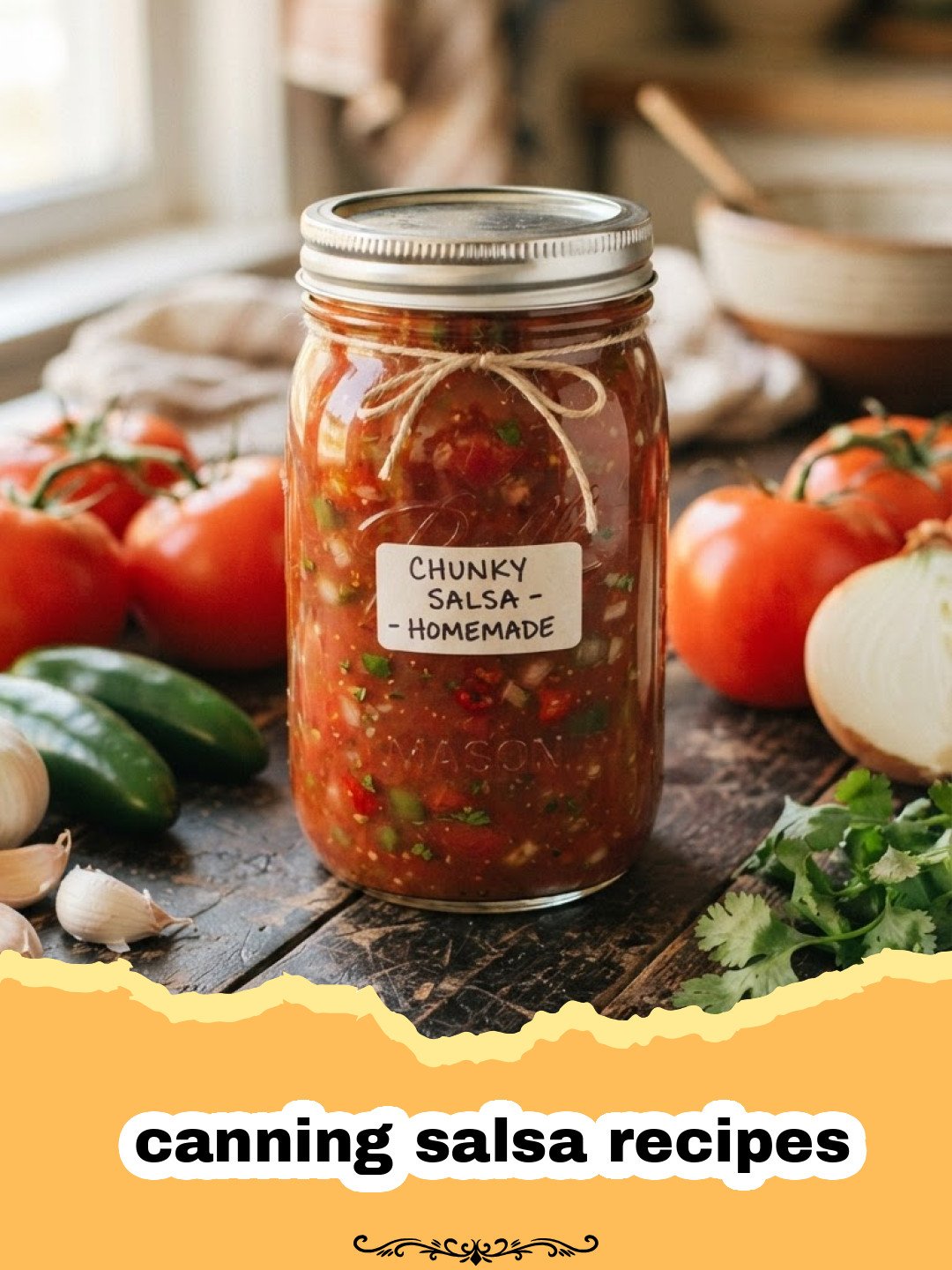
There is something truly magical about the aroma of simmering tomatoes and vinegar that fills a kitchen when you are diving into canning salsa recipes for the first time. I remember my grandmother’s kitchen every August; it was a humid, bustling sanctuary filled with the sounds of clinking jars and the rhythmic chopping of onions. She taught me that canning salsa recipes isn’t just about food preservation; it’s about capturing the very essence of summer in a glass jar so you can enjoy it when the snow is falling outside. Every time I hear that satisfying ‘pop’ of a lid sealing, I feel a sense of accomplishment that connects me to generations of home cooks. This guide is designed to help you master canning salsa recipes so you can fill your own pantry with the vibrant, zesty flavors of home-grown produce.
Why This Recipe is a Must-Try
- Peak Flavor Preservation: By using canning salsa recipes, you lock in the taste of sun-ripened tomatoes and crisp peppers at their absolute best, far surpassing anything you can buy at a grocery store.
- Complete Control Over Ingredients: Unlike commercial brands, following your own canning salsa recipes allows you to manage the sodium levels, sugar content, and the exact heat level of your peppers.
- Budget-Friendly Gifting: A shelf full of jars from your favorite canning salsa recipes makes for thoughtful, delicious, and inexpensive holiday gifts for friends and family.
- Sustainable Living: Reducing food waste by processing a garden glut ensures that your hard work in the garden doesn’t go to waste.
Key Ingredient Notes
When it comes to canning salsa recipes, the quality and type of ingredients you choose are paramount for both flavor and safety. The foundation of any great salsa is the tomato. For canning salsa recipes, I highly recommend using paste tomatoes like Romas or San Marzanos. These varieties have thicker walls and less water, which results in a heartier, less watery salsa. If you use slicing tomatoes, you may find yourself simmering the mixture much longer to achieve the desired consistency.
The second critical component in canning salsa recipes is the acid. Because tomatoes are often on the borderline of high and low acidity, adding vinegar (with at least 5% acidity) or bottled lime juice is essential to ensure the environment inside the jar is safe from harmful bacteria. While I love making a fresh salsa recipe for immediate consumption, the safety requirements for shelf-stable canning salsa recipes mean we cannot skip or reduce the acid. If you find yourself with an abundance of tomatoes, you might also be interested in canning homemade spaghetti sauce to round out your pantry. Finally, the choice of peppers allows you to customize the heat. Jalapeños are standard, but adding a few habaneros can elevate canning salsa recipes to a whole new level of spice.
Step-by-Step Guide with Pro Tips
Preparing canning salsa recipes requires a bit of preparation, but the process is straightforward once you get the hang of it. Start by preparing your tomatoes. The best canning salsa recipes always call for peeled tomatoes to avoid tough skins in the finished product. To do this easily, cut a small ‘X’ on the bottom of each tomato and drop them into boiling water for 30-60 seconds, then immediately plunge them into an ice bath. The skins will slip right off!
Once your vegetables are chopped, combine them in a large stainless steel pot. It is important to use non-reactive cookware for canning salsa recipes because the high acid content can react with aluminum or unlined cast iron, giving your salsa a metallic taste. Bring the mixture to a boil and then reduce the heat to a simmer. A pro tip for canning salsa recipes: do not add thickeners like cornstarch or flour before canning, as these can interfere with heat penetration during the processing phase, making the food unsafe. If you prefer a thicker salsa, simply simmer it longer to reduce the liquid naturally.
While your salsa simmers, prepare your jars and boiling water canner. Cleanliness is key when executing canning salsa recipes. Wash your jars in hot, soapy water and keep them warm until ready to fill. Once filled, leave about 1/2 inch of headspace at the top of the jar. Wipe the rims carefully; any residue can prevent a proper seal. Process the jars in a boiling water bath according to your altitude. After the timer goes off, turn off the heat and let the jars sit in the water for 5 minutes before removing them. This little-known secret in canning salsa recipes helps prevent ‘siphoning,’ where liquid is pushed out of the jar due to sudden temperature changes.
If you have any leftovers that didn’t fit into a full jar, I recommend storing them in Basics Glass Food Storage containers in the refrigerator for immediate use. Proper canning salsa recipes ensure that the vacuum seal will keep your pantry stock fresh for up to a year.
Variations & Serving Suggestions
The beauty of canning salsa recipes is the versatility they offer. If you want a sweeter profile, you can experiment with canning salsa recipes that incorporate fruits like mango or pineapple, provided you maintain the correct acid ratios. For those who enjoy a smoky flavor, try roasting your peppers and onions on a grill before adding them to the pot. This adds a depth of flavor that makes your canning salsa recipes stand out at any gathering.
Beyond the standard chip-and-dip routine, your homemade canning salsa recipes can be used as a marinade for chicken, a topping for grilled fish, or a base for a spicy vinaigrette. I love pouring a jar of salsa over a pork roast in the slow cooker for easy carnitas. Because canning salsa recipes result in a product that is so much more flavorful than ‘store-bought,’ you’ll find yourself reaching for these jars to enhance almost every savory meal. Don’t be afraid to mix different types of peppers in your canning salsa recipes to find the perfect balance of heat and flavor that suits your family’s palate.
Nutrition Information
Many people love canning salsa recipes because salsa is naturally low in fat and calories while being high in vitamins A and C. Here is a breakdown of the nutritional content per serving for this specific recipe:
| Nutrient | Amount per Serving |
|---|---|
| Calories | 25 kcal |
| Total Fat | 0.2g |
| Saturated Fat | 0g |
| Cholesterol | 0mg |
| Sodium | 180mg |
| Total Carbohydrates | 5g |
| Dietary Fiber | 1.5g |
| Sugars | 3g |
| Protein | 1g |
Conclusion
Mastering canning salsa recipes is one of the most rewarding skills a home cook can develop. It turns a summer harvest into a year-long celebration of flavor. Whether you are a seasoned pro or a beginner, following reliable canning salsa recipes ensures that your pantry is always stocked with healthy, delicious, and safe appetizers. So grab your jars, start chopping, and enjoy the incredible satisfaction that comes from canning salsa recipes in your own home kitchen!
FAQs
Can I use lime juice instead of vinegar in canning salsa recipes?
Yes, you can substitute bottled lime juice for vinegar in canning salsa recipes, as long as the lime juice is bottled (to ensure consistent 5% acidity). Use an equal amount to what the recipe calls for in vinegar.
How long does home-canned salsa last in the pantry?
When properly processed using tested canning salsa recipes, jars will stay fresh and safe for up to 12-18 months in a cool, dark place. After opening, store in the refrigerator and consume within 2 weeks.
Why is my canned salsa so runny?
Canned salsa can be runny if you use slicing tomatoes instead of paste tomatoes (like Romas) or if it isn’t simmered long enough to reduce the liquid. Never add cornstarch to canning salsa recipes before processing; instead, drain off excess liquid when you open the jar.
Is it safe to reduce the amount of peppers in canning salsa recipes?
You can safely decrease the amount of onions or peppers in canning salsa recipes, but you should never increase the total amount of low-acid vegetables, as this can lower the overall acidity and make the recipe unsafe for water-bath canning.
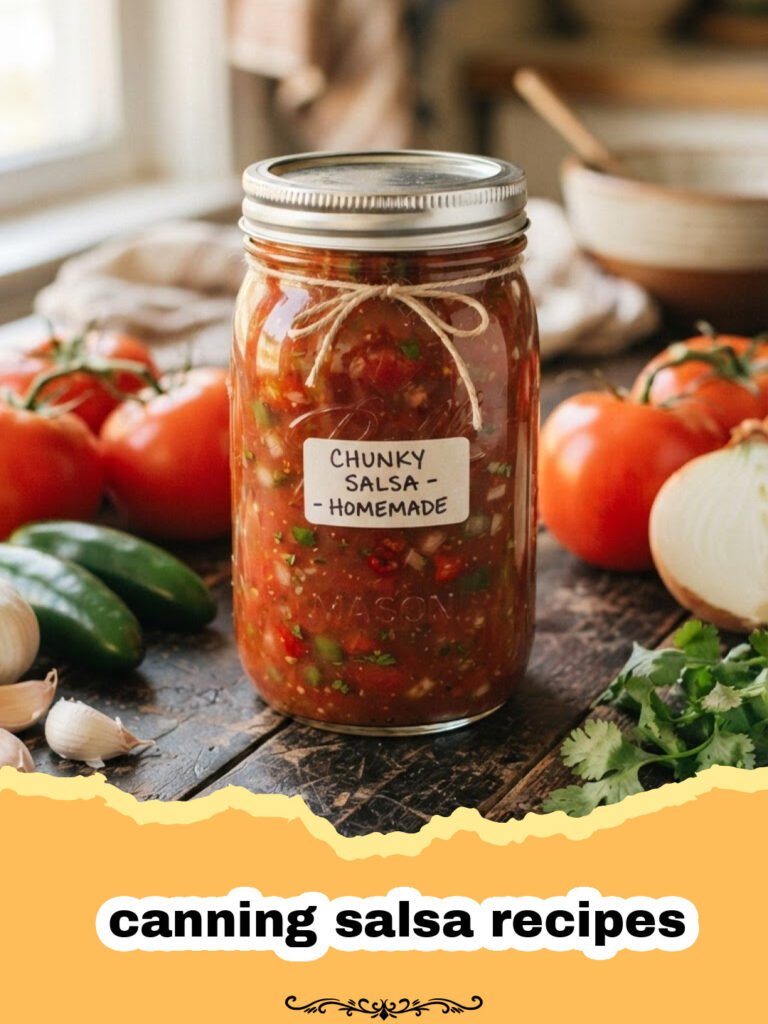
Traditional Garden-Fresh Canned Salsa
A classic, safe, and zesty tomato salsa perfect for water-bath canning and long-term storage.
- Total Time: 1 hour 30 minutes
- Yield: 6 pints 1x
Ingredients
7 lbs tomatoes, peeled, cored, and chopped
2 lbs onions, chopped
1 lb green bell peppers, seeded and chopped
1/2 lb jalapeño peppers, seeded and finely chopped
1 cup cider vinegar (5% acidity)
3 cloves garlic, minced
2 tbsp canning salt
1/2 cup fresh cilantro, chopped (optional)
1 tsp cumin
Instructions
Step 1: Prepare your canning equipment. Wash 6 pint jars and lids in hot soapy water. Keep jars warm in a pot of simmering water until ready to use.
Step 2: Blanch the tomatoes in boiling water for 60 seconds, then shock in ice water to easily remove the skins. Core and chop the tomatoes.
Step 3: In a large non-reactive stockpot, combine the chopped tomatoes, onions, all peppers, garlic, vinegar, salt, cumin, and cilantro.
Step 4: Bring the mixture to a boil over medium-high heat, stirring frequently to prevent sticking.
Step 5: Reduce heat and simmer for 15-20 minutes until the salsa reaches your desired consistency. Remember that it will thicken slightly as it cools.
Step 6: Ladle the hot salsa into the prepared warm jars, leaving 1/2 inch of headspace at the top.
Step 7: Wipe the jar rims with a clean, damp cloth to remove any residue. Center the lids on the jars and screw the bands on until fingertip tight.
Step 8: Place jars in a boiling water canner, ensuring they are covered by at least 1-2 inches of water. Process for 15 minutes (adjust for altitude).
Step 9: Remove the canner lid, wait 5 minutes, then remove the jars and place them on a towel-lined surface. Let them sit undisturbed for 24 hours.
Step 10: Check seals by pressing the center of the lid; it should not pop back. Store in a cool, dark place.
Notes
Always use bottled vinegar or lime juice to ensure consistent acidity levels for safety. Do not alter the ratio of vegetables to acid in canning salsa recipes.
- Prep Time: 1 hour
- Cook Time: 30 minutes
- Category: Appetizers & Snacks
- Cuisine: Mexican-American
Nutrition
- Serving Size: 2 tablespoons
- Calories: 25 kcal
- Sugar: 3g
- Sodium: 180mg
- Fat: 0.2g
- Saturated Fat: 0g
- Unsaturated Fat: 0.1g
- Trans Fat: 0g
- Carbohydrates: 5g
- Fiber: 1.5g
- Protein: 1g
- Cholesterol: 0mg
Keywords: canning salsa recipes, water bath canning, homemade salsa, preserving tomatoes, garden salsa