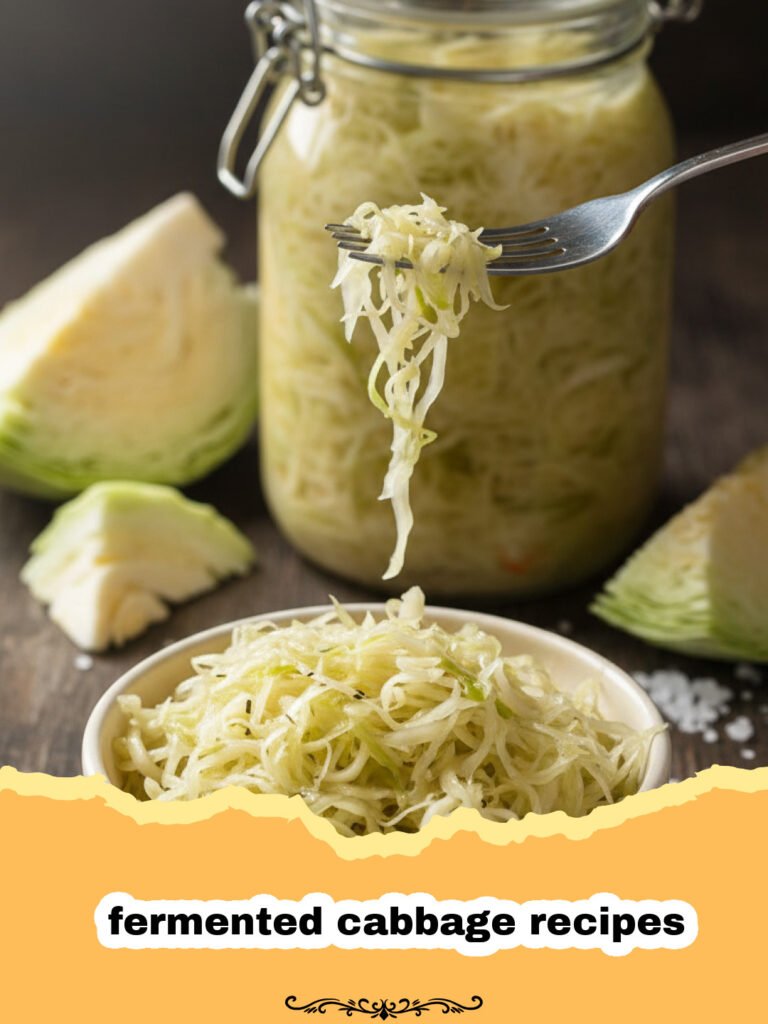
Ingredients
1 medium head green cabbage (approx. 2.5–3 lbs / 1.1–1.4 kg)
2 tablespoons non-iodized sea salt (fine grain)
Optional: 1 cup filtered water (if cabbage doesn’t release enough brine)
Optional additions for flavor: 1 tbsp caraway seeds, 2-3 cloves garlic (minced), 1 tsp red pepper flakes
Instructions
Step 1: Prepare the Cabbage. Remove any bruised or damaged outer leaves from the cabbage. Reserve one or two large, intact outer leaves. Cut the cabbage into quarters and remove the core. Using a sharp knife or mandoline, finely shred the cabbage into thin strips (about 1/8 inch thick). The thinner the shreds, the easier it will be to pack and ferment.
Step 2: Salt the Cabbage. Place the shredded cabbage in your large non-reactive bowl. Sprinkle 2 tablespoons of non-iodized salt over the cabbage. Begin to massage the salt into the cabbage using your clean hands. Squeeze, scrunch, and pound the cabbage for about 5-10 minutes. You’ll notice the cabbage starting to soften and release liquid. This is the brine forming. Continue until a significant amount of liquid has accumulated at the bottom of the bowl.
Step 3: Pack the Jar. Take handfuls of the salted cabbage and firmly pack them into your clean quart jar. Use a pounder, a muddler, or your clean fist to press the cabbage down tightly, expelling air pockets. The goal is to get it as dense as possible.
Step 4: Submerge the Cabbage. Once all the cabbage is packed into the jar, pour any remaining brine from the bowl over the cabbage. Press down again to ensure all the cabbage is submerged under the liquid. If the cabbage isn’t fully submerged, you can make a simple brine by dissolving 1 teaspoon of non-iodized salt in 1 cup of filtered water and adding just enough to cover the cabbage.
Step 5: Add Weight and Seal. Take one of the reserved whole cabbage leaves and fold it to fit snugly over the packed cabbage, pushing it down to keep all the shredded pieces submerged. Place a fermentation weight (or a smaller, clean jar filled with water) on top of the cabbage leaf to keep everything below the brine level. This is crucial to prevent mold growth. Secure the lid. If using an airlock, attach it. If using a regular lid, tighten it lightly; you’ll need to ‘burp’ the jar daily.
Step 6: Ferment. Place the jar in a cool, dark place (ideally 60-75°F / 15-24°C) for 10-21 days. During this time, beneficial bacteria will convert the sugars in the cabbage into lactic acid, creating the classic tangy flavor and preserving the kraut. You’ll see bubbles forming, which is a sign of active fermentation. If using a regular lid, unscrew it briefly once a day to release built-up gases (burp the jar).
Step 7: Check for Doneness. After about 10 days, start tasting your fermented cabbage. Use a clean fork to extract a small piece. It should be tangy, slightly sour, and crunchy. Fermentation time varies based on temperature and desired sourness. The longer it ferments, the tangier it becomes. Once it reaches your preferred taste, remove the weight and the top cabbage leaf.
Step 8: Store. Replace the lid tightly and transfer the jar of finished fermented cabbage to the refrigerator. The cold temperature will slow down the fermentation process significantly. It will keep for several months, continuing to develop flavor as it ages.
Notes
Always ensure your hands, equipment, and jars are meticulously clean to prevent unwanted mold. Keep the cabbage submerged under the brine at all times to ensure an anaerobic environment. A thin layer of white film (kahm yeast) can sometimes form on top; it’s generally harmless, but if it’s fuzzy, green, black, or smells putrid, discard the batch. Trust your nose!
- Prep Time: 45 minutes
- Cook Time: 10-21 days (fermentation)
- Category: How To
- Cuisine: German
Nutrition
- Serving Size: 1/2 cup (approx. 75g)
- Calories: 25 kcal
- Sugar: 2 g
- Sodium: 350 mg
- Fat: 0 g
- Saturated Fat: 0 g
- Unsaturated Fat: 0 g
- Trans Fat: 0 g
- Carbohydrates: 6 g
- Fiber: 2 g
- Protein: 1 g
- Cholesterol: 0 mg
Keywords: fermented cabbage recipes, sauerkraut recipe, how to make sauerkraut, probiotic food, gut health, cabbage fermentation, homemade kraut, easy fermentation, traditional food
