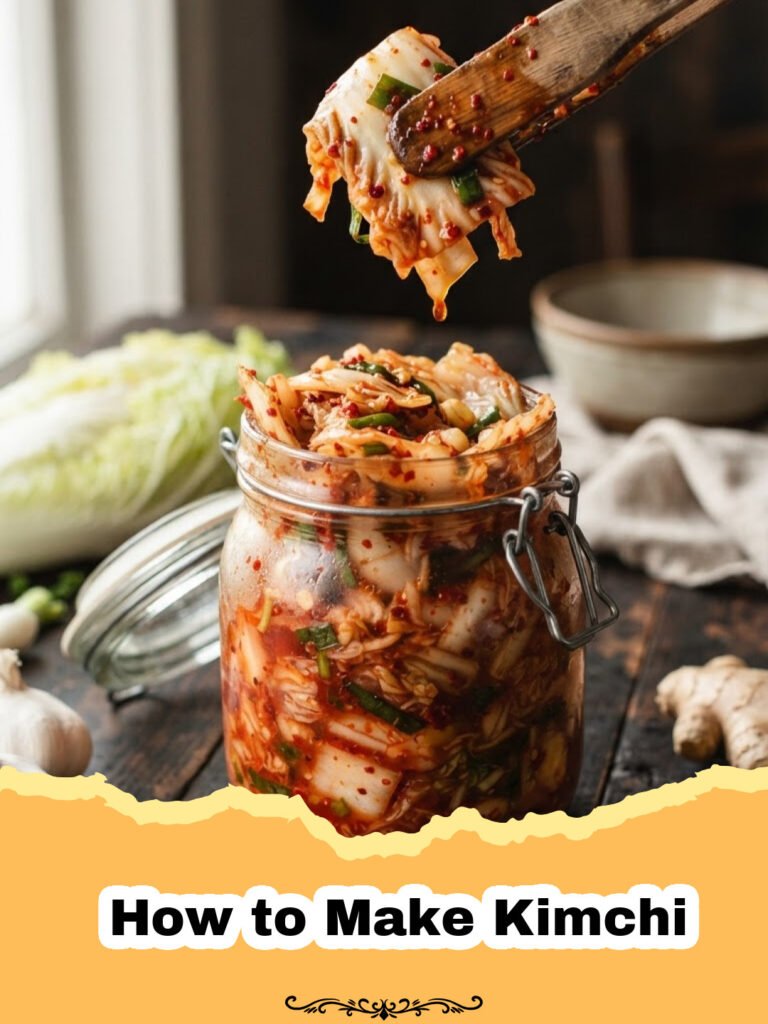
Ingredients
1 large (2.5-3 kg) Napa cabbage
1/2 cup coarse sea salt (or pickling salt)
1 cup glutinous rice flour (or sweet rice flour)
1 cup water
1/2 cup Korean chili flakes (Gochugaru) – adjust to taste
1/4 cup fish sauce (Korean anchovy sauce preferred)
2 tablespoons sugar (or Korean plum extract)
1 whole head garlic, minced (about 1/4 cup)
1 piece (2-inch) fresh ginger, grated (about 2 tablespoons)
1/2 medium onion, pureed (about 1/4 cup)
1/4 cup salted shrimp (saeujeot), finely minced (optional, but highly recommended)
1 medium daikon radish, julienned
4–5 green onions, cut into 2-inch pieces
1/2 medium carrot, julienned
Instructions
Step 1: Prepare the Napa Cabbage: Quarter the cabbage lengthwise. Cut out the tough core. For each quarter, make a 2-inch incision at the core end and gently pull the leaves apart. This helps the salt penetrate better.
Step 2: Salt the Cabbage: Rinse the cabbage quarters under cold water. Sprinkle coarse salt generously between every leaf, focusing on the thicker white parts. Place the salted cabbage in a large bowl or tub, stacking them. Let it sit for 2-3 hours, flipping every hour, until the cabbage is flexible and has wilted significantly. It should bend without breaking. This is a critical step for How to Make Kimchi.
Step 3: Rinse and Drain Cabbage: Thoroughly rinse the salted cabbage under cold running water 2-3 times to remove excess salt. Squeeze gently to remove as much water as possible without tearing the leaves. Place the rinsed cabbage in a colander and let it drain for at least 30 minutes to 1 hour, or until no more water drips out.
Step 4: Make the Porridge (Full): In a small saucepan, whisk together the glutinous rice flour and water until smooth. Cook over medium-low heat, stirring constantly, until it thickens into a paste, about 5-7 minutes. Let it cool completely. This acts as a binder and helps with fermentation.
Step 5: Prepare the Kimchi Paste (Yangnyeom): In a very large bowl, combine the cooled rice porridge, gochugaru, fish sauce, sugar, minced garlic, grated ginger, pureed onion, and finely minced salted shrimp (if using). Mix well until a smooth, thick paste forms. This paste is the heart of How to Make Kimchi.
Step 6: Add Vegetables to Paste: Add the julienned daikon radish, green onions, and julienned carrot to the kimchi paste. Mix everything thoroughly with your hands (wearing gloves is highly recommended to protect your hands from chili and prevent contamination).
Step 7: Combine Cabbage and Paste: Spread the kimchi paste generously between each leaf of the drained cabbage quarters. Make sure to get into every nook and cranny, but avoid using too much paste on the thin green parts. Apply more to the thicker white parts. Once coated, fold each cabbage quarter in half and pack tightly into airtight glass containers or fermentation crocks. For best results, use quality storage like these Basics Glass Food Storage.
Step 8: Fermentation: Leave the kimchi at room temperature (around 68-72°F or 20-22°C) for 1-2 days to ferment. The exact time depends on the temperature and your preference. You’ll see bubbles forming and it will develop a tangy smell. Taste it after a day; if it’s tangy enough, transfer it to the refrigerator. If you prefer a stronger flavor, let it ferment for another day. This step is crucial for the probiotic benefits of How to Make Kimchi.
Step 9: Store and Enjoy: Once fermented to your liking, store the kimchi in the refrigerator. It will continue to ferment slowly and develop deeper flavors over several weeks, even months. Enjoy cold as a side dish or incorporate into your favorite recipes.
Notes
Always use gloves when handling the chili paste. The fermentation time can vary based on your room temperature and desired tanginess. Taste periodically! Ensure your storage containers are airtight to prevent odors and maximize freshness. Remember, learning How to Make Kimchi is a journey, so adjust flavors to your preference over time.
- Prep Time: 1 hour 30 minutes
- Cook Time: 0 minutes
- Category: How To
- Cuisine: Korean
Nutrition
- Serving Size: 100 g
- Calories: 25 kcal
- Sugar: 2 g
- Sodium: 350 mg
- Fat: 0.5 g
- Saturated Fat: 0 g
- Unsaturated Fat: 0.3 g
- Trans Fat: 0 g
- Carbohydrates: 4 g
- Fiber: 2 g
- Protein: 1.5 g
- Cholesterol: 0 mg
Keywords: kimchi recipe, how to make kimchi, homemade kimchi, korean food, fermented food, probiotic recipe, napa cabbage kimchi, kimchi from scratch, gochugaru, korean fermented vegetables
