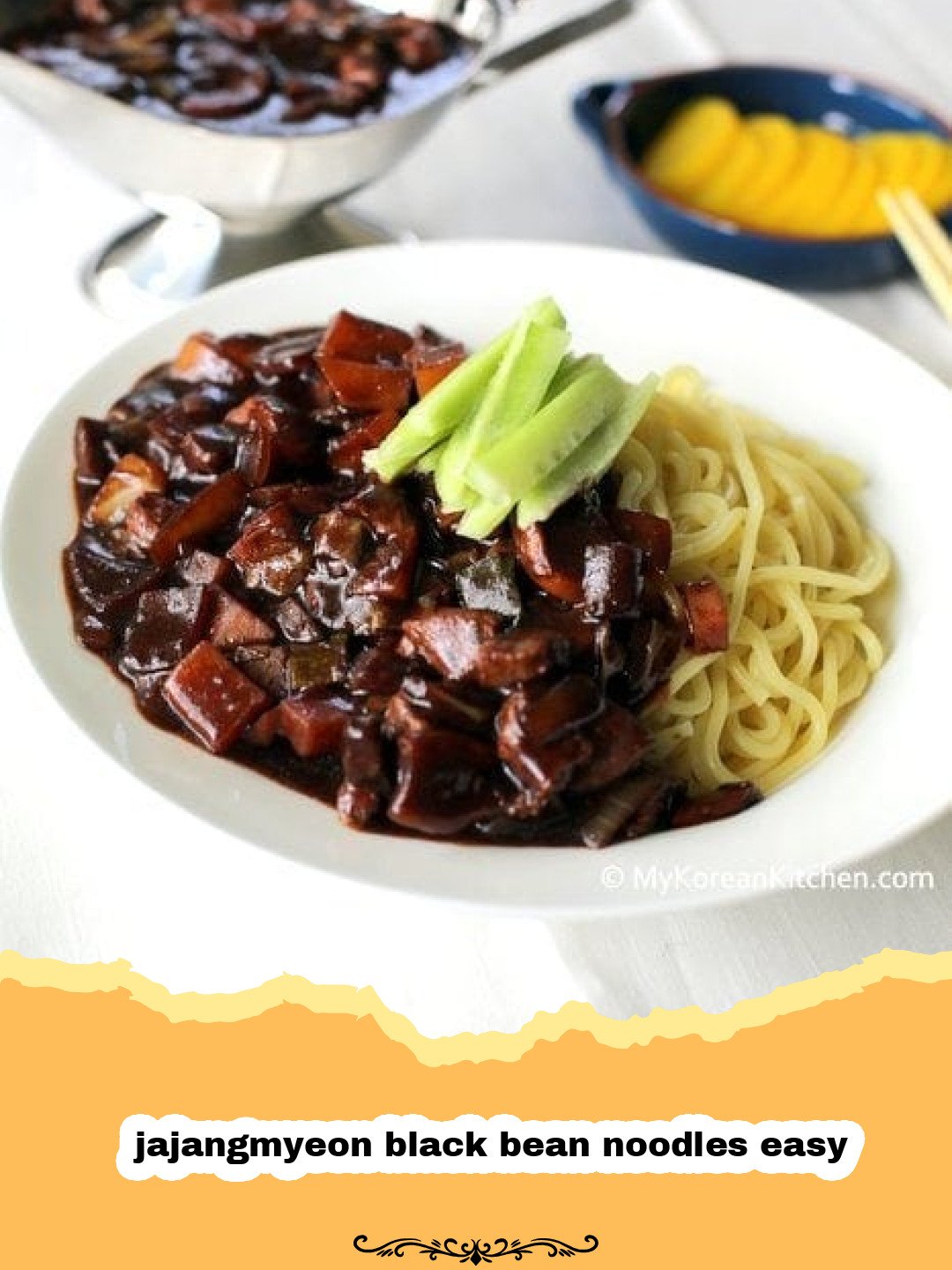
There are some dishes that instantly transport you, and for me, a steaming bowl of jajangmyeon black bean noodles easy style is exactly that. I remember the first time I truly fell in love with Jajangmyeon. It wasn’t in a bustling Seoul restaurant, but during a quiet evening at home after a particularly long and stressful week. I’d been craving something deeply comforting, something that felt like a hug in a bowl, and the idea of savory, glossy black bean noodles kept calling my name. The thought of ordering takeout felt too much, so I decided to tackle it myself. What started as an experiment quickly turned into a revelation: making authentic-tasting jajangmyeon at home didn’t have to be complicated. This recipe became my go-to, a testament to how simple ingredients, when handled with a little love, can create culinary magic. It’s perfect for busy weeknights, special occasions, or just when you need a delicious escape. Get ready to discover your new favorite comfort food, an incredible **jajangmyeon black bean noodles easy** recipe that will impress everyone!
Why This Recipe is a Must-Try
Surprisingly Simple to Master
Despite its rich, complex flavor, this **jajangmyeon black bean noodles easy** recipe is incredibly straightforward. With a few key ingredients and a step-by-step guide, you’ll be surprised at how quickly you can whip up this Korean classic. It’s truly a weeknight-friendly meal!
Authentic & Irresistible Flavor
Forget bland takeout versions. This recipe captures the deep, umami-rich, slightly sweet, and savory notes that make traditional Jajangmyeon so beloved. The secret lies in properly caramelizing the chunjang (black bean paste), which unlocks its full depth of flavor. You’ll be craving this **jajangmyeon black bean noodles easy** version again and again.
Ultimate Comfort Food
There’s something incredibly satisfying about a bowl of chewy noodles coated in a thick, savory sauce. Jajangmyeon is the ultimate Korean comfort food, perfect for cheering you up on a gloomy day or celebrating with friends and family. It’s hearty, warming, and deeply fulfilling.
Highly Customizable
While the classic pork and onion combination is divine, this recipe offers a fantastic base for customization. Add more vegetables, different proteins, or adjust the sweetness and spice to suit your preference. This flexibility makes our **jajangmyeon black bean noodles easy** recipe a versatile star in your kitchen.
Key Ingredient Notes
Understanding a few core ingredients will elevate your **jajangmyeon black bean noodles easy** experience from good to absolutely phenomenal.
Chunjang (Korean Roasted Black Bean Paste)
This is the soul of Jajangmyeon. Chunjang is a salty, earthy, and slightly bitter fermented black bean paste. It’s crucial to properly cook and caramelize the chunjang in oil before adding other ingredients. This process removes its raw bitterness and deepens its savory notes, creating that signature rich, dark color and complex flavor. You can find chunjang at most Asian grocery stores or online. Don’t skip this step for an authentic **jajangmyeon black bean noodles easy** taste.
Noodles
While you can use various noodles, the best for Jajangmyeon are thick, chewy wheat noodles specifically labeled for Jajangmyeon or kal-guksu (knife-cut noodles). Fresh udon noodles also make a fantastic substitute. Their robust texture holds up beautifully to the thick sauce. Avoid thin ramen or spaghetti, as they won’t provide the right chewiness that makes **jajangmyeon black bean noodles easy** so satisfying.
Pork Belly or Shoulder
Traditional Jajangmyeon often uses fatty pork belly for its incredible richness and flavor. However, lean pork shoulder or even ground pork can be used if you prefer. The fat from the pork renders into the sauce, contributing a luscious mouthfeel and depth that’s hard to replicate. When making this **jajangmyeon black bean noodles easy** dish, don’t skimp on a good quality cut of pork.
Step-by-Step Guide with Pro Tips
Let’s dive into making this incredible **jajangmyeon black bean noodles easy** recipe. Follow these steps carefully for the best results!
Preparing Your Ingredients
- Dice pork, onions, potatoes, and zucchini into small, uniform pieces (about ½-inch).
- Mince garlic and ginger.
- Prepare your noodles according to package directions, then set aside.
Cooking the Chunjang (The Most Important Step!)
Step 1: Heat 3 tablespoons of cooking oil in a large wok or deep pan over medium-low heat. Add 4 tablespoons of chunjang. Fry the chunjang, stirring constantly, for 5-7 minutes until it becomes glossy and fragrant. This crucial step removes bitterness and develops flavor. Remove the fried chunjang and oil to a small bowl and set aside.
Sautéing Aromatics and Pork
Step 2: In the same wok (or add a little fresh oil if needed), add the diced pork. Cook over medium-high heat until browned and cooked through, about 5-7 minutes. Drain any excess fat, leaving about 1-2 tablespoons in the pan.
Step 3: Add the minced garlic and ginger to the pan with the pork. Sauté for 1 minute until fragrant. Then, add the diced onions. Cook until softened and translucent, about 5-8 minutes.
Building the Sauce Base for your Jajangmyeon Black Bean Noodles Easy
Step 4: Add the diced potatoes to the pan and cook for 3-5 minutes, stirring occasionally. Then, add the diced zucchini and cook for another 2-3 minutes. You want the vegetables to be slightly tender but still have a bit of bite.
Step 5: Stir in the fried chunjang mixture, ensuring all ingredients are well coated. Cook for 1-2 minutes, allowing the flavors to meld.
Step 6: Pour in the chicken or vegetable broth. Bring the mixture to a simmer. Reduce heat to low, cover, and let it cook for 10-15 minutes, or until the potatoes are tender. This slow simmer allows the flavors to deepen, making your **jajangmyeon black bean noodles easy** truly shine.
Thickening and Finishing the Sauce
Step 7: In a small bowl, whisk together the cornstarch and 2 tablespoons of cold water to create a slurry. Slowly add the slurry to the simmering sauce, stirring constantly, until the sauce thickens to your desired consistency. It should be thick enough to coat a spoon.
Step 8: Stir in the sugar and a splash of sesame oil. Taste and adjust seasonings as needed. If it’s too salty, add a little more sugar or broth. If you want more umami, a dash of oyster sauce can work wonders, ensuring this **jajangmyeon black bean noodles easy** recipe is perfect.
Assembling Your Jajangmyeon Black Bean Noodles Easy
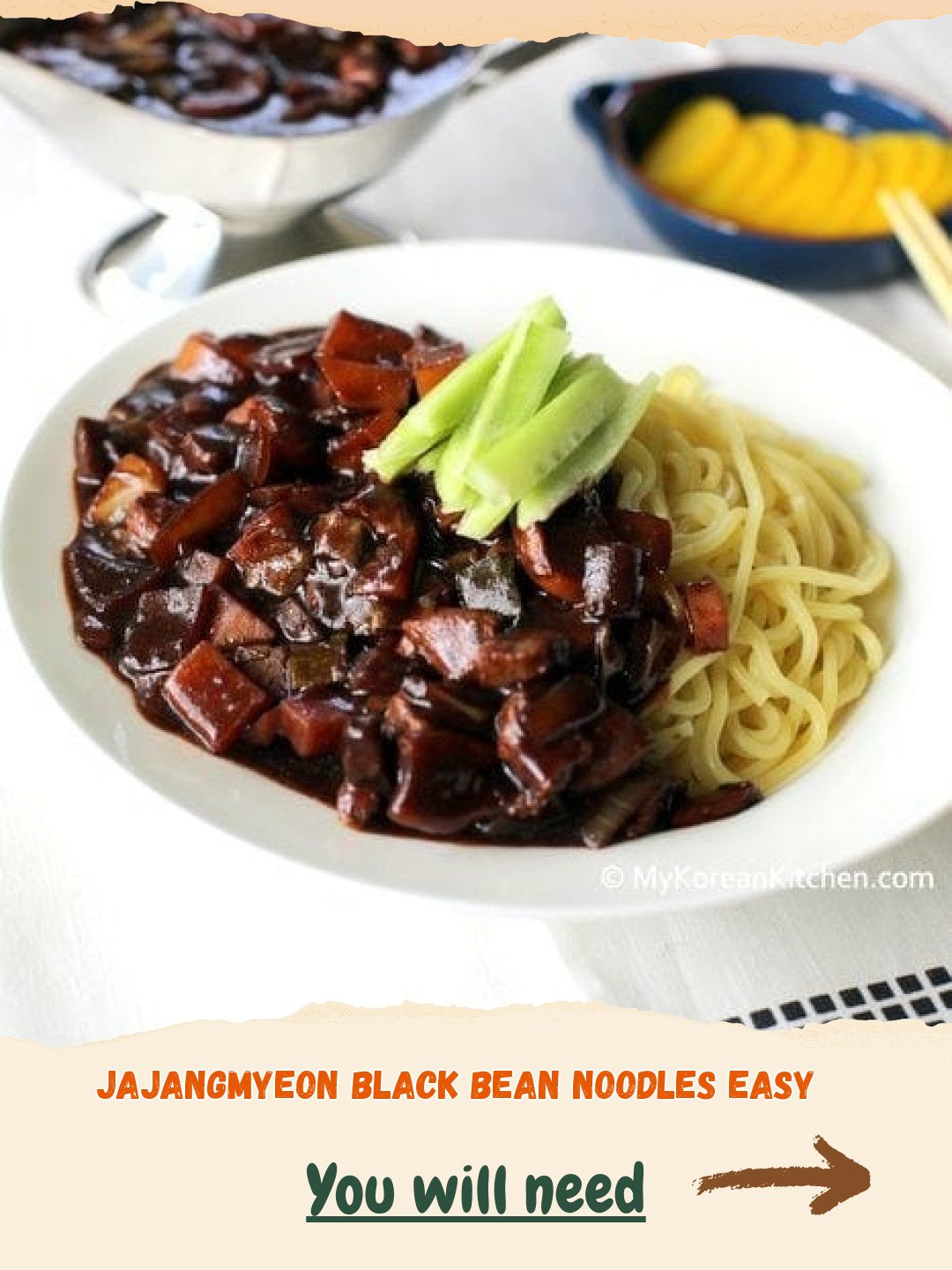
Step 9: Divide the cooked noodles among serving bowls. Spoon a generous amount of the rich black bean sauce over the noodles. Garnish with fresh julienned cucumber, a fried egg, or pickled radish if desired. Serve immediately and enjoy your homemade **jajangmyeon black bean noodles easy**!
Variations & Serving Suggestions
This **jajangmyeon black bean noodles easy** recipe is wonderfully adaptable!
Protein Swaps
- Vegetarian/Vegan: Omit the pork and use firm tofu or rehydrated shiitake mushrooms for a hearty bite. Ensure you use vegetable broth instead of chicken broth.
- Seafood: Add shrimp or calamari during the last few minutes of cooking for a unique twist.
- Ground Meat: Ground beef or turkey can also be used for a quicker cook time and different texture.
Vegetable Additions
Feel free to incorporate other vegetables like cabbage, bell peppers, or even a handful of spinach. Add heartier vegetables with the potatoes, and quicker-cooking ones with the zucchini.
Serving Suggestions
- Traditional Sides: Jajangmyeon is often served with danmuji (yellow pickled radish) and raw onion slices dipped in chunjang for a refreshing contrast.
- Kimchi: A side of spicy kimchi complements the savory richness perfectly.
- Fried Egg: A sunny-side-up or soft-boiled egg on top adds a creamy richness to each bite of your **jajangmyeon black bean noodles easy**.
- Other Korean Dishes: For a complete Korean feast, serve alongside The Ultimate Easy Bibimbap with Ground Beef or The Ultimate Budae Jjigae.
Storing Leftovers
Leftover Jajangmyeon sauce can be stored separately from the noodles in an airtight container in the refrigerator for up to 3-4 days. When ready to eat, reheat the sauce gently and pour over freshly cooked noodles. This is where good Basics Glass Food Storage containers come in handy for easy reheating!
Nutrition Information
Here’s an estimated nutritional breakdown for one serving of this delicious **jajangmyeon black bean noodles easy** recipe:
| Nutrient | Amount per Serving |
|---|---|
| Calories | 650 kcal |
| Carbohydrate Content | 80g |
| Cholesterol Content | 55mg |
| Fat Content | 28g |
| Fiber Content | 6g |
| Protein Content | 20g |
| Saturated Fat Content | 10g |
| Serving Size | 1 bowl (approx. 550g) |
| Sodium Content | 1200mg |
| Sugar Content | 12g |
| Trans Fat Content | 0g |
| Unsaturated Fat Content | 15g |
Conclusion
There you have it – your very own homemade **jajangmyeon black bean noodles easy** to prepare and absolutely bursting with authentic Korean flavors! This dish is more than just a meal; it’s a culinary journey, a comforting hug, and a testament to how incredible home cooking can be. Don’t be intimidated by the name; with our detailed instructions and pro tips, you’re well on your way to mastering this beloved Korean staple. So gather your ingredients, fire up your stove, and get ready to indulge in the savory, satisfying goodness of Jajangmyeon. You’ll soon find yourself making this **jajangmyeon black bean noodles easy** recipe on repeat. Happy cooking!
FAQs
What kind of noodles are best for Jajangmyeon?
For the most authentic and satisfying Jajangmyeon, use thick, chewy wheat noodles specifically labeled for Jajangmyeon or kal-guksu (knife-cut noodles). Fresh udon noodles are also an excellent substitute due to their robust texture that holds up well to the thick sauce.
Can I make Jajangmyeon vegetarian or vegan?
Yes, absolutely! To make it vegetarian or vegan, omit the pork and use firm tofu (pressed and diced) or rehydrated shiitake mushrooms for a hearty bite. Ensure you use vegetable broth instead of chicken broth. The black bean sauce itself is typically vegan-friendly.
How do I store leftover Jajangmyeon?
It’s best to store the leftover Jajangmyeon sauce separately from the noodles in an airtight container in the refrigerator for up to 3-4 days. When you’re ready to enjoy it again, simply reheat the sauce gently on the stove or in the microwave, and pour it over freshly cooked noodles for the best texture.
What is Chunjang and where can I buy it?
Chunjang is a Korean roasted black bean paste, which is the essential ingredient for Jajangmyeon. It’s salty, earthy, and slightly bitter, forming the deep, dark, and savory base of the sauce. You can find chunjang at most large Asian grocery stores, often in the Korean section, or purchase it online from specialty food retailers.

Jajangmyeon (Easy Korean Black Bean Noodles)
A comforting, savory Korean noodle dish featuring a rich black bean sauce, perfect for a quick and satisfying meal at home. This jajangmyeon black bean noodles easy recipe is a true weeknight winner.
- Total Time: 40 minutes
- Yield: 4 servings 1x
Ingredients
4 tbsp Chunjang (Korean black bean paste)
3 tbsp cooking oil (vegetable or canola)
1 lb pork belly or shoulder, diced ½-inch
1 large onion, diced ½-inch
1 medium potato, diced ½-inch
1 medium zucchini, diced ½-inch
2 cloves garlic, minced
1 tsp fresh ginger, minced
2 cups chicken or vegetable broth
1–2 tbsp sugar (to taste)
1 tsp sesame oil
2 tbsp cornstarch
2 tbsp cold water (for slurry)
1.5 lb fresh Jajangmyeon noodles or thick Udon noodles
Optional garnishes: julienned cucumber, fried egg, pickled radish
Instructions
Step 1: Heat 3 tablespoons of cooking oil in a large wok or deep pan over medium-low heat. Add 4 tablespoons of chunjang. Fry the chunjang, stirring constantly, for 5-7 minutes until it becomes glossy and fragrant. This crucial step removes bitterness and develops flavor. Remove the fried chunjang and oil to a small bowl and set aside.
Step 2: In the same wok (or add a little fresh oil if needed), add the diced pork. Cook over medium-high heat until browned and cooked through, about 5-7 minutes. Drain any excess fat, leaving about 1-2 tablespoons in the pan.
Step 3: Add the minced garlic and ginger to the pan with the pork. Sauté for 1 minute until fragrant. Then, add the diced onions. Cook until softened and translucent, about 5-8 minutes.
Step 4: Add the diced potatoes to the pan and cook for 3-5 minutes, stirring occasionally. Then, add the diced zucchini and cook for another 2-3 minutes. You want the vegetables to be slightly tender but still have a bit of bite.
Step 5: Stir in the fried chunjang mixture, ensuring all ingredients are well coated. Cook for 1-2 minutes, allowing the flavors to meld.
Step 6: Pour in the chicken or vegetable broth. Bring the mixture to a simmer. Reduce heat to low, cover, and let it cook for 10-15 minutes, or until the potatoes are tender. This slow simmer allows the flavors to deepen.
Step 7: In a small bowl, whisk together the cornstarch and 2 tablespoons of cold water to create a slurry. Slowly add the slurry to the simmering sauce, stirring constantly, until the sauce thickens to your desired consistency. It should be thick enough to coat a spoon.
Step 8: Stir in the sugar and a splash of sesame oil. Taste and adjust seasonings as needed. If it’s too salty, add a little more sugar or broth.
Step 9: Divide the cooked noodles among serving bowls. Spoon a generous amount of the rich black bean sauce over the noodles. Garnish with fresh julienned cucumber, a fried egg, or pickled radish if desired. Serve immediately and enjoy!
Notes
The key to authentic Jajangmyeon flavor is properly frying the chunjang at the beginning. Don’t rush this step!
- Prep Time: 15 minutes
- Cook Time: 25 minutes
- Category: Dinner Dishes
- Cuisine: Korean
Nutrition
- Serving Size: 1 bowl (approx. 550g)
- Calories: 650 kcal
- Sugar: 12g
- Sodium: 1200mg
- Fat: 28g
- Saturated Fat: 10g
- Unsaturated Fat: 15g
- Trans Fat: 0g
- Carbohydrates: 80g
- Fiber: 6g
- Protein: 20g
- Cholesterol: 55mg
Keywords: jajangmyeon, Korean black bean noodles, easy recipe, comfort food, Korean food, chunjang, quick dinner, noodles, Asian recipes, savory