Ingredients
5 lbs green cabbage (about 2 large heads)
3–4 tablespoons non-iodized sea salt (fine-grain or pickling salt)
Optional: 1-2 tablespoons caraway seeds
Instructions
Step 1: Prepare your cabbage. Remove any bruised outer leaves, reserving 2-3 large, intact outer leaves. Quarter the cabbage and cut out the tough core. Finely shred the cabbage using a sharp knife or mandoline (about 1/8 to 1/4 inch thick). Place shredded cabbage in a very large bowl or food-grade bucket.
Step 2: Salt the cabbage. Sprinkle 3-4 tablespoons of non-iodized salt over the shredded cabbage. Using clean hands, vigorously massage, squeeze, and scrunch the salt into the cabbage for 10-15 minutes until it starts to soften and release a significant amount of liquid. If using, mix in caraway seeds now.
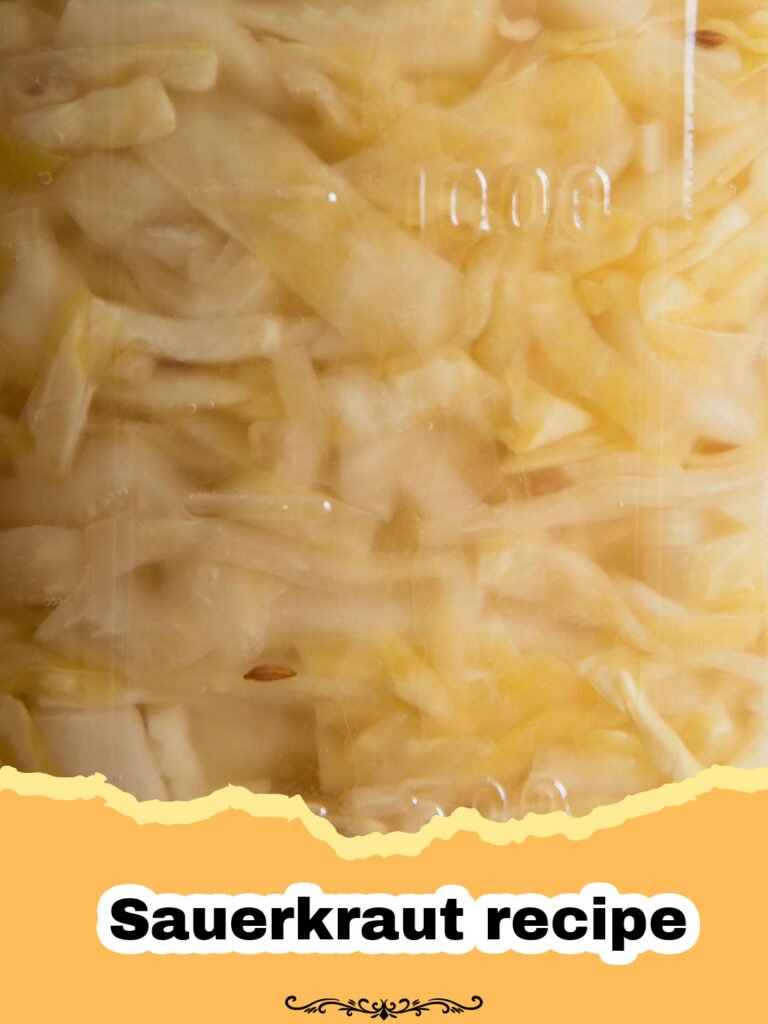
Step 3: Pack the cabbage. Begin packing the salted cabbage tightly into a clean 2-quart glass jar or ceramic crock. Pack it in layers, pressing down firmly with your fist or a wooden pounder to release more brine and eliminate air pockets. The goal is to get all the cabbage submerged under its own liquid.
Step 4: Submerge and weight. Continue pressing until the cabbage is fully submerged under the brine that has been released. If, after vigorously pounding, you don’t have enough liquid to cover the cabbage, dissolve 1 teaspoon of non-iodized salt in 1 cup of filtered water and add just enough to ensure the cabbage is covered. Place one of the reserved whole cabbage leaves over the shredded cabbage, then place a fermentation weight (or a smaller, clean glass jar filled with water) on top to keep the cabbage completely submerged.
Step 5: Ferment your sauerkraut. Cover the fermentation vessel loosely (with an airlock lid or a regular lid that allows gas to escape, or burp daily). Place it in a cool, dark place (ideally 60-75°F / 15-24°C) for 2-4 weeks. During this time, beneficial bacteria will convert sugars into lactic acid, creating the tangy flavor. Check periodically for mold (see Step 6).
Step 6: Monitor and skim (optional). If a white film (kahm yeast) appears on the surface, simply skim it off with a clean spoon. If you see any fuzzy, colored mold (green, black, pink), discard the entire batch, sanitize your equipment, and start again.
Step 7: Store your homemade sauerkraut. Once the sauerkraut has reached your desired level of tanginess and crispness (taste after 2 weeks), remove the weight and outer leaf. Transfer the fermented sauerkraut and its brine into clean, airtight glass jars, ensuring the cabbage remains submerged in the liquid. Store in the refrigerator for several months.
Notes
Always use clean, sanitized equipment to prevent undesirable microbial growth. The exact fermentation time can vary significantly based on ambient temperature; warmer temperatures lead to faster fermentation. Taste frequently after the second week to achieve your preferred level of tanginess. Ensure the cabbage stays submerged under the brine at all times to prevent mold.
- Prep Time: 30 minutes
- Cook Time: 2-4 weeks (fermentation)
- Category: Side Dish
- Cuisine: German
Keywords: sauerkraut, fermentation, cabbage, probiotic, homemade sauerkraut recipe, easy sauerkraut, healthy side dish, gut health, fermented vegetables
